‘Don’t Make It Worse’: Kīhei Cleans Up, Braces For More Rain
Apr 10, 2026 | 6:01 am ET
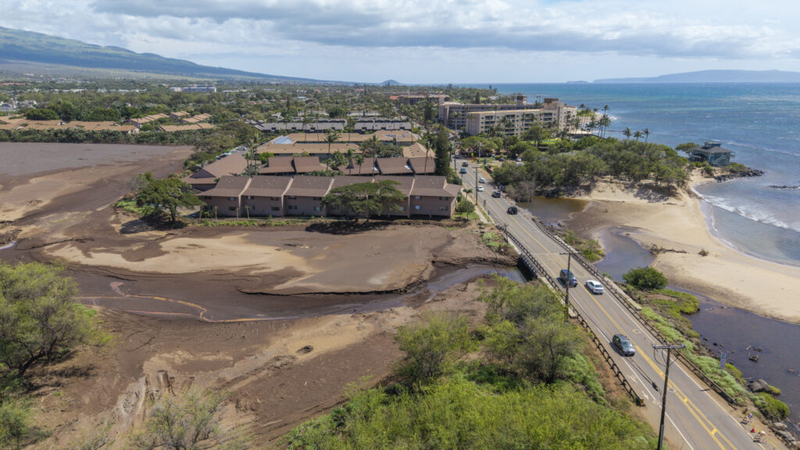
Description
Photo courtesy of Honolulu Civil Beat
When the rains resumed again this week, Edward Agcaoili turned to God for help.
The exhausted site manager at the Kīhei Bay Vista condominiums used to place sandbags around the low-lying property on South Kīhei Road ahead of incoming storms, as many residents and business owners in the flood-prone area have been doing for years now. The floodwaters have grown so strong there that the current just carries them away, so he stopped.
“It has been like 20 times more dirt coming into our parking lot than ever before, and 20 times more mud coming into our swimming pool,” said Agcaoili, recalling how surging floodwaters lodged debris beneath the raised building and turned the parking lot into a murky pond. He has been working for properties on South Kīhei Road for 17 years, including the past six at Kīhei Bay Vista.
“Now, every time we have flooding, I wait. Then once it has happened, I deal with it, because when I try to do something, it's not good enough,” he said. “We are not recovered yet, so when I heard about this rain coming again … I learned how to pray and I said, ‘Please, God, don't make it worse.’”
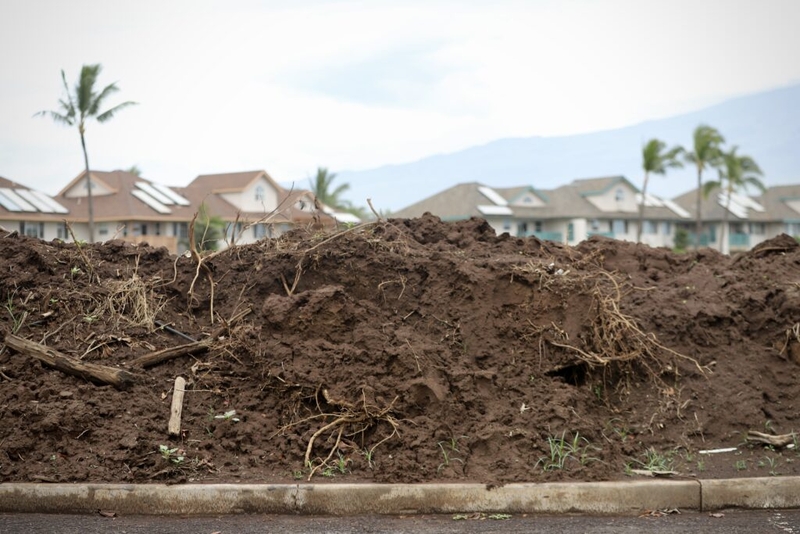
Many South Maui residents feel like it is getting worse. The storms are more frequent, the flooding more severe, which scientists have connected to the longer periods of drought the island has experienced. And as Kīhei continues to sprawl out, concrete has replaced natural wetlands.
Nearly 20 inches of rain fell over South Maui during the two storms last month. That flooding was compounded by heavy rain that fell Upcountry and cascaded down the slopes of Haleakalā like raging rivers before surging through storm drain channels along South Kīhei Road.
“It’s definitely a visible difference,” longtime resident Mike Moran said, referring to the number of property owners that he notices taking precautions ahead of expected rain or even installing permanent flood mitigation measures. “The condos, they’ll sandbag some of their entrances to try and redirect the flow of the water, but they have their own funding. For individual homeowners, it is a lot tougher. It depends on how much money they have to spend on something to protect it, and for some of them, they are just built in the wrong place.”
South Kīhei Road has long been known as a place where conditions can quickly turn dangerous during a storm, Moran said, and the community has had to adapt in recent years as it experiences more intense flooding.
Gerri Lewis, who has owned a long-term rental property at Kīhei Bay Vista with her husband since 1999, said she and other local property owners now expect to spend more time, energy and money every year preparing themselves, their tenants and their properties for disastrous floods, which have become a near annual occurrence.

“The insurance and the HOA fees, the special assessments — I mean, it's increased so much it’s just outrageous at this point,” she said. “And whenever we start hearing about flash floods coming and rain Upcountry, we make sure to let our tenants know soon that they might want to park their car uphill.”
David Yamashiro, who co-owns the Ululani's Hawaiian Shave Ice stores and Sugar Beach Bake Shop with his wife, wasn't concerned when he opened the Ululani's location on South Kīhei Road 13 years ago. It became top of mind over the past five years.
“We were prepared for bad weather — hurricane insurance in case of anything from the ocean or weather wise — but just flooding, we weren’t concerned," he said.
Floods damaged his businesses for the first time in late 2021, shortly after a bridge was built just up the street on South Kīhei Road to accommodate water draining down a neighboring gulch. Sandbags and plastic had been placed around the building, but flooding in the area was so severe that several inches of brown water and viscous mud still seeped inside, he said.
“We had to close for five weeks,” he said. “I never expected it, and it was devastating.”
Since then, the Yamashiros waterproofed the bottom of the building and installed makeshift removable barriers on all of the entrances. Whenever flooding is expected, they only need to place a board between two metal slots bolted on either side of the doors.
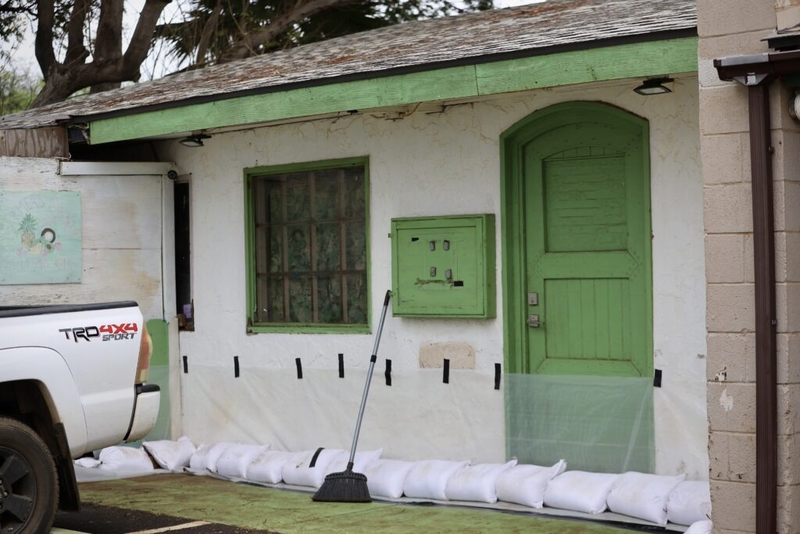
“When the Kona lows came, we actually were well prepared in the sense that we were boarded up so good that we didn't get any mud inside and no rain,” he said. “On the exterior, we were cleaned up and could have opened if the roads were open and the parking lot was clear.”
His stores finally opened 10 days after the last Kona low in March, after the streets were cleared. But it was back to preparation mode Thursday as Maui went under yet another flood watch that's set to run until 6 p.m. Friday. He estimates business losses of up to $12,000 per day from having to close his bake shop and shave ice store on South Kīhei Road.
County Takes Stock While Prepping For More
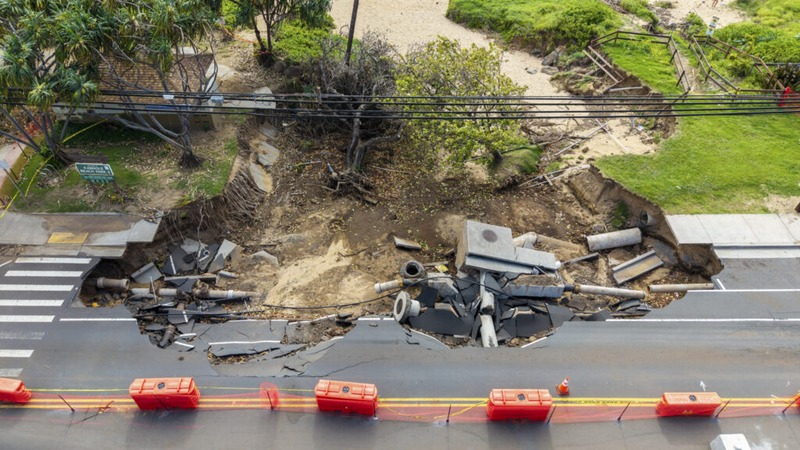
County crews were out in force all week trying to repair massive sinkholes, clear storm drains and deal with all the damage from the March storms while at the same time gearing up for the next round of rain.
The Maui Police Department was staffing up in all districts to prepare for the storm, and the Department of Public Works was doing its best to stabilize damaged infrastructure to prevent further damage. Emergency shelters were opened Wednesday ahead of the storm and water conservation advisories were issued.
Mayor Richard Bissen signed an emergency proclamation Monday to tap into state and federal assistance and more deploy resources faster if needeed, a county release said. President Donald Trump approved Hawaiʻi’s request for a federal disaster declaration Wednesday, which should let the counties and state recoup much of the costs of the Kona low storms that also devastated parts of Oʻahu and Hawaiʻi island.
The full extent of the storms’ damage is still being assessed, but as of late last week, county officials estimated at least $80 million would be needed just to cover the cost of repairing county assets and related operational needs, according to Josiah Nishita, the county’s managing director.
The Maui County Council approved Bissen’s request to use $12 million in emergency funds to address some of the March destruction. Lesley Milner, Maui’s budget director, said officials were planning to make another request soon.
Shortly after the first storm, county contractors descended on South Kīhei Road and the surrounding neighborhoods to excavate the pavement from beneath the mud. As of Tuesday, 524 damage assessments had been completed across Maui and Molokaʻi, according to a statement provided by a county spokesperson.
MEMA and HIEMA also teamed up with the Federal Emergency Management Agency and the U.S. Small Business Administration to assess the damage to 225 residential homes and 23 sites involving county infrastructure and public facilities, the county spokesperson said.
Last week, Bissen announced that the Office of Recovery — which was established to respond to the impact of the 2023 wildfires — would oversee long-term recovery efforts related to other emergencies including the recent floods, and a “March 2026 Kona Low Storms” section had been added to the county’s official wildfire recovery website to provide updates and resources for those impacted by the storms.
It could take months to address all of the flood damage on South Kīhei Road, but Moran said the county did a tremendous job clearing the pavement and getting the area’s infrastructure back up and running again for the most part.
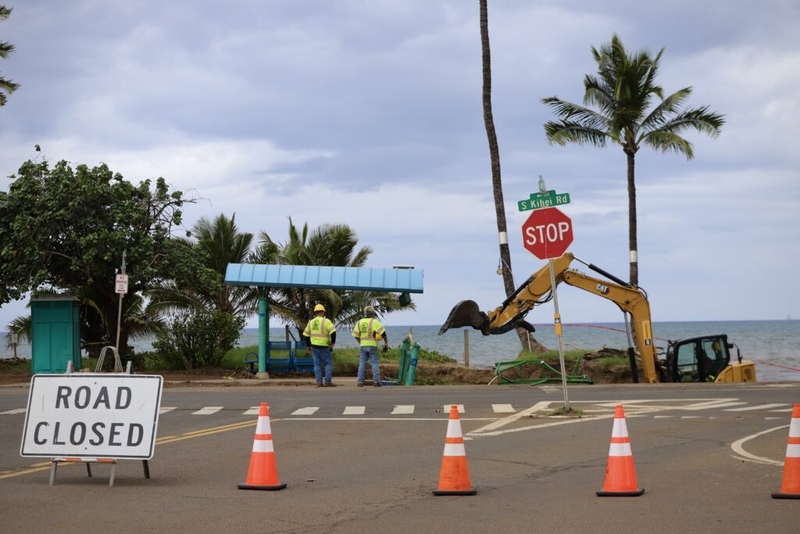
“I give them all the credit in the world,” he said. “These guys were all working their tails off using heavy equipment and using shovels where heavy equipment couldn't get in.”
Some of those workers were out on South Kīhei Road near the intersection of Uwapo Street on Wednesday afternoon, racing to begin repairing one of several massive sinkholes lining the street and other flood-related damage before the next storm hit.
'The Future Feels Uncertain'
While most of the residents who needed to evacuate during last month’s storms have returned home, and many of the neighborhood businesses have reopened, not everyone was so lucky.
One of two buildings at Kihei Kai Condominiums, already weakened by previous floods, collapsed sometime after 6 p.m. on March 13, said resident manager Michael Casey. The property was damaged beyond repair, and the owners recently announced that the building would be demolished.
“It was emotional for me,” he said. “I looked at the damage that was done, and I knew right then that basically my job and my home and everything that comes with it was again coming to an end very quickly.”
It was the second time in less than three years that Casey lost his home and job as a result of a natural disaster, said Casey, who survived the 2023 Lahaina wildfire.
“I am doing my best to stay hopeful as I search for new opportunities,” he said. “But the future feels uncertain.”
Civil Beat’s coverage of climate change and the environment is supported by The Healy Foundation, the Marisla Fund of the Hawai‘i Community Foundation and the Frost Family Foundation.
Honolulu, HI