NJ farmers plead for help after April freeze destroyed fruit trees, other crops
May 22, 2026 | 7:15 am ET
Description
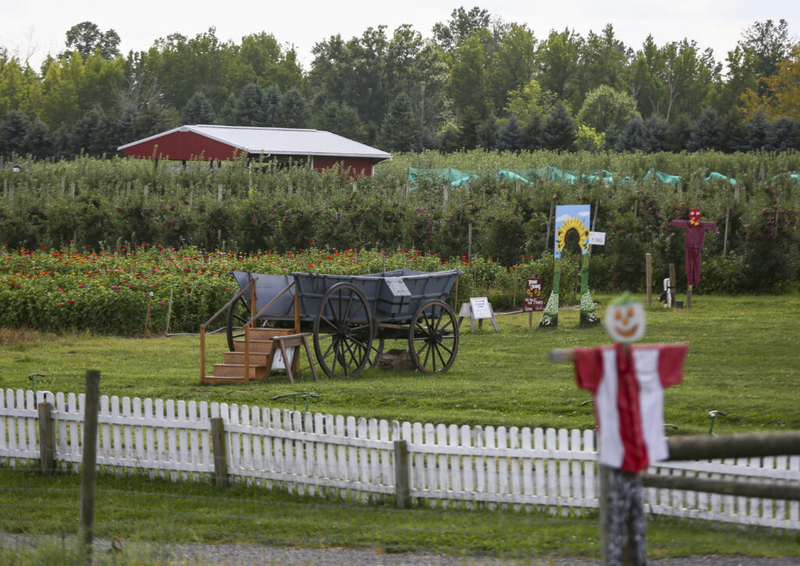
Farmers at Terhune Orchards in Mercer County reported that they lost 100% of their peach, Asian pear, and cherry crops after an early April heat wave led trees to flower early — and a mid-April freeze then destroyed buds and young fruit. (Photo by Dana DiFilippo/New Jersey Monitor)
A four-day freeze in April that proved mildly bothersome for summer-starved New Jerseyans was devastating for Garden State farmers, with growers of tree fruits, strawberries, blueberries, and other early bloomers reporting catastrophic losses.
Now, Gov. Mikie Sherrill has declared a state of emergency in all 21 counties, a move that should ultimately open up funding to help farmers recover from damages the state estimates could top $300 million.
Desperate farmers say they need the help.
The April 19-22 cold snap, with temperatures dipping into the low 20s, came after a heat wave that drove many perennial crops to flower earlier than usual. The cold spell that followed wasn’t just the freeze of a lifetime, said Jim Giamarese, who farms 130 acres in East Brunswick.
“I think it’s the freeze of a century,” Giamarese said. “I’ve been farming pretty much all my life. I’m 70 years old. I’ve experienced probably 100 frosts in my lifetime. Most of the time you can mitigate some of the damage. But it just got too cold for too long.”
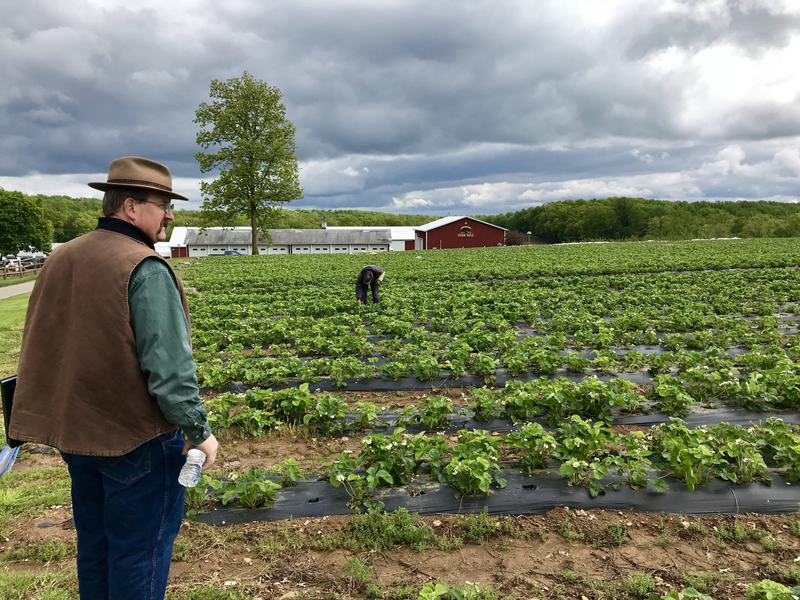
Giamarese estimates he lost 90% of his apple crops and 40% of his strawberries. Other farms reported 100% losses of some crops, including Terhune Orchards in Mercer County, where the cold snap wholly wiped out its peach, Asian pear, and cherry orchards and sorely damaged its apple and blueberry crops too.
“Farming is full of ups and downs,” Terhune staff wrote in a Facebook plea for public support. “This is one of the hardest hits we’ve ever had. We will persevere.”
The wintry blip impacted farmers all along the eastern U.S., with the U.S. Department of Agriculture finding that farms in 13 states, from Virginia to Michigan, sustained catastrophic damage to perennial crops.
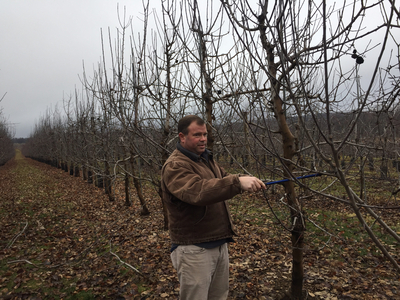
John Melick, a 10th generation farmer in Hunterdon County, said up to 90% of his peaches are gone and a big chunk of his 90 acres of apples are too. He’s thankful he has crop insurance, which farmers aren’t required to have but many do because of federal incentives.
“This will be the biggest claim we’ve ever submitted for,” Melick said.
In an executive order issued Wednesday, Sherrill ordered state agencies to work together to facilitate farm recovery and granted farms statewide temporary regulatory flexibility.
She also wrote to Brooke Rollins, the U.S. secretary of agriculture, to ask for a federal disaster designation and relief assistance. Pennsylvania Gov. Josh Shapiro made a similar request two weeks ago, and the Maryland Farm Bureau did too last week. Rollins’ agency did not respond to a request for comment.
Sherrill noted that New Jersey’s farms, nurseries, and greenhouses employ more than 25,000 people and produce over $1.5 billion in wholesale value annually.
“New Jersey’s agricultural sector is a vital engine of our economy; it is the very reason we bear the name the Garden State. The April freeze caused serious damage to our growers, and those losses demand decisive action,” Sherrill said in a statement. “This executive order mobilizes a whole-of-government recovery effort out of Trenton, cutting through bureaucracy and accelerating results for impacted farmers and families.”
Farmers applauded the move, but they hope Sherrill and state legislators will follow her declaration up with dollars.
“What we’re trying to do, between Rutgers and the New Jersey Farm Bureau and others, is to get the New Jersey Legislature aware of the situation and possibly get a supplemental appropriation for fruit growers,” Giamarese said.
He added: “For a lot of us, we’re not going to have a crop now till September of 2027, but the trees still need to be sprayed, still need to be pruned. I probably have about $5,000 per acre into my trees, just with over-the-winter labor. The bills just keep mounting up.”
Farmer Kurt Alstede, whose apple and peach orchards in Chester suffered losses, agreed Sherrill’s executive order is “step number one of 100 steps that need to be taken.”
“The industry’s appreciative of the governor’s recognition of the impact of this freeze,” Alstede said. “What really matters is: What’s the response after this? And I don’t know if anybody knows right now what that will be.”
Alstede noted that the crop-killing freeze came as farmers everywhere already were grappling with stressors out of their control, including the rising costs of fertilizer, fuel, and labor and increasingly frequent extreme weather events.
“There’s so many producers that are really, really swinging in the wind right now without a lot of options,” he said. “If I was a blueberry producer in South Jersey and had hundreds of acres of blueberries and half of my crop just got destroyed, I’d be in big trouble.”
Beyond the immediate crisis, policymakers looking for longterm solutions should consider offering climate resiliency grants that would allow growers to invest in freeze-protection equipment, Alstede said. He also pointed to crop insurance, which is federally managed, as ripe for reform.
“The one federal crop insurance program has an artificial cap in terms of what it’ll pay out. So if you’re a larger grower, you can’t possibly insure all of your crops. It caps at $325,000, which seems like a lot of money. But our operation is producing millions and millions and millions and millions of dollars worth of crops per year, and we can only insure to $325,000, and there’s nothing else available. So what do you do?” Alstede said. “It’s easy for people to say, ‘well, why aren’t they just buying more insurance?’ Because we can’t.”
Pivoting to pick-you-own and more
Smaller farms, those without crop insurance, fruit growers, and those without open ground to plant back-up crops likely will suffer most, the farmers said.
“There are certainly some growers that will find themselves probably having to leave the business sector because they’re not going to be able to survive,” Alstede said.
Farms that have diversified, grow vegetables and other later crops, and offer pick-your-own and other agritourism likely will recover more easily, those in the industry agreed.
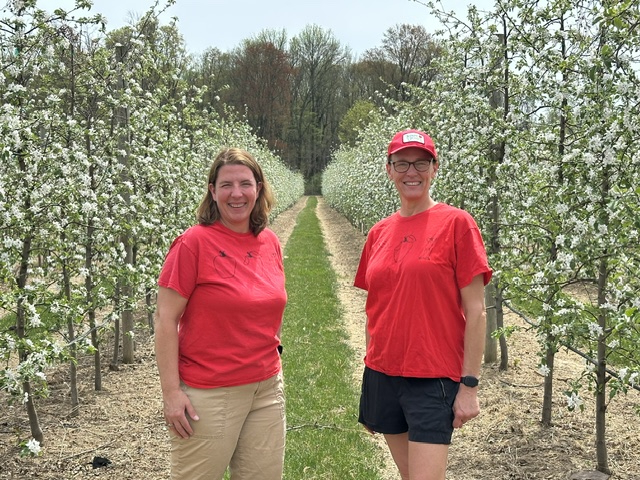
Tannwen Mount of Terhune Orchards said they’ll open pick-your-own up for tomatoes, potatoes, corn, peppers, and other vegetables for the first time to offset losses in other crops.
“As farmers, we have to pivot when Mother Nature throws us a curveball,” Mount said. “I think the message in farming, in these days of climate change, is that we have to remain diverse and still give opportunities for folks to come out and support local farming and enjoy the crops that we do have and enjoy the open environment.”
Farmers learned during the COVID-19 pandemic that pivoting to new offerings and strategies can be “really fun and really successful,” Mount added.
“So we’re trying some new things, and welcoming our community to come and support farming. And you never know — pick-your-own corn might be the next best thing!” she said.
Melick agreed some farmers will be forced to get creative, including relying more on pick-your-own and fall agritourism activities like corn mazes and pumpkin patches.
“It’s going to be a challenge all year,” Melick said.
That’s true too for the general public, who will find slimmer pickings and higher prices when they shop for fruit and other farm-fresh goods.
“With the economy the way it is, with inflation, people just think, ‘oh, the farmers are just trying to rip us off,’ but no, we just lost it all,” Giamarese said.
The public, though, can help farmers recover, he added.
“A great encouragement the farmers would have would be that consumers keep coming to us, even though we don’t have fruit,” he said. “We’re still going to have Jersey tomatoes and sweet corn, and that’s a pretty good portion of the taste of summer. So go to your farm market, support your local guys just like any other small business. We’re part of the community, and we want to stay here.”
Trenton, NJ