Alabama birth centers focus on mission as court battle over state regulations continues
May 26, 2026 | 6:01 am ET
Description
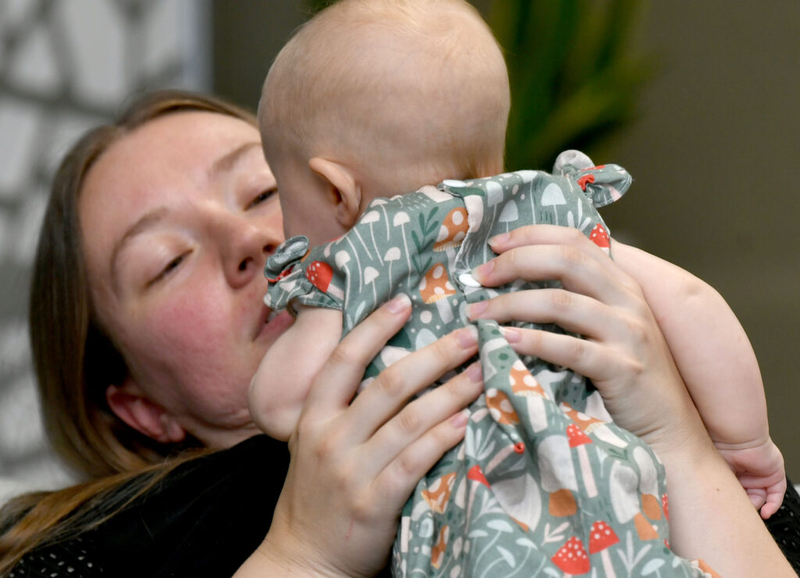
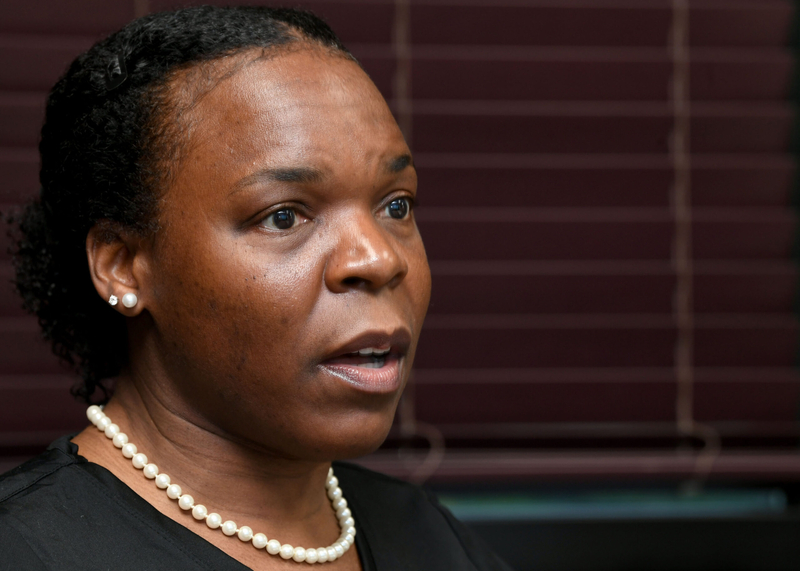
Sierra Edgil holds her daughter Ramona as she talks about her birth experience at the Alabama Birth Center on April 15, 2026 in Huntsville, Alabama. The state's birth centers are involved in lengthy litigation with the Alabama Department of Public Health over regulations ADPH says are necessary for the health of new mothers but which birth centers say are unnecessary and potentially devastating for their operations. (Eric Schultz for Alabama Reflector)
HUNTSVILLE — Last August, Anna Harshbarger gave birth to her son at the Alabama Birth Center in Huntsville — a normal method of delivering a child in her native country of Germany, but a non-traditional way in the United States.
She feared that she was “going to forget every English word I’ve ever learned and start speaking German,” but the team of five midwives and doulas made her feel more comfortable at every prenatal appointment, and the staff took time to get to know her and her husband.
“They took the time, Dr. [Yashica] Robinson explained everything, really got to know the ins and outs of us. When it came down to our birth, that’s what we needed too, because my husband completely lost his mind,” she said. “He was very worried and concerned, and they were able to calm him down. I think that wouldn’t have been the case with random people.”
Creating relationships like those Harshbarger experienced is what Dr. Robinson, the birth center’s founder and consulting physician, and Elisabeth Nussel, the center’s manager and a doula, aim to achieve with all patients.
“Under the midwifery model of care, we focus on the whole person, versus you’re just a pregnant patient coming in,” Nussel said. “After moms have their babies, and they come for the postpartum group, even then we’re connecting outside of the birth center, whether that be maybe you’re texting or we’re Facebook friends. We really become a family here.”
Alabama has long struggled with infant and maternal mortality, and Robinson believes that birth centers – through midwifery and doula care – can be part of the solution. But officials fear the proposed state regulations on the freestanding centers that currently operate as nonprofits could put their mission in jeopardy.
Robinson says this kind of community-based healthcare is needed amid ongoing provider shortages around the state. Only 30% of Alabama’s rural hospitals have labor and delivery units, leaving many expectant parents to drive long distances for care. Providence Hospital in Mobile announced on May 14 that it is closing its labor and delivery unit this summer.
“When you have midwives that can kind of help to share the load, as far as taking care of pregnant people, they can really focus on educating and spending time and learning. That will allow the obstetricians and the hospitals to be able to focus on the higher risk moms,” Robinson said. “If you add them to the ecosystem and really integrate them the way that it should be done, we would achieve what we all want to achieve, which is improving maternal and infant outcomes, especially in Alabama, just by spreading that load a little bit more.”
Harshbarger lives in Huntsville, but two other mothers that participated in the group interview live in surrounding rural towns, and considered crossing state lines to a birth center in Tennessee before they discovered the Huntsville clinic.
“I used to be terrified of pregnancy, and then I read Ina May’s Guide To Childbirth, and it was kind of like, wow, I’d really like to give birth on the farm, or cross state lines,” said Sierra Edgil, who gave birth to her daughter Ramona at the birth center. “But then I found this place, and it just aligned with what I wanted to do.”
Disputes over a state rule
The Alabama Birth Center and Oasis Family Birthing Center, based in Birmingham, sued the Alabama Department of Public Health (ADPH) in 2023 over a rule it made declaring that birth centers are hospitals and should fall under the regulation of ADPH.
ADPH proposed the rules partly because they had not been updated in 30 years. Midwifery was effectively banned in Alabama from 1976 to 2017. At the time, State Health Officer Dr. Scott Harris said the rules are meant to protect people.
“We believe the way to protect the health and safety of people is to have the physician involved in that process,” Harris said in 2023.
Multiple messages were left over the last month with the Attorney General’s Office, which represents ADPH, and Harris were left over the last month.
The proposed rules require birth centers to have oversight by a physician or medical director, and to be within 30 minutes of a hospital with OB-GYN services. Those requirements, the plaintiffs say, would make it difficult if not impossible to function.
“These requirements have nothing to do with safety, but they could make it financially unsustainable or impossible for birth centers to stay open and provide care, especially affordable care to their communities,” said Whitney White, an attorney with the ACLU Reproductive Freedom Project representing the clinics.
In January, the Alabama Court of Civil Appeals unanimous ruled that birth centers are hospitals under state law and subject to ADPH’s regulation, will remain in place.
On May 15, the Alabama Supreme Court declined to take up that main question, leaving the appeals court’s ruling in place. But the litigation will likely continue for years over other aspects of ADPH’s proposed rules, White said, noting there are 12 other complaints in the lawsuit that were put on hold during the appeals process. Those complaints will be addressed in the Montgomery County Circuit Court. As of Friday, the court had not taken any action.
Both birth centers are currently operating under temporary licenses granted by Montgomery Circuit Judge Greg Griffin in 2024.
“The Alabama Supreme Court’s decision not to hear the case was disappointing, but the case isn’t over,” White said. “For the moment the birth centers are open, patients are still able to get this care and we’re committed to continue fighting to ensure that access to midwifery care and birth centers remains available in Alabama long term.”
Dr. Karen Landers, chief medical officer from ADPH, in 2023 testified that ADPH are “experienced regulators when it comes to promotion and protection of citizens.” She said the purpose of these regulations are to ensure safety, quality and that meet the public’s expectations.
“If those types of standards are not met, then there is danger not only to the patient, but a violation of the public’s trust in us as persons who promote and protect the health of our citizens,” Landers said during a hearing in September 2023.
The rules ADPH has proposed are based on those that were in place in the 1980s with the addition of professional midwives, a profession that did not exist at the time, in a supportive role to nurse midwives and registered nurses. White said in a recent interview that while the rules acknowledge professional midwives, it still does not recognize their skill and independence.
“They’re taking away the ability for these midwives to practice consistent with their training and qualifications, which more than qualifies them to provide additional care without the kind of additional oversight and limitations that these regulations put in place,” she said.
She said the rules try to hold nurse and professional midwives to the same standard as obstetricians, which she said is not comparable.
“Obstetricians train for as long as they do, in part because obstetrics is a surgical specialty and they need to, and it is targeted towards making sure that obstetricians are equipped to diagnose and treat pathology and abnormality in pregnancy,” White said. “That simply isn’t what midwives are doing in birth centers. It’s exclusively low risk care and low intervention care focused on physiological birth.”
Still providing care
Birth centers provide an option to families and expectant mothers with low-risk pregnancies. They offer an environment similar to a home, rather than a hospital or doctor’s office. According to the American Association of Birth Centers, 0.3% of births take place in a birth center in the United States, where midwives and doulas take care of expectant mothers. All patients who give birth in birth centers are healthy and low-risk, while about 85% who give birth in hospitals are considered low-risk.
Alabama has long struggled with high maternal mortality and difficulties in accessing prenatal care. According to state data released in November, the state’s infant mortality rate was 7.1 babies per 1,000 live births in 2024, reflecting the rate of infants who died within their first year of life. That was down from 7.8 deaths per 1,000 births in 2023, according to state data. There were 414 infant deaths in 2024. Of those, 222 of the deaths were white babies and 176 were Black babies, the lowest recorded number for Black infants.
But infant mortality rates for Black Alabamians remain far higher than those of white Alabamians. The infant mortality rate among white Alabamians was 5.4 deaths per 1,000 live births in 2024. For Black Alabamians, the rate was 11.8 per 1,000. In 2023, the rates were 5.7 and 13.1 deaths per 1,000 births, respectively.
The infant mortality rate is much higher in rural counties like Wilcox, Butler, Conecuh and Hale in the Black Belt, and Cherokee County in the northern part of the state. Those counties have a higher rate of poverty than the state average and correlate with counties lacking hospitals that can deliver babies, according to the data.
“We know that starting care earlier is one of the things that’s going to help improve outcomes, because then we can identify anything that needs to be addressed early in the pregnancy, when it really makes the most difference,” Robinson said. “The other thing is transportation, that makes a big difference with the midwifery model of care. Not only do we slow things down, but we’re taking the midwives to the community, so that helps to build trust.”

Robinson said that when a patient comes to the Huntsville clinic, the midwives assess their medical history and determine the risk level of their pregnancy. Some conditions like high blood pressure, diabetes or a previous cesarean-section birth make a mother high-risk. Robinson said midwives are not allowed to care for high-risk patients under Alabama law, but the assessment is ongoing.
“It’s an ongoing risk assessment, because at each prenatal visit, the provider is constantly assessing those risks and making those determinations and re ensuring that the client continues to be low risk,” Robinson said.
Birth center patients can, and sometimes do, transfer to a local hospital. Nussel said that the Alabama Birth Center has not had an emergent transfer since it opened in 2024, but some mothers choose to transfer if they want pain management.
“We’re doing a lot of things proactively versus reactively. Anything can happen in labor – here, at a home birth, at a hospital,” Nussel said. “We’re not here to play God. We’re here to make sure that you and baby are safe, and if you and baby aren’t safe, that’s a conversation.”
A study by the Journal of Midwifery & Women’s Health, the journal of the American College of Nurse-Midwives, found that less than 1% of hospital transfers from birth centers nationwide are for emergencies during labor, and fewer were transferred after birth for emergencies.
The Huntsville clinic assesses each patient on a case-by-case basis. Mary Carolyn Last, a mother from Falkville who used the clinic, participated in a hybrid model of care and said she received all of her prenatal care from the birth center. She gave birth to her daughter Sabrina in a hospital.
“I used the midwife care here, and then I gave birth in a hospital,” she said during a group interview. “I would have given birth here if my insurance had covered me.”
As a nonprofit organization, the clinic is able to use grants to provide financial assistance since it does not accept health insurance, Nussel said. She said that 83% of the clinic’s patients have requested financial assistance, and all have received some form of aid.

A full package – which includes prenatal care, birth classes, vaginal delivery, postpartum care and postnatal home visits – costs about $10,200. According to CareCostIndex, the average cost of a vaginal delivery in Alabama is $10,700 without insurance, about $2,000 less than the national average. With insurance, the average cost is $2,100 in Alabama.
Harshbarger said that it was important to her family to have a choice, and the birth center gave it to them.
“I think it’s important to point out that to have the choice as a family to be able to say this is what feels right for us,” Harshbarger said. “If I am low risk, then I should be able to choose this route for my family and not have to cross state lines.”
Nussel believes that the community-based model of care, in partnership with traditional hospital care, will help improve maternal and infant mortality in Alabama by filling gaps in care.
“If we can focus on the low risk patients, and that opens up so many more opportunities for those high risk patients who are waiting to get in … There could be problems that are being missed,” Nussel said. “When you think about the labor and delivery units that are constantly closing in the state, what’s the solution to follow up with? Birth centers are the solution.”
Last said the “deserts of care are just enormous in this state.”
“We definitely were happy with this decision even before the delivery,” she said.
Being able to meet her baby on her own terms made the difference to Edgil. She said it would not have been the same at the hospital. At a hospital, expectant mothers are not allowed to eat in case they need an emergency cesarean-section. At the birth center, there is a kitchen where Nussel said families will bring crockpots and make themselves at home.
“When you think of reproductive rights, you think of abortion and access to birth control, but I think choice of where you have pregnancy is just as important. You can only meet your baby for the first time once, and that should be on the mom’s terms,” Edgil said.
This story was updated Monday at 3:23 p.m. to remove a child’s name for privacy and correct the opening date of the Alabama Birth Center.
Montgomery