After farmers return to State House, lawmakers advance $45 million agriculture bond
Apr 07, 2026 | 5:17 pm ET
Description
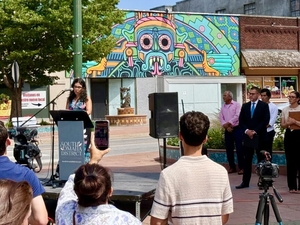
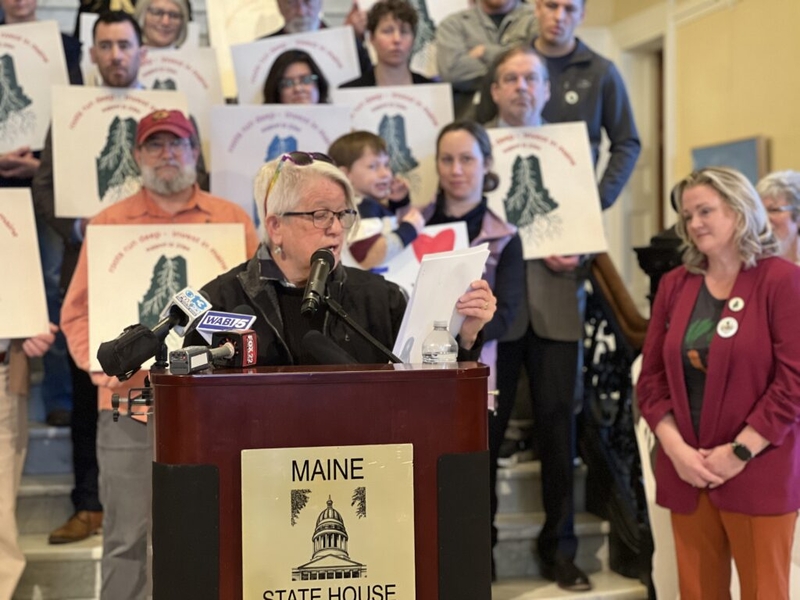
Penny Jordan, a farmer from Cape Elizabeth, speaks in support of a proposed $40 agriculture bond. (Photo by Eesha Pendharkar/ Maine Morning Star)
After failing to get the necessary votes to advance a multi-bond package last week, Maine lawmakers are taking another crack at it, this time trying for only one agriculture bond.
The Senate took the bond bill, LD 2094, up again Monday, and approved a floor amendment that stripped it down to just the $45 million bond for agriculture, farming and forestry programs.
One day later, the majority of the House of Representatives agreed to the changes, though it remains unclear if enough lawmakers will support the proposal for the bond to ultimately be sent to voters.
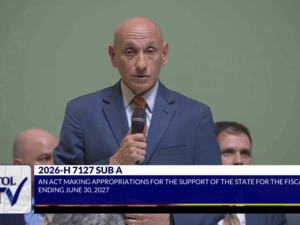
On the House floor Tuesday, Rep. Sharon Frost, an unenrolled lawmaker from Belgrade, said Maine has lost over 100 dairy farms since 2015.
“I’m not a farmer, but I’m here to support the farms,” Frost said. “And I’m not a logger, but I’m going to support the loggers. And I don’t fish, I don’t catch lobster, I don’t raise mussels or oysters, but I’m here to support those heritage industries. So I hope that we can pass this ag bond.”
The amendment came after farmers returned to the State House Monday, for the second time in three weeks, to rally in support of the funding, urging lawmakers to take it up as a standalone bond.
Ashley Marshall, who is working to start a dairy farm with her husband in Jay, said the programs funded in the bond would “without a doubt” help them get the business started.
“It costs a lot to get in it, let alone the cost of production in general is hard for those that are already established to stay in business, so it’s a huge financial hardship, really, for farmers here in Maine,” she said.
Erica Emery, a vegetable farmer in Farmington, said for her, the bond is about “shoring up” farms that are already in business.
“I just want to get this bond on the ballot because I think voters would support this, and right now this is caught up in bureaucratic, whatever, cluster-mess,” she said. “Maine voters would totally vote this in. We just need to get it on the ballot.”
Crispy blueberries, flash drought: Maine farmers seek support with extreme growing conditions
The Appropriations and Financial Affairs Committee voted along party lines to approve a large bond package in late March. The amended version of LD 2094 included funding for agriculture, the University of Maine System, housing programs and more.
The committee didn’t need the five Republican members’ support to vote the package out, but Democrats do need bipartisan support to meet the two-thirds threshold for enactment to get a bond on the ballot.
Annie Watson, a dairy farmer and president of the Maine Dairy Industry Association, said supporting the state’s food system is not a partisan issue.
“I think there is a tremendous amount of interest in supporting our rural communities, especially from the people who represent those communities, but I think some of it is just getting lost in political translation, so to speak,” she said. “So we’re trying to remind folks that these are businesses that are a major part of our economy, a major part of our rural communities, and so investing in these businesses is well worth the expense.”
Watson said the bond is an investment in the future of farms and rural communities.
“It is getting even more and more increasingly difficult and expensive to farm here in Maine,” Watson said. “So we’re really hoping that this influx of investment into infrastructure will not only help lower our production costs, but also give future, next generations, the opportunity to continue farming.”
The package that came out of committee totaled $207 million in bonds — something House Republicans took aim at in floor discussions. They argued that it was simply too large, given that Maine’s total bonding capacity is $210 million.
“I’m opposing this even though there are things in here that may be helpful in certain areas,” said Rep. Jack Ducharme (R-Madison) before the initial House vote in March. “And the reason I’m opposing is it kind of feels like we’re using up all of our bonding capacity before this administration goes out the door, and I’m really concerned about leaving that type of thing going on, it feels like running your credit cards up before you file bankruptcy and I’m just not interested in doing that.”
The bill got initial approval in the House and Senate, but when it came time for the crucial enactment vote in the House last Tuesday, it failed to get the necessary support of two-thirds of lawmakers present.
But with the latest Senate amendment reducing LD 2094 to just the agriculture bond, the bill has a second chance at passage.
Rep. Mark Cooper (R-Windham) said Monday that he agreed with those in his party that said this funding should be a permanent item in the budget, rather than a bond that will incur interest, but he would support it because farmers need the funding, especially after dealing with droughts last year.
“I realize that nobody really likes a bond, and a bond does push it on,” Cooper said. “This is our one chance to help support agriculture and forestry.”
On the House floor Tuesday, Rep. Daniel Ankeles (D-Brunswick) offered an amendment that would add a transportation bond back into the bill, and said it would be “profoundly wasteful” to pass a bond without transportation funding.
However, that amendment failed after a 64-83 roll call vote.
The final vote in the House was 91-56, an increase of almost 20 votes in favor from the initial vote on the previous version of the bill, but still short of the two-thirds majority it will need for enactment.
And in the Senate Monday, the bill passed without a roll call, so it’s unclear whether the bond will reach the threshold to get on the ballot in November.
Rep. Bill Pluecker (I-Warren), who sponsored the measure, said ahead of the Senate vote Monday that he is hopeful the bill can get the bipartisan support it needs.
“We’re looking at food prices going up, supply chains going wonky, looking at cost of energy going up, fertilizer going up — our food supply as a nation is in a perilous state and so investing as a state in our farmers right now is more important than ever,” he said.
Augusta, ME