NC property tax moratorium, on collision course with county budgets, heads for final vote
Jun 09, 2026 | 8:20 pm ET
Description
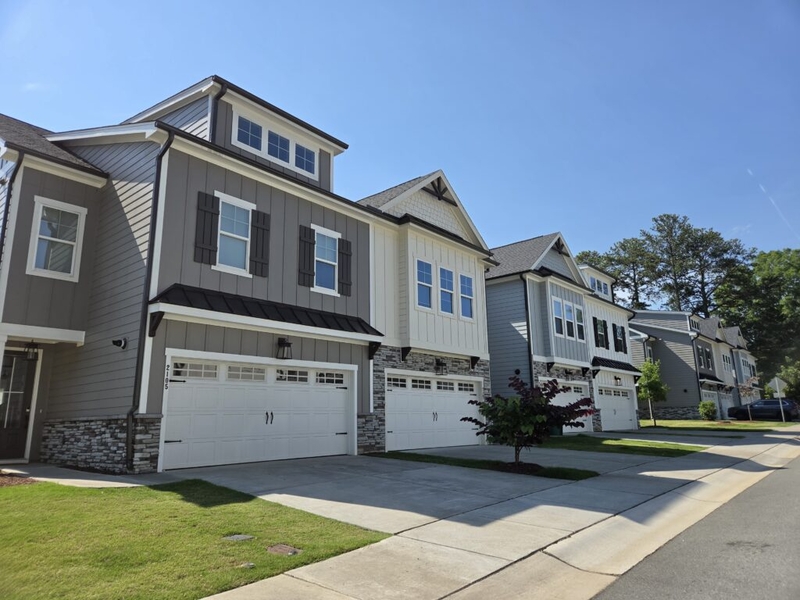
Photo: Clayton Henkel/NC Newsline
The North Carolina House on Tuesday approved a controversial proposal to block some local governments from using new property tax revaluations in 2026. Senate Bill 889 was approved on a 72-42 vote on second reading. A final House vote is scheduled for Wednesday.
The vote followed a spirited debate along party lines. The strongest support came from Republicans, while most Democrats spoke against the legislation, insisting that it would harm the counties affected. Nonetheless, five Democrats crossed the aisle to vote in favor of the bill.

“I strongly believe that this bill is shortsighted to attempt to ease short-term financial pain,” said Rep. Tracy Clark, a Democrat from Guilford County, one of the counties that would be affected by the bill.. “It will cause catastrophic trickle-down effects to all of the vital services uplifting Guilford County, from our schools to our public safety and beyond.”
Clark said the legislation would cause Guildford County Schools to lose $58 million in the upcoming fiscal year.
“We continually, in this building, make our public schools do more with less, and the fact that we have no state budget and we’re now passing this moratorium to prevent our county from doing what they need to do to pass their budget,” said Clark, a public school parent. “Taking away $58 million from Guilford County schools? I think it is disgusting and a disgrace.”
Guilford officials and some Democrats also questioned why House Republican leaders sat on S889 for five weeks, waiting to hear it until just days before June 30, when most counties are required to approve new budgets.
Meanwhile, Republicans argued that S889, which grew out of growing concerns about rising property taxes, is needed to help tax-burdened residents stay in their homes while legislators craft more comprehensive property tax reform proposals in the coming months.

“I think it’s incumbent upon this body to try to address the immediate problem while we grapple for solutions to the long-term problem,” said Rep. John Blust (R-Guilford).
According to Blust, the bill would now affect eight or nine counties, including his district. The last count was 12, but several counties were removed from the legislation.Blust said if counties are concerned about losing revenue due to the moratorium, they can simply raise their tax rates on existing property values to bring in what they need..
“If that’s what you say you need for your budget, you’re just gonna have to adjust your tax rate accordingly and be honest with people,” Blust said.
If S889 isn’t approved, low-income homeowners will be hurt the most, he said.
“The lower-value houses went up at about twice the rate that the upper-value houses went up, and over twice the rate that commercial property went up,” Blust said. “If these new values are used, we are pushing the property tax burden down on the little guy and the low-income guy.”

Rep. Amos Quick (D-Guilford) said Democrats and Republicans agree that property taxes are too high and that something must be done to lower them.
“But if you would please excuse my grammar, this ain’t it,” Quick said.
He pointed to the impact the legislation would have on Guilford County Schools, and said the county is too far along in its budget process to make such significant changes.
“I’m a 12-year school board member and vice chairman from Guilford County before being elected here, and I know for a fact that almost $60 million in funding being removed from Guilford County schools would directly impact the delivery of the educational services that we provide to our families and to our children,” Quick said.

Rep. Eric Ager is a Democrat who represents Buncombe County, another county that would be affected by the proposal. He said state lawmakers must take responsibility for North Carolina’s high property taxes because a lack of state funding is the reason county commissioners are having to increase taxes to meet demands for services.
“The reason that they’re having to take a little bit more property tax and a little bit more property tax and a little bit more property tax, is because here at the state level, we are falling down on the job,” Ager said. “We have decided that big tax cuts and cutting our revenue into a place where we don’t have any money, or that’s what we hear, is the solution.”
Clark noted that Senate Bill 474 has been rewritten as a companion bill to make changes to the moratorium, but it was not heard in the House on Tuesday. Leaders in Buncombe County have voiced concerns about having to defer property tax revenue while they’re still grappling with the impacts of Hurricane Helene.
“I do hope that if this bill passes, that we continue to push for 474 to make sure that Helene-impacted counties are not doubly punished,” Clark said.
If the measure gains final House approval Wednesday, it goes to Democratic Gov. Josh Stein, who could veto it and send it back to lawmakers, sign it, or allow it to become law without his signature.
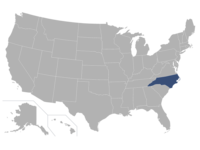
Raleigh, NC