FY27 budget heads to Gov. McKee’s desk after Senate approval
Jun 09, 2026 | 7:13 pm ET
Description
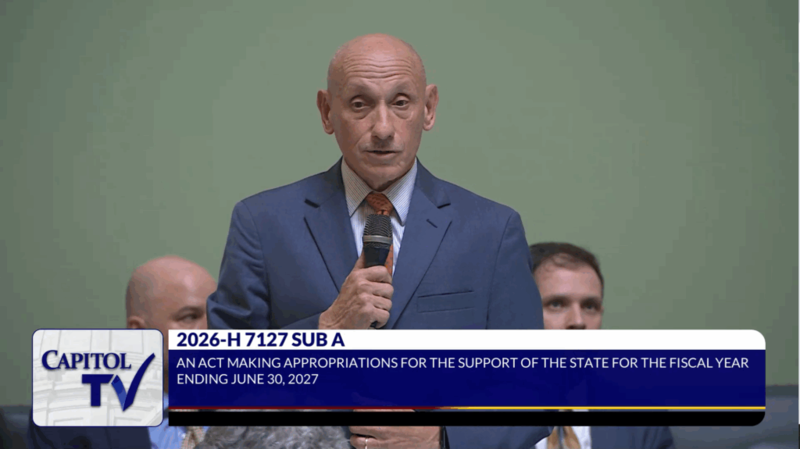
Senate Finance Committee Chairman Louis P. DiPalma, a Middletown Democrat, speaks during the debate on Tuesday, June 9, 2026. (Screenshot/Capitol TV)
A $15.2 billion budget — the highest state spending plan on record — heads to Gov. Dan McKee’s desk, following the Rhode Island Senate’s approval Tuesday.
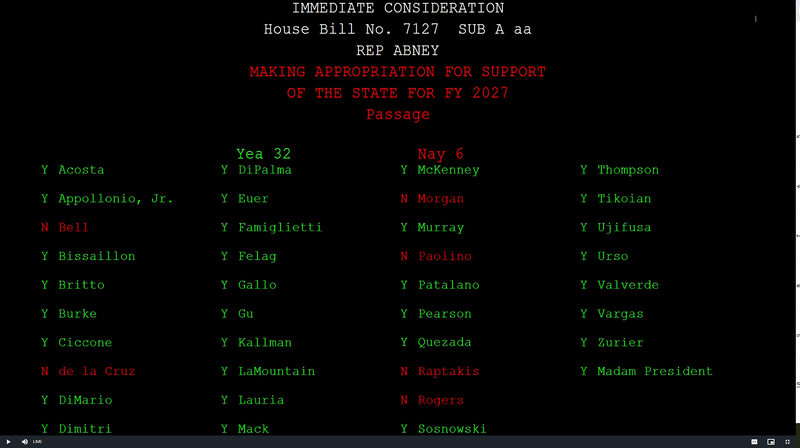
The upper chamber’s 32-6 vote followed more than two hours of debate and a dozen failed amendments, including three Republican-led attempts to strike down or weaken the millionaire’s tax headlining the fiscal 2027 budget. All four chamber Republicans voted against the budget, along with Democrats Sam Bell of Providence and Leo Raptakis of Coventry.
The Senate’s blessing marks the penultimate hurdle for the tax-and-spend plan ahead of the July 1 start date. But where McKee stands remains in question — especially because last year he declined to sign the budget, letting it take effect without his signature.
The governor’s office did not immediately respond to requests for comment Tuesday.
The budget features a 1% increase in taxes on income over $1 million, followed by 1% increases in the next two years, rather than the 3% hike in one year McKee proposed in January. Lawmakers explained the phased-in approach would strike a balance between revenue generation that offsets federal funding cuts and economic and business development.
Taxing top earners has dominated debate throughout the legislative session, including across the rotunda on Friday, where the Rhode Island House of Representatives reviewed and ultimately approved a carbon copy of the spending plan, again with opposition from its 10 Republican members.
More robust debate ensued in the upper chamber Tuesday regarding the budget’s changes to state energy regulations. An amendment introduced by Sen. Dawn Euer, a Newport Democrat, narrowly failed, by a 16-22 vote that united progressives and Republicans in a failed attempt to protect ratepayers from bearing the cost for roadpaving work by the utility company.
While state utility regulators have effectively prevented the utility provider, Rhode Island Energy, from recouping profits based on mandatory curb-to-curb paving associated with utility work, the budget reverses that protection, Euer said.
Senate Finance Chairman Lou DiPalma, a Middletown Democrat who opposed the amendment, urged lawmakers to wait and address the issue when they reconvene in January when there was more time to describe Euer’s seemingly last-minute amendment.
Lawmakers’ revised fiscal 2027 spending plan preserves many of the hallmarks of the proposal McKee unveiled in January, like a new state tax credit for middle and low-income families with children and eliminating the minimum age requirement for retirees to avoid paying state income taxes on Social Security benefits.
But legislators declined to extend the additional tax relief McKee proposed for high-income retirees by eliminating the income tax. They also axed McKee’s pitch for a gubernatorial line-item veto, and proposed increases in cigar and cigarette taxes. And they reversed McKee’s controversial attempt to weaken state renewable energy and energy efficiency mandates,
Much of the spending focuses on the social service and healthcare programs now under new strain from the One Big Beautiful Bill Act and accompanying federal policy and funding decisions.
“This is one of the best budgets I’ve seen considering what we’ve been dealing with from the federal government,” said Sen. V. Susan Sosnkowski, a South Kingstown Democrat.
Increased aid to hospitals, schools
There’s more money for hospitals and healthcare providers to offset the cost associated with a rise in uncompensated care due to restricted Medicaid access and to counteract rising premiums facing enrollees in the state health exchange. The Rhode Island Public Transit Authority also received extra attention — and funds — although not by changes to the gas tax or Newport cruise ship fees, as McKee proposed. A new state inspector general’s office, with a 12-person staff, will also be set up to oversee executive government spending, ensuring efficiency and preventing fraud and waste.
This is one of the best budgets I've seen considering what we’ve been dealing with from the federal government.
On education, the budget increases state aid to local school districts with higher numbers of low-income students, while setting aside more than $700,000 in a new fund to train educators to work with multilingual learners.
Education-minded senators Jonathon Acosta, of Central Falls, and Ryan Pearson, of Cumberland, noted existing flaws with the convoluted education funding formula, urging their colleagues to consider holistic improvements next year.
“I think the budget tees us up to come back with a critical eye in the future,” Acosta said. “I will begrudgingly say, while I am not necessarily infatuated with the budget, I am appreciative of some of the investments we’ve made here.”
Education, housing and economic development are also in line for parts of a $600 million boost under a five-question series of bonds headed to voters on the November ballot. The bond questions also include $40 million for a state history center.
I think the budget tees us up to come back with a critical eye in the future. I will begrudgingly say, while I am not necessarily infatuated with the budget, I am appreciative of some of the investments we've made here.”
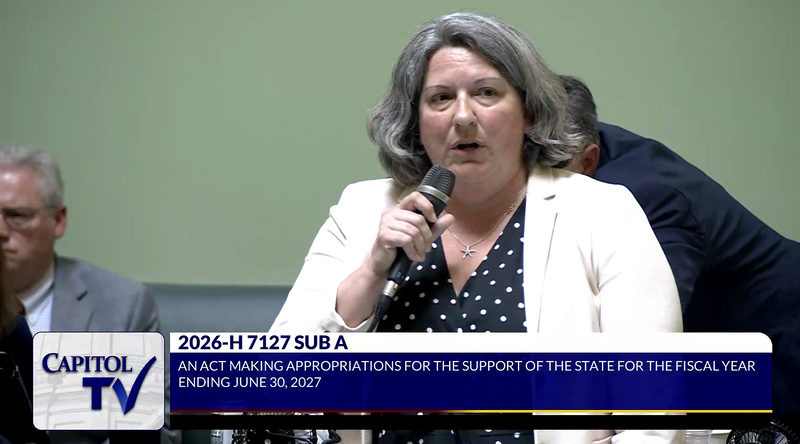
Senate Minority Leader Jessica de la Cruz, a North Smithfield Republican, critiqued not only the contents of the budget, but the timing of the chamber’s vote. She urged lawmakers to wait until the final day of the legislative session, now expected on Thursday, June 11, to allow for a more thorough vetting of the sweeping proposal. The chamber has waited until the final day of the legislative session in recent years before approving a budget, though it is not required.
“There’s no emergency that compels us to vote tonight,” de la Cruz said. “A bill of this consequence deserves more than a few hours between the committee vote and the floor vote.”
Greg Pare, a spokesperson for Senate President Valarie Lawson, said the chamber scheduled the vote Tuesday in anticipation of “considerable debate.”
“We expect to have lengthy calendars in the next few days and want to move business along expeditiously while also affording ample opportunity for rigorous discussion on every issue,” Pare said in a text Tuesday night.
Providence, RI