Moore vs. Lisonbee: What’s at stake in the GOP race for Utah’s 2nd Congressional District
Jun 10, 2026 | 7:03 am ET
Description
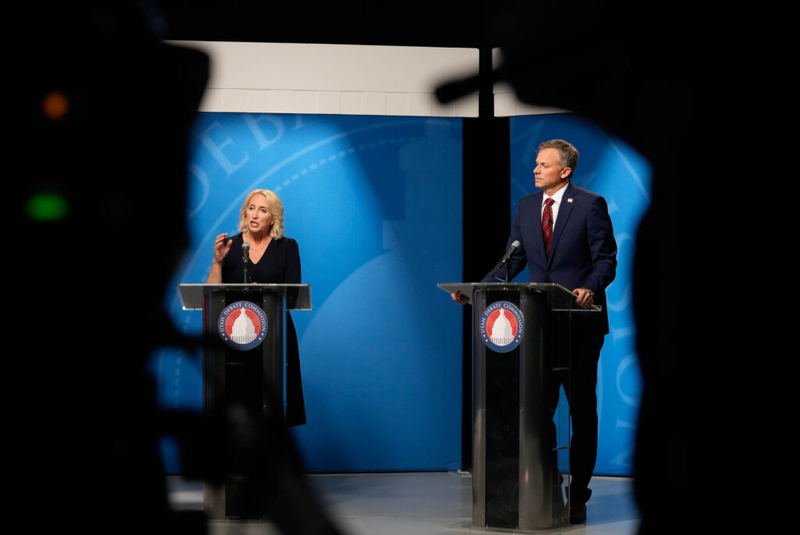
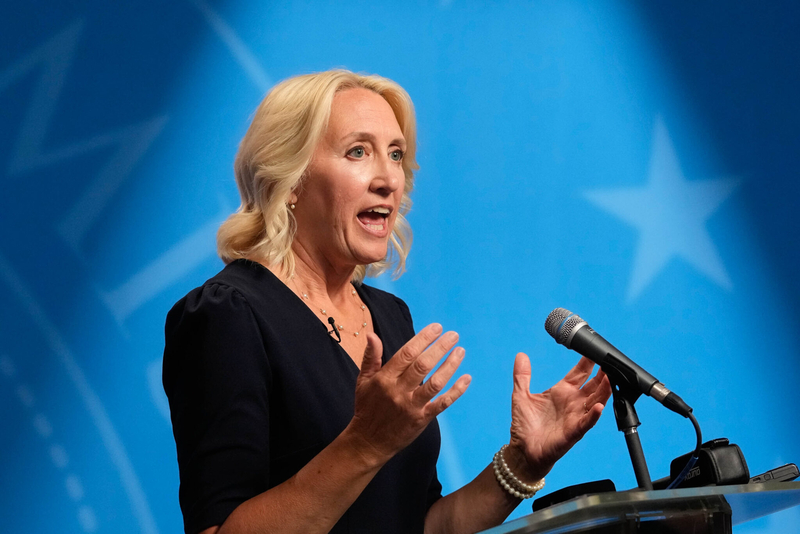
Candidates Karianne Lisonbee and Blake Moore participate in the 2nd Congressional District GOP primary debate in Salt Lake City on Monday, June 1, 2026. (Pool photo by Francisco Kjolseth/The Salt Lake Tribune)
The Republican contest between incumbent congressman Rep. Blake Moore and challenger state Rep. Karianne Lisonbee is entering its final stretch, with by-mail ballots already hitting Utahns’ mailboxes ahead of the June 23 primary.
More than any other congressional race this cycle, redistricting has been a key issue in the 2nd Congressional District GOP primary, with Lisonbee frequently attacking Moore over his past involvement with Better Boundaries, the anti-gerrymandering group that successfully sought a 2018 ballot initiative to create an independent redistricting commission and ban partisan gerrymandering.
The ‘fascinating’ dynamics in play for Utah’s 2026 congressional primaries
A yearslong lawsuit over the GOP-controlled Utah Legislature’s moves to sidestep that voter-approved law and its independent redistricting commission’s map recommendations eventually led to a court-ordered map that turned one of Utah’s four congressional districts blue for the 2026 midterms — but also deepened conservative control over the other three red districts.
Moore and Lisonbee are competing to be the Republican contender in the November general election for the new District 2, which stretches from Davis and Weber County to the northernmost corners of the state along the Idaho border.
Because of the deep red makeup of the district, the winner of Utah’s GOP primary is likely to go on to prevail in the November election — but there will still be four other general election contenders, including Democrat Peter Crosby, Libertarian Daniel Cottam, Independent American Carlton Bowen, and unaffiliated candidate Robert Moesinger.
As Moore and Lisonbee make their final appeals to voters with less than two weeks to go until the primary, Utah News Dispatch interviewed both candidates to discuss the biggest issues at play in their race.
What’s at stake? Moore’s leadership roles vs. Lisonbee’s pitch to disrupt the status quo
Moore has touted that he’s the “first Utahn ever” to be elected to U.S. House or Senate leadership when he became vice chair of the House Republican Conference. Moore is also the first Utah Republican to serve on the powerful House Ways and Means Committee, which writes tax policy.
“I’m giving an outsized voice to Utah,” Moore said. “We’ve never had anybody in leadership before, and I earned a spot to do that because I can give Utahns an outsized voice, be a part of the agenda making, right? And it’s been unique.”
On the House Ways and Means Committee, Moore said he played a key role in extending the 2017 Trump tax cuts.
“It was a really tough feat. It was very difficult to get on that committee,” Moore said. “And I got onto it at the very time we were going to have a chance to extend (the Trump tax cuts), and we didn’t just extend it. We made it permanent. And that will give the economy and … families and job providers some consistency going forward. It’s very important.”
Moore argued that example showcases a “promises made, promises kept” track record, and “you don’t see that much in politics.”
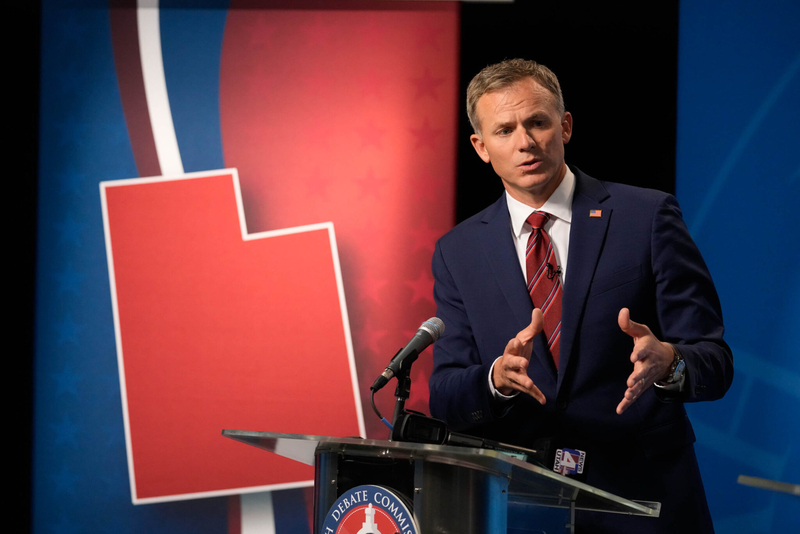
Lisonbee has argued that she can show better leadership than Moore by being a disruptor rather than a “get along to go along candidate.”
“Leadership is absolutely much more than a position. It’s really how you show up for your constituents,” Lisonbee said, arguing that people in northern Utah have told her that “they are not seeing Blake serve them, show up for them, come back and do in-person town halls, be accountable, have important conversations and go back to D.C. and actually follow through on what he says he’s going to do.”
Lisonbee argued that Moore hasn’t done enough to tackle the national debt, which has topped $39 trillion and counting.
“We are on an unsustainable trajectory, and every dollar that Congress deficit spends diminishes the value of the dollars that hardworking Utahns earn,” Lisonbee said. “So I absolutely think there needs to be actual, real conservative leadership in D.C. that understands that issue and that will work to reform processes and make sure that we are reining in out-of-control federal spending.”
Redistricting
Lisonbee’s campaign has repeatedly gone after Moore for his role as a co-chair of the 2018 Better Boundaries initiative known as Proposition 4. Though Lisonbee has said she opposes gerrymandering, she argued the independent redistricting commission took “power away from elected officials,” the Legislature, which she argues has the sole constitutional authority to draw political boundaries in the state.
Both Lisonbee and Moore disagree with the district court judge’s ruling that enacted a map drawn by the lawsuit’s plaintiffs for the 2026 elections rather than one drawn by the Legislature, after that judge determined the Legislature’s proposed remedial map failed in multiple ways to comply with Proposition 4’s neutral map-drawing standards.
Data centers, redistricting and Great Salt Lake take center stage in Republican CD2 debate
Moore argues that the judge should have repeatedly asked lawmakers to redraw the map rather than adopting an alternative, because he also argues only lawmakers have the constitutional authority to redistrict. He said he’s “frustrated” that her ruling came right before the deadline for a map to be adopted in time for the election, and that left no time for a second redraw, which he said “would have been totally reasonable.”
Moore stands by his past involvement with Better Boundaries because he also opposes gerrymandering, and he said at the time of the Proposition 4 initiative most states were moving toward independent redistricting reform. He has argued that Republicans “can win on candidates and policy, we don’t need to manipulate too much to do it.”
“It’s a principled decision I took,” Moore said. “It’s not my fault that the judge ruled the way she did. I don’t agree with the judge’s final decision, and I’ve made that very clear. But this is politics, and challengers will use whatever they feel like they can use, even if it’s not, you know, perfectly directed or accurate about where the blame should go.”
Lisonbee criticized Moore for standing by his support of redistricting reform.
“I truly can’t tell whether he’s naive or gaslighting the public,” Lisonbee said during last week’s debate. “To suggest that because Blake gifted a … congressional seat to the Democrats in Utah that Gavin Newsom will now magically decide to give a seat to the Republicans in California, or pick your blue state. It’s just not good policy.”
In response, Moore said at the time of his support of Proposition 4, he “had no idea how anything was going to play out,” but he also noted it’s “important to remember back in 2018, most of the states in the U.S. actually were moving to some type of redistricting reform. … That was in red states, blue states, purple states.”
Moving forward, Moore said policymakers need to decide how to handle redistricting.
“Is this going to be sort of a race to the bottom? Or are we going to rise above this?” Moore said. “I don’t know how that plays out.”
A pundit’s prediction
Taylor Morgan, a political consultant with the Utah-based lobbying and public affairs firm Morgan & May, told Utah News Dispatch in an interview Tuesday that even though he thought Lisonbee performed better than Moore did during their televised debate last week, she faces an uphill climb to beat Moore that he doesn’t think she’ll overcome.
Utah Republican Party delegates pick challenger over congressional incumbent, split on another
“Ultimately, I think Blake Moore is going to win the primary election by a very comfortable margin,” Morgan said, predicting it will be in the “double digits.”
He pointed to Moore’s advantage as an incumbent with high approval ratings and support (including endorsements and fundraising) from the U.S. House majority’s leadership political action committee and House Speaker Mike Johnson, R-Louisiana, along with President Donald Trump’s endorsement.
Morgan also said Lisonbee’s campaign has been “focused on trying to tear down Blake Moore rather than promote herself or her ideas or her positions.”
“That never, ever works against a popular incumbent,” Morgan said, while noting Lisonbee also faces a challenge with name recognition compared to Moore. Lisonbee, however, said she doesn’t see herself as an underdog.
“I’m definitely working harder,” she said, saying that she’s showing voters her work ethic by campaigning in all five counties in the district “to make sure that I’m hearing their concerns and responding to them.”
Lisonbee said she’s seen some polling “that actually was very positive for me and showed that I win on an informed ballot. So we’ve been working hard to make sure that the ballot is informed.” She also said the new congressional boundaries could also give her more of an advantage than previous congressional boundaries because the new district “shifted more conservative, and I think that is an advantage to me as a conservative.”
Moore said he’s focused on staying on his “message,” which is communicating to voters his track record and the importance of Utah keeping its “outsized voice” in leadership.
“I’m focused on making sure that I can continue to be productive,” Moore said. “I’m confident that we’ll get another chance to be in the next term, and we’ll be solely focused on ensuring that (the Republican Party) can maintain the majority. As a member of leadership, that’s a really strong motivation for me. … I’m in the best position to serve northern Utah and also help us win the majority.”
Salt Lake City, UT