Superintendents, advocates push back on Landry’s proposed school funding cut
Description
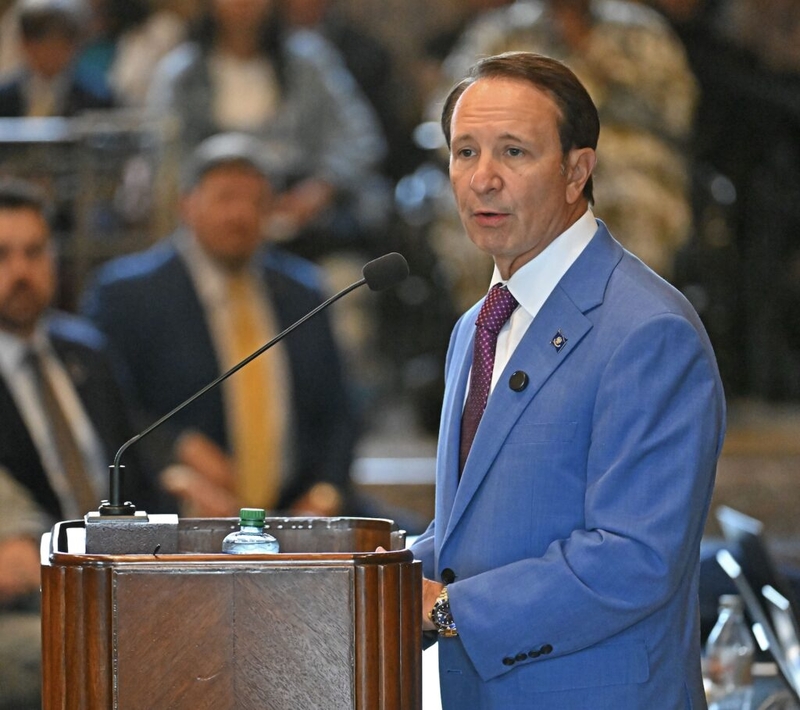
Gov. Jeff Landry has proposed moving $168 million in school district operating funds to preserve teacher pay stipends next school year. School system leaders and education advocates shared their concerns about the plan at the Board of Elementary and Secondary Education meeting Tuesday, June 9, 2026. (Hilary Scheinuk/The Advocate, Pool)
A wide range of public education leaders and advocates, representing traditional systems and charters, expressed frustration Tuesday with Gov. Jeff Landry’s plan to shift $168 million from K-12 school operations to another round of teacher pay stipends.
The overall reduction in school funding will affect classroom instruction and could lead to layoffs, particularly in rural areas with less financial reserves, they said.
“What I heard … is we’re not cutting fat. We are cutting meat,” said Kevin Berken, R-Lake Arthur, vice president of the state Board of Elementary and Secondary Education who represents Southwest Louisiana.
Berken spoke at the state school board’s first public discussion of Landry’s proposal to avoid a teacher pay cut. The governor wants to transfer money from K-12 schools that covers operational costs — such as insurance, building maintenance, grounds upkeep and general administration — to keep stipends worth $2,000 for teachers and $1,000 for school support staff in place for the 2026-27 school year.
Two-thirds of each chamber of the Louisiana Legislature must approve Landry’s plan. The lawmakers have until 5 p.m. June 23 to vote on the proposal.
Louisiana lawmakers continue to boost prison spending while leaving teacher pay cut in place
The governor said the $168 million in operational funding should be easy to divert from what he characterized as bloated central school district offices. At a news conference last week, he criticized school systems for increasing administrative spending while teacher compensation lagged over the years.
“Our classroom teachers are actually making less money today than they did in 1988 when you adjust for inflation,” Landry said.
Spending on Louisiana schools has continued to grow even as enrollment has fallen. The school workforce has increased 6% over the past decade though the number of public school students dropped 7% statewide, according to The Times-Picayune.
But school district superintendents, charter school advocates and the state’s largest teacher union pushed back Tuesday on the notion that schools can absorb a $168 million cut in operational funding without affecting students in the classroom.
“What if this causes us to lose jobs? We don’t know the true impact,” said Larry Carter, president of the Louisiana Federation of Teachers, who has not endorsed the governor’s plan.
School leaders said more state mandates on schools, special education students and required expenses such as insurance have led to increased spending outside of teacher compensation.
“Reducing $168 million in [school operations funding] will impact staffing,” St. Charles Parish School Superintendent Ken Oertling said at the BESE hearing. “It will impact programs. It will impact processes. These are not idle dollars.”
As an example, Oertling said his school’s health insurance costs have risen from around $400,000 annually in the 1980s to $40 million currently.
The district has also seen its number of developmentally delayed students go up 35% and the number of students with an autism diagnosis rise 30% over the past three years, he said. Those children require more staff to serve, according to Oertling.
Under the Landry proposal, the average school district’s reduction in state funding would amount to about 5%, according to Beth Scioneaux, who oversees finances for the Louisiana Department of Education. Each school district’s reduction would equal the amount of funding required to offer pay stipends to its staff, she told BESE members.
This means traditional school systems will lose anywhere from $107,000 in Tensas Parish to $11 million in Jefferson Parish.
Among the charter schools directly the state school board oversees, the reductions would range from $3,200 at Louisiana Key Academy in Metairie to $627,000 at Acadiana Renaissance Charter Academy in Youngsville, according to information the state education department provided.
Landry has limited through an executive order where funding can be cut. It cannot come from dollars that support classroom instruction, school transportation, food services or security.
The governor’s executive order also requires schools to use their savings or reserve funding to lessen the impact of the funding reductions “where feasible.” Landry has said school systems are sitting on $1.8 billion of unassigned money currently.
School leaders said Tuesday the governor doesn’t have a good understanding of how public school financing works. Some school districts use that funding to make payroll and cover their bills through the first half of the school year while they wait on a large chunk of their tax revenue to appear. Several also rely on large reserves to help them through emergencies, such as natural disasters.
“We have some charters that have larger fund balances because they are always one step away from a hurricane,” said Caroline Roemer, executive director of the Louisiana Association of Charter Schools.
Scioneaux said school systems have been encouraged to carry a fund balance of at least 7.5% of their total budget as a “best practice,” but some districts have struggled to maintain that amount. For example, the Madison Parish School District — which is already on a corrective financial plan — has zero dollars in savings, she said.
“Some of the smaller school systems that we already know have some challenges with their funds, this will just add to their challenges,” Scioneaux said.
The Louisiana Federation of Teachers, the state’s largest teachers union with nearly 21,000 members, expressed frustration that Landry’s stipend extension wouldn’t go to all school employees who have received stipends in the past.
The governor’s plan calls for spending $30 million less on stipends than the past three years. Last week, the governor said his proposal intentionally excludes school administrators from the stipend extension because they make far more money than teachers.
School nurses, therapists and counselors who have previously gotten stipends would also be left out under Landry’s proposal, according to the education department.
“That is a pay cut for people who have helped move Louisiana forward,” Carter, the union president, said.
In general, school superintendents and other advocates said they are bewildered that Landry and lawmakers are contemplating a reduction to K-12 schools’ funding when Louisiana has been climbing in national education rankings.
In May, Landry celebrated Louisiana’s math and reading test score improvements alongside state Superintendent Cade Brumley. Schools leaders said those eye-catching results are the product of strong leadership and more spending on public education.
“You have to admit when we had all of that COVID money come in, that’s when we’ve seen some of the biggest results,” Roemer told the state school board. “That’s what’s gotten you great results on the backs of teachers and kids. And so now your answer is to cut all of that?”
BESE member Preston Castille, D-Baton Rouge, agreed. He leads a network of charter schools.
“Now that we are having success, don’t fix what’s not broken,” he said.
Baton Rouge, LA