State of Iowa certifies 2026 election results, with no changes from unofficial results
Nov 24, 2026 | 3:06 pm ET
Description
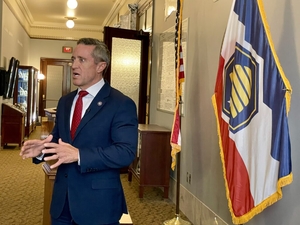
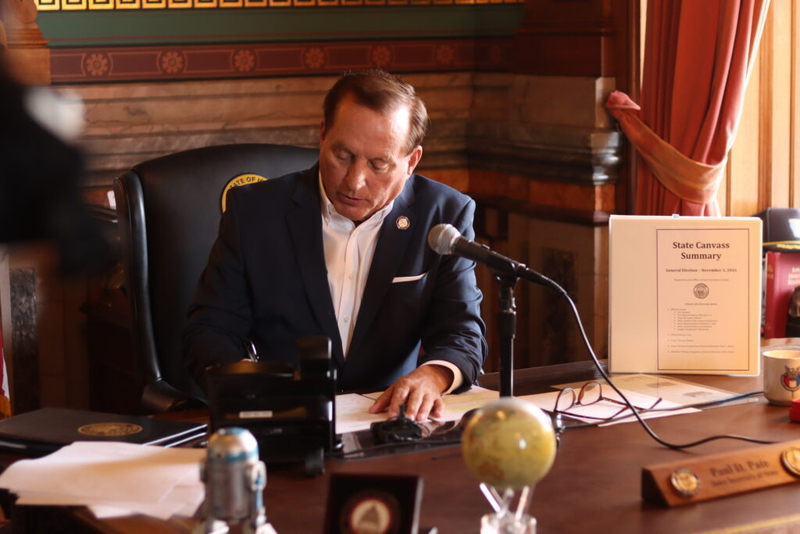
Iowa Secretary of State Paul Pate spoke with reporters in his office at the Iowa State Capitol Nov. 24, 2026, with other members of the Iowa State Board of Canvass joining virtually, to certify the results of the 2026 midterm election. (Photo by Cami Koons/Iowa Capital Dispatch)
Iowa State Board of Canvass certified election results Tuesday for Iowa’s Nov. 3, 2026 election, which saw a voter turnout of 62.35%.
Iowa Secretary of State Paul Pate said there had been a “shift more and more” toward early voting, and this most recent election showed that more early voters are choosing to vote in person at the auditor’s office or at satellite sites. Nearly 30% of all ballots were cast in person before Election Day, according to Pate.
The board’s certification is the final step for the state in all races and issues on the ballot, aside from the governor and lieutenant governor race, which will be canvassed by the Legislature at the start of session. Certificates for federal positions, U.S. Senate or U.S. House of Representatives, will be sent to respective offices in Washington, D.C.
Bailey Kelley, the state director of elections, said Tuesday there was one recount this election, in Pottawattamie County for an Iowa House race. The recount found no discrepancies, meaning Republican Rep. Brent Siegrist maintained his seat in the House.
“Overall, there were no balancing discrepancies to report for the 2026 general election,” Kelley said.
Winneshiek County had the highest voter turnout, according to Pate, with 70.34%.
Pate said overall, there were about 12% more ballots submitted in this election compared to the last midterm election in 2022.
He attributed the high turnout to the competitive nature of the races on the ballot and the millions in advertising spent in Iowa for the election. According to reporting from the Des Moines Register, there was about $525 million spent on 2026 election ads in Iowa. Pate said “it was a pretty expensive election cycle, to put it candidly.”
“When you have an open governor’s race and an open U.S. Senate race and several congressional races, the way they were situated, I think there’s something for everybody, and then on top of that, a constitutional amendment,” Pate said. “That should have been appealing enough to get a lot of people out to vote.”
According to the Secretary of State, about 36% of all ballots cast were absentee ballots and of those, about 23% were sent via mail.
“So satellite voting … was a bigger channel than the mail was,” Pate said.
He said he believes part of this change has to do with voter concerns of whether or not the “mail moves fast enough.”
Mail-in voting has also been targeted by the Trump administration, which sought to add regulations to the process.
Moving forward, Pate said there is always some “technical tweaking” to be done following an election, but he said “nothing major came out” of the election in terms of process. Pate said the state had about 10,000 poll workers.
Pate said his office is still analyzing demographic data from the election and finalizing legislative priorities for the upcoming session, which begins in January.
Des Moines, IA