Colorado to seek 6-month grace period for new Medicaid work requirements
Nov 24, 2026 | 3:26 pm ET

Description
(Getty Images)
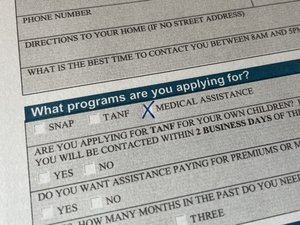
Colorado will seek a six-month delay on enforcement of new Medicaid work requirements as officials build capacity to fully review enrollees’ eligibility.
That means recipients of Medicaid, the health insurance program for low-income people, will not lose coverage until July if they can’t prove to the state that they work a required number of hours every month or are otherwise exempted.
“Colorado is grateful to take the ‘hold harmless’ option so that we can prevent members from losing coverage due to the new federal work requirements for the first six months of 2027,” Adela Flores-Brennan, the Colorado Medicaid director, said in a Monday statement. “We will use this time to help our members understand how to meet the new requirement, work out operational concerns, offer additional training for eligibility staff and get additional guidance from” the Centers for Medicare and Medicaid Services.
CMS announced on Nov. 13 that it would delay enforcement of the new Medicaid work requirements for states that opt in. The One Big Beautiful Bill Act from 2025 requires that adults covered under Medicaid through the Affordable Care Act expansion earn $580 or complete at least 80 hours per month of work, volunteering or other qualifying activities. About 377,000 of the 1.2 million Coloradans on Medicaid are in that expansion population, according to Colorado’s Department of Health Care Policy and Financing.
“We have heard directly from states about their implementation timelines, impediments to successful launches at scale, policy updates, operations, and overall readiness,” Daniel Brillman, the CMS director of Medicaid, wrote in the letter announcing the “hold harmless” option. “We are aware that leading up to January 1, 2027, and continuing thereafter, states are and will be actively identifying and addressing deficiencies, such as updating eligibility determination logics and system-generated notices, and mitigating challenges to maintain compliance with timely eligibility operations.”
He wrote that states should use reliable existing data and automation as much as possible to determine if Medicaid enrollees satisfy work requirements. Colorado is already planning to do that, officials said during an October briefing with reporters. People will be able to self-attest to their work activities during 2027, but Colorado will have to start verifying work hours in 2028.
Health First Colorado launched an online self-screener tool for Coloradans on Medicaid to determine if they are subject to the new requirements.
Denver, CO