Proposed right-of-way authorizations for Alaska LNG project draw skepticism
Nov 19, 2026 | 6:06 pm ET
Description
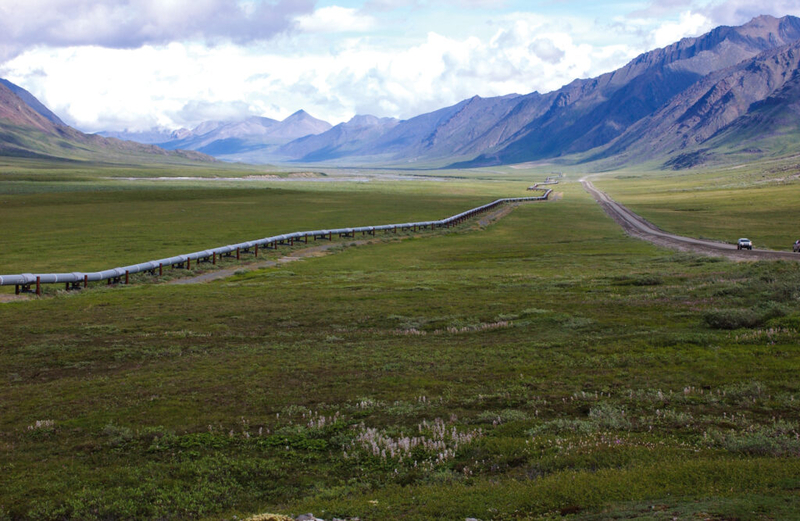
The Trans-Alaska Pipeline is seen in the northern Brooks Range on June 20, 2007. Running along the pipeline is the Dalton Highway. The pipeline passes through state and federal land. The Alaska Department of Natural Resources is proposing to expand land rights along the route to the entity proposing to build a massive natural gas pipeline project. (Photo provided by the U.S. Geological Survey)
The outgoing Dunleavy administration is seeking to grant important land rights to the would-be developers of a massive project to ship natural gas from the North Slope. But the idea has gotten pushback from state lawmakers, who are skeptical of the need for such action right now, before any financial commitments to the megaproject have been secured and in the last weeks of Dunleavy’s term.
At stake is a right-of-way lease covering state territory along the 807-mile route that would be used for a new natural gas pipeline from Prudhoe Bay to the proposed site of a liquefaction plant at Cook Inlet, along with a right-of-way lease covering the 63 miles that would be used for a connector pipeline from the Point Thomson field on the Eastern North Slope to Prudhoe Bay.
Standard right-of-way authorizations give lessees control over pipeline routes, under state law, and such authorizations would be necessary for the Alaska natural gas project to be built.
The Alaska Gasline Development Corp., a state-owned entity that for years was the lone sponsor of the massive gas pipeline project, has held conditional right-of-way leases along those corridors since 2021.
Now the Department of Natural Resources is proposing to convert those conditional leases into standard leases, which are broader and less restrictive than the tentative conditional leases, under state law.
The conversion is important to accomplish now, AGDC President Frank Richards told state lawmakers at a hearing in Anchorage on Nov. 17.
“These parties understand the magnitude of constructing an 807-mile pipeline across Alaska. They expect land rights to be in place to support construction and operations before making long-term commercial and financing commitments,” Richards said.
The application for conversion was submitted seven weeks ago, and DNR issued its proposed decision to grant it on Oct. 23. The decision, signed by DNR Commissioner John Crowther, said conditions justifying the change had been met and converting the leases “is in the best interest of the state.”
A 30-day public comment period on the proposal ends next Wednesday, and public hearings are scheduled for Monday and Tuesday.
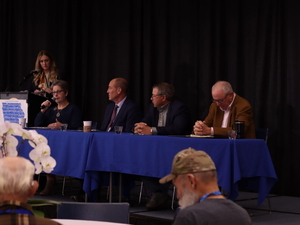
That timing drew criticism at the Nov. 17 hearing of the state House and Senate Resource committees, where Richards, Crowther and other officials testified.
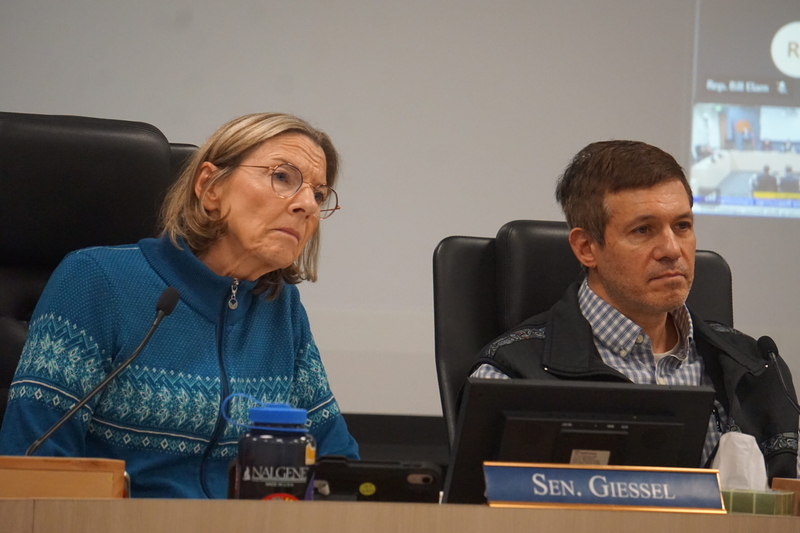
“We do feel that this is a rushed process,” Sen. Cathy Giessel, R-Anchorage and chair of the Senate committee, told Crowther. “The public testimony is on Monday and Tuesday, and written (comment) is required by the end of the day on Wednesday of a national holiday week. I realize that complies with the 30-day structure, but it’s hard to look at that and not call this rushed when the public is probably doing other things during a national holiday week.”
Some legislators asked about the intertwined relationships between the groups proposing to build the project.
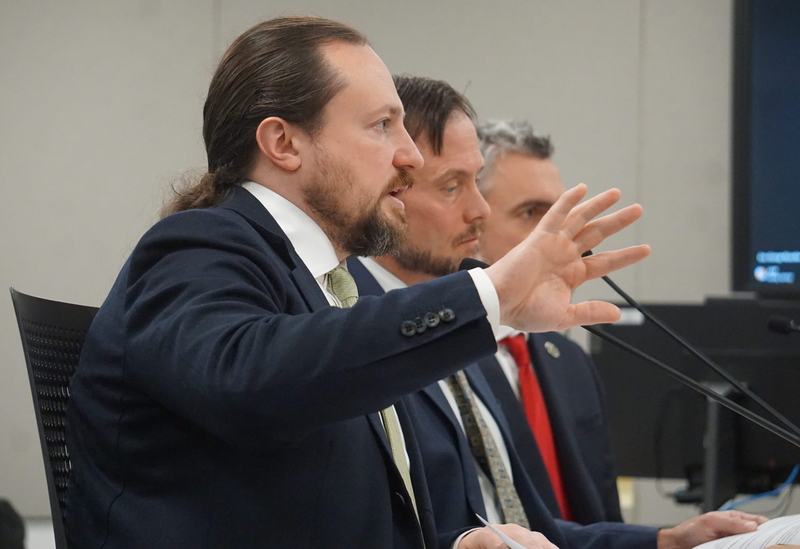
Rather, it was submitted by 8 Star, the partnership between the Glenfarne Group and AGDC. Glenfarne, a Texas-based investment company, entered the project in early 2025 and acquired 75% of AGDC’s share of the project; 8 Star is 75% owned by Glenfarne and 25% by AGDC.
Although Richards said AGDC has been working for two years to convert its right-of-way leases into something more permanent, 8 Star’s application was submitted very recently, on Oct. 2.
The arrangement between AGDC, Glenfarne and 8 Star “just seems incredibly confusing,” said Sen. Matt Claman, D-Anchorage.
“We have this possibility that an entity that has no agreement with AGDC may use a pipeline corridor to build a pipeline. They’re not the lessee,” he said. And there is “somebody from 8 Star writing on Alaska LNG letterhead, not their own letterhead. It just seems like a very disorganized and confusing process here in the last days of the Dunleavy administration,” he said.
‘What’s the rush?’
Like Giessel, other lawmakers said the process appeared to be rushed.
They pointed out that no entity has made binding commitments to finance the project, which would cost $44.5 billion to $54.5 billion, according to Glenfarne’s estimates, and no entity has made a final investment decision.

Sen. Bill Wielechowski, D-Anchorage, posed a nearly identical question.
“What’s the rush? This seems like a little bit of a rush before the next governor takes office,” Wielechowski said.
Neither AGDC nor Glenfarne has ever built a gas pipeline, and neither has demonstrated the financial wherewithal to meet normal requirements of an entity granted this type of right of way, he said.
He listed some of those requirements, which include demonstrated financial ability to minimize impacts to the environment, wildlife and adjacent private property and an ability to perform cleanup and dismantling tasks, among other qualifications.
Crowther, in response, said the participation of AGDC — a state entity rather than a private corporation — made the process unusual.
“We are dealing with a unique project in terms of scope and consequence, and unique applicant in terms of statutory authority,” he said.
The department is trying to ensure that authorization and land rights are granted “in a way that continues to push the project forward and that advance its chances of success in, at times, a kind of incremental and step-by-step manner,” he said.
The Nov. 23 hearing on the right-of-way proposal will be online, while the Nov. 24 hearing is scheduled to be held in person at the Alaska Housing Finance Corp. office in Anchorage. Written comments are due by 5 p.m. on Nov. 25.

Juneau