Lawmakers call for promise of campaign neutrality if the tax is raised to fund IWiLL
Nov 19, 2026 | 6:15 pm ET
Description
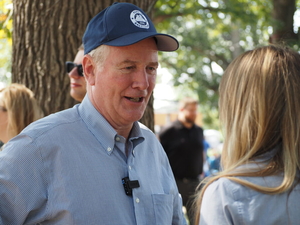
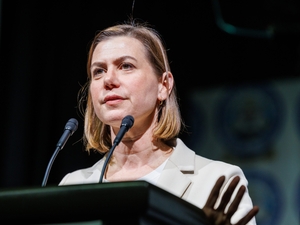
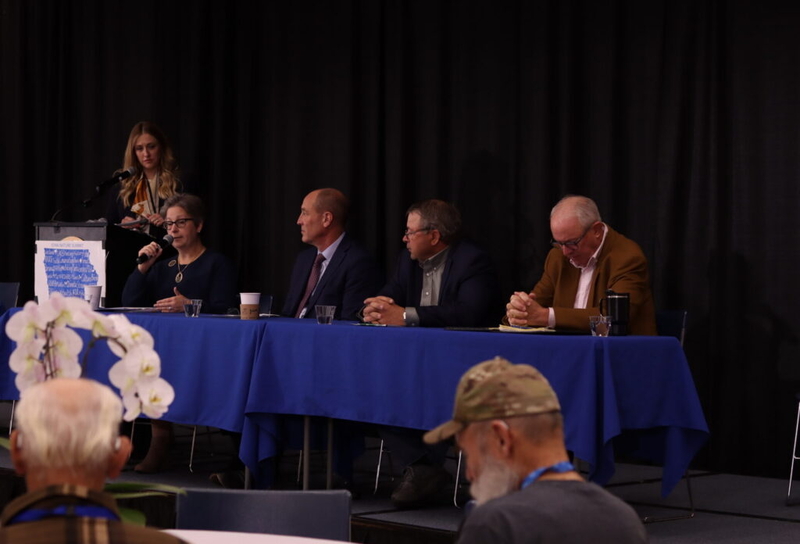
Lawmakers speak at the Iowa Nature Summit Nov. 19, 2026 in Des Moines. From left, Anna Gray with Iowa Natural Heritage Foundation, Rep. Heather Matson, Rep. Chad Ingels, Rep. Norlin Mommsen, and Rep. Kenan Judge. (Photo by Cami Koons/Iowa Capital Dispatch)
Iowa lawmakers said Thursday that if the Legislature is to raise the state sales tax to fund a natural resources and conservation trust, they will need to reach an agreement that raising the sales tax won’t become a future damaging campaign issue.
Environmental groups, Iowans and candidates on both sides of the aisle in the recent election have advocated for the Legislature to levy the tax increase that would fill the Iowa Water and Land Legacy, of IWiLL, trust that voters approved in 2010.
The fund would support natural resources projects for clean water, sustainable agriculture, soil health and other outdoor-related opportunities.
Rep. Chad Ingels, R-Randalia, said Thursday during a panel at the Iowa Nature Summit that the necessary three-eighths of a cent sales tax increase has not been raised, in short, because “we have a significant portion of our caucus that is resistant to any kind of tax increase.”
Iowa’s sale and use tax rate has not increased since 2008, according to the state department of revenue.
Ingels said he believes a “big part” of the conversation around funding IWiLL is about what will happen with the other five-eighths of a cent if tax is raised.
“If we increase the sales tax, we’re not going to just increase it three-eighths of a cent to fund the IWiLL,” Ingels said. “It’s going to be a penny increase.”
Ingels said he predicts there will be a call among lawmakers to use the remaining portions of the tax increase to “reduce the tax burden somewhere else” such as local property tax or “some other portion of state government.”
In the Nov. 3 election, Iowans approved a constitutional amendment to make it more difficult for lawmakers to increase personal and corporate income taxes. Opponents of the amendment argued the provision would lead lawmakers to instead turn to revenue increases like sales tax and other fees to address the state deficit.
Rep. Heather Matson, who was recently elected to the Iowa Senate, mentioned the amendment and said if the Legislature is going raise the sales tax for IWiLL, lawmakers need to be “willing to actually fund things in this state that need to be funded” like natural resources, healthcare and education.
“It’s obviously hard to raise a tax as a legislator,” Matson said. “I think what there has not been, in my opinion, the political will of too many elected officials over the last decade or more, to get this done. I think that there are a lot of people coming into this Legislature, plus the governor-elect, who care deeply about this, that are going to be willing to have hard conversations within their caucus to get the votes we need to do it.”
Rep. Norlin Mommsen, a Republican from DeWitt, noted that while he was supportive of the IWiLL amendment, “nowhere on the ballot that I voted for did it talk about a tax increase.” That information was presented on the longer explanation of the constitutional amendment that was posted at election sites, he said, but not on the ballot.
Mommsen said when the initial constitutional amendment was drafted, lawmakers could have “put in the fine print” that with its passage, a 1% sales tax increase would be initiated, and lawmakers over the past 15 years also could have chosen to fund the trust.
“But they chose not to do that,” Mommsen said. “… There’s been different parties in charge of the trifecta over that time, so there’s been multiple opportunities for people to do it. And basically, at the end of the day … nobody wants to see the postcard in the mail that says ‘Rep. Mommsen raised your sales tax, so kick his ass out of the Legislature.’”
Polling from Iowa’s Water and Land Legacy, a coalition pushing for lawmakers to fund IWiLL, found that 69% of Iowa voters support raising the state sales tax to fund the trust.
Ingels agreed with his colleague and said “there’s going to have to be agreement that it’s not going to be a campaign issue” if the measure is going to move forward this year.
Rep. Kenan Judge, D-Waukee, said Ingels “hit the nail on the head.”
“We have to quit looking at each other as: this is a good party or that’s a bad party,” Judge said. “That’s when our best legislation is going to get done.”
He also agreed with Ingels that lawmakers need to figure out where the other five-eighths of a cent will go, “but it’s probably going to need to go to help balance our budget in these coming years.”
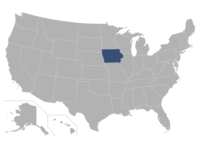
Des Moines, IA