Disability program providers, families urge state to keep funding support services
Nov 19, 2026 | 6:09 pm ET
Description
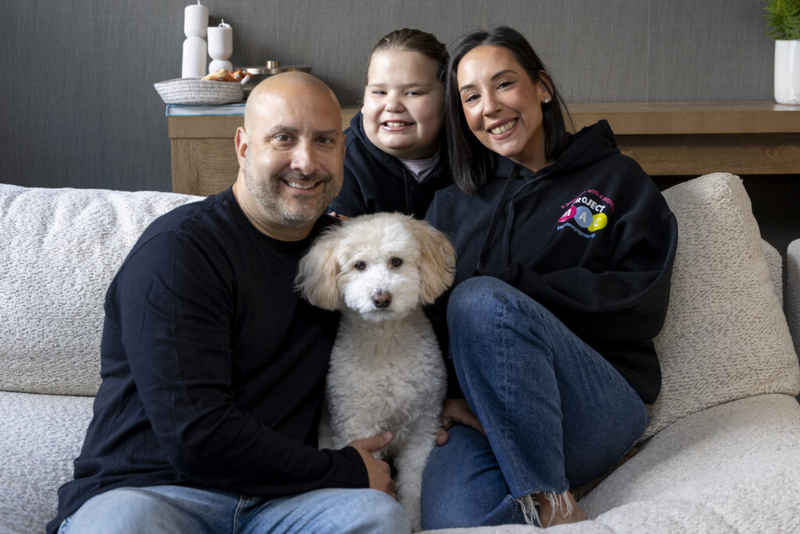
Marc Caponi, Marni Tanenbaum, 10, her mom, Randi Meltzer, and their dog, Gary, pose for a photo in Marlboro on Nov. 7, 2026. Caponi and Meltzer founded Project MAC, which hosts art, music, and social skills classes for disabled adults and other members of the public. Such programs may be at risk as the state seeks to ensure compliance with federal Medicaid rules. (Photo by Anne-Marie Caruso/New Jersey Monitor)
Organizations that provide exercise, life skills and other programs for adults with disabilities continue to urge the state to keep paying them for this work, months after New Jersey officials began to more closely scrutinize how disability services are funded under Medicaid.
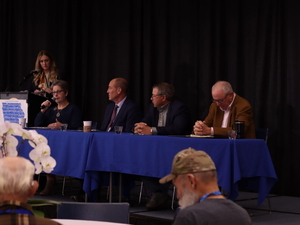
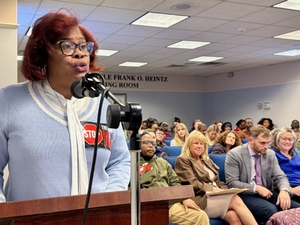
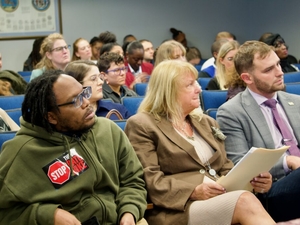
Roughly 20 program operators and relatives of people with disabilities told the New Jersey Council on Developmental Disabilities during its quarterly meeting Thursday that the shift in state payment practices could endanger their livelihood as business owners, and also leave disabled individuals languishing at home.
The last meeting had just six public speakers, chairman Paul Blaustein said, but this time the council had to bring in more chairs and limit the time of each speaker. The council is not a state agency, but an independent, federally funded group that advocates for people with disabilities and provides input on policy issues.
Judy Rosenberg said programs at JTB Consulting, in Maywood, which runs various life skills classes, have been a “lifeline” for her 34-year-old autistic son. “He would have little to no human contact, no ability to make friends,” she said.
James Paoletti, a co-founder of Spectrum Sports, which operates specialized fitness programs in several south Jersey locations, said more than 100 clients have lost access to their services since the state started questioning reimbursements and not paying them for some clients.
“And that number continues to grow,” he said.
Services for disabled adults in New Jersey are funded through Medicaid, with individual budgets based on a person’s needs. Families work with program coordinators to select care and services from a list of approved organizations.
Groups that provide specialized services, like medical care, speech therapy and behavioral health, are available only through licensed Medicaid providers. Add-on services designed to ease or improve the life of a disabled resident — like a microwave or a swim class — are available as goods and services through licensed vendors. JTB and Spectrum are considered vendors.
As payments for goods and services soared, increasing five-fold over five years, according to the state, Medicaid officials at the Department of Human Services took a closer look at this spending, starting this past summer. Vendors can set their own rates, while Medicaid providers get paid based on a state schedule.
Vendors who operate programs started seeing denials in late summer for services that had long been reimbursed by the state. Some, like Spectrum Sports, were told their rates were too high; others learned they were not integrated enough with the community at large.
Jonathan Seifried oversees the Division of Developmental Disabilities within Human Services, and is a member of the disabilities council. He stressed Thursday that there has been no state policy change.
“What we are doing is applying longstanding Medicaid rules consistently,” he said. “It’s clear how much classes mean to individuals and their families.”
Seifried said programs that “build confidence and community” align with the state’s goals and he encouraged program operators to work with the states to figure out how to ensure quality programs remain covered.
“There is a safety aspect to this as well,” he said, noting that while Medicaid providers must submit to background checks and undergo extensive safety training, this is not required for vendors.
“We’re committed to high-quality programs in a way that is safe and compliant,” Seifried said.
Program operators are worried the changes will endanger their livelihoods, however.
Randi Meltzer and her fiance Marc Caponi operate Project MAC, a vendor that hosts art, music, and social skills classes for disabled adults and other members of the public, and has been denied state payment recently for some services. Meltzer, who was not at Thursday’s meeting, worries what this will mean for clients, but also for her 10-year-old daughter who has autism and will need services like this someday.
“I’m building this program for her for her future. And like, if they take this away when my daughter ages out of the school system, she will have nothing,” Meltzer told the New Jersey Monitor earlier this month.
Several speakers at Thursday’s meeting said the state has failed to clearly communicate the policy, leaving program operators and parents struggling to navigate the system and secure services for their loved ones, even if those services have been paid in the past. Others stressed the need for families to have more programming choices. They urged the council to speak with state officials on their behalf.
Tina Marie Morisco, a special education teacher with JTB Consulting, complained of unanswered emails and inconsistent guidance. “We’re not asking for everything to be approved,” she said, “we’re asking for transparency and consistency.”
Brianne Baker, another educator with JTB, said there are few programs like theirs, with options that appeal to people “with a curiosity and passion for learning,” stressing that “one size does not fit all.”
“Removing access to these options hurts life-long learners and makes our community less,” she said.
Trenton, NJ