Money begins to flow in fight over threshold for South Dakota constitutional changes
Oct 02, 2026 | 5:05 pm ET
Description
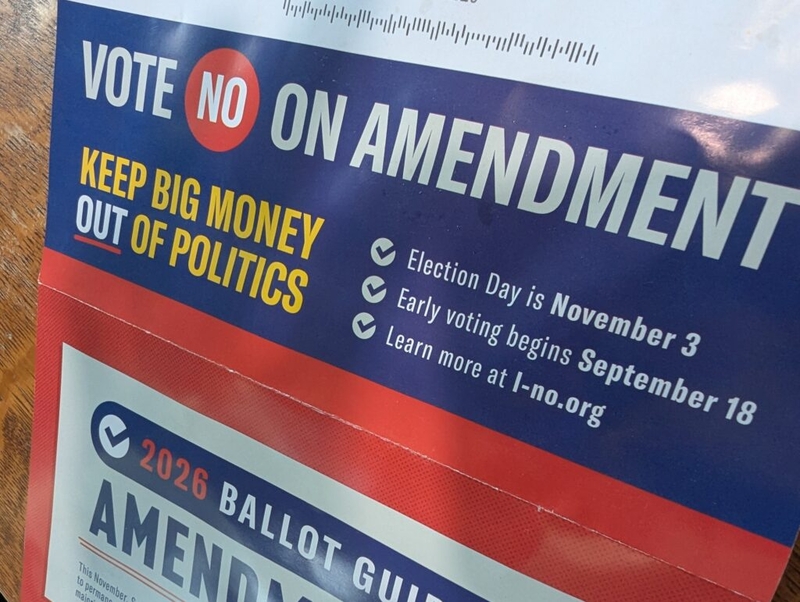
Mailed campaign materials from L-No, a South Dakota ballot question committee formed to opposed a measure that would require 60% voter approval to change the state constitution. (John Hult/South Dakota Searchlight)
The backers of a South Dakota ballot measure that would make it harder to change the state constitution accused their opponents this week of misleading voters with campaign ads tying the measure to “out-of-state billionaires.”
The spokesperson for the opposition called the allegations “comical.” The ads are a nod to how much more expensive campaigns for ballot measures would become if it took more votes to pass them, he said.
The dust-up highlights the role out-of-state funders and interest groups have had in recent debates about direct democracy in South Dakota, which was the first state in the U.S. to allow citizens to change laws through initiatives and referendums.
If a majority of voters support it during the general election, Amendment L would change the constitution to require 60% of voters to back any future attempt to change it at the ballot box. The amendment would not change the threshold for passage of citizen-initiated measures or referendums, which deal with laws rather than the constitution.
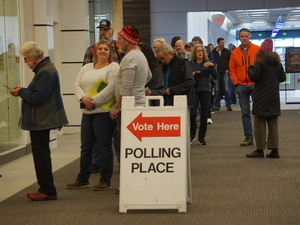
This year’s election is Nov. 3, advance voting is underway, and the voter registration deadline is Oct. 19.
Backers: Grassroots effort to protect constitution
Things like the expansion of Medicaid or the legalization of recreational marijuana — both of which have appeared as constitutional amendments on general election ballots in South Dakota — don’t belong in the state constitution, said state Rep. John Hughes, R-Sioux Falls, who sponsored the 2025 resolution that lawmakers passed to put Amendment L on the 2026 ballot. He argues changing the state’s foundational document ought to be more difficult than changing its laws.
Hughes, a Sioux Falls attorney, is a member of a ballot question committee called Save Our South Dakota Constitution that was launched to support Amendment L. On Tuesday, he sent a cease-and-desist letter to four media organizations that had been airing an advertisement opposing Amendment L.
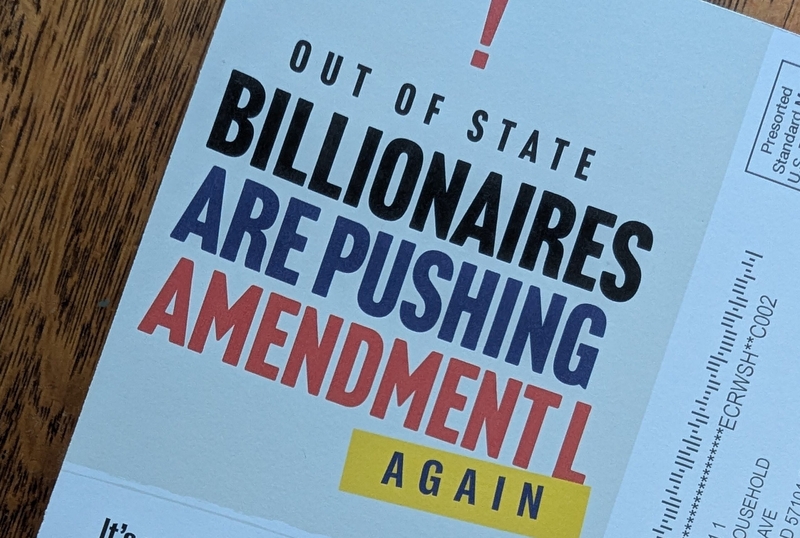
“Out-of-state billionaires and their lobbyists are coming to South Dakota, pushing Amendment L,” the ads say. “They’re trying to change the South Dakota Constitution again.”
The letter asks station managers to pull the ads for being misleading.
The ads “contain multiple false and materially misleading statements that are defamatory” to the ballot question committee and “associated individuals,” Hughes’ letter said.
Hughes told South Dakota Searchlight his committee doesn’t get its money from out-of-state donors but is supported by a “grassroots coalition” that includes the groups Protecting South Dakota Kids, South Dakota Family Voice, the South Dakota Retailers Association and South Dakota Right to Life.
Hughes said he’s upset about the ads in part because he believes out-of-state money is backing the ads calling out his side for having the support of wealthy out-of-staters.
“We hardly have two nickels to rub together,” Hughes said.
T.J. Nelson, a lobbyist from Sioux Falls, testified on behalf of the 2025 resolution to put the amendment on the ballot.
Podcast: Pros and cons on a ballot question to raise the bar for changing the state constitution
He did so as a lobbyist for the Foundation for Government Accountability, a think tank whose website says it supports work requirements for the beneficiaries of social welfare programs, annual recertification for unions and the securing or elimination of ballot drop boxes to protect what it calls election integrity, among other issues. It opposes “far-left” efforts to promote diversity, equity and inclusion.
As a 501(c)(3) organization, the Foundation for Government Accountability is not required to disclose its donors by name, but The Washington Post reported that its largest donors in 2022 included a foundation led by billionaire Richard Uihlein.
Nelson sent a press release about the cease-and-desist letter from Save Our South Dakota Constitution on Wednesday.
Campaign finance disclosures for ballot question committees are not due until Oct. 19, but Nelson told South Dakota Searchlight that Foundation for Government Accountability has contributed nothing financially to the Amendment L campaign.
“They have not made any financial commitments,” said Nelson, who said the Foundation for Government Accountability is “one of many clients” served by the Redstone law firm in Sioux Falls, where he works.
All the funding for Save Our South Dakota Constitution comes from within the state, Nelson and Hughes said.
L-No: Ads make a broader point
Zach Nistler is a spokesperson for L-No, the ballot question committee formed to oppose Amendment L.
The ads, which Nistler said had already been scheduled for replacement with newer materials by the time the cease-and-desist letter was delivered, were not meant to call out Save Our South Dakota Constitution as a group supported financially by out-of-state billionaires, Nistler said.
They couldn’t have been, he said. The ad contracts were signed and initial broadcasts aired before the pro-Amendment L group had filed its statement of organization with the South Dakota Secretary of State’s Office.
“We find it comical,” Nistler said, that the committee members or Hughes would believe the ads were about them specifically.
“I don’t mean to be rude, but we weren’t even thinking about them,” he said.
The idea behind the broadcast ads and mailed opposition materials that reference “out-of-state billionaires,” Nistler said, is that making it more difficult to pass a constitutional amendment would inevitably push up the price of campaigns to do so.
The costlier the campaign, Nistler said, the more likely campaigners are to need backing from wealthy non-South Dakotans.
The reference to billionaires is meant to highlight “how much further out of reach it is for regular South Dakotans to make changes to their constitution” at a 60% vote threshold, Nistler said, “and how it doesn’t make a dent for the people who have unlimited resources.”
Nistler also pointed out that a group called Americans for Prosperity supported the campaign for Amendment C, the 2022 measure to raise the threshold for passing ballot questions.
Americans for Prosperity, founded by billionaire businessman David Koch, bills itself as a group whose political operations support limited government and personal freedom.
Outside funding for L-No
The news release on the cease-and-desist letters says that Amendment L’s opponents have spent “at least $400,000” on advertising. Nelson said he calculated the figures based on invoices for the L-No broadcast ads filed with the Federal Communications Commission.
When asked if the $400,000 figure was roughly representative of L-No’s spending thus far, Nistler did not address the figure. He sent a statement via text that read, in part, “the L-No campaign will continue to highlight that South Dakotans have overwhelmingly voted no twice” on amendments similar to Amendment L, “and will do so again.”
Lawmakers consider higher bar for constitutional amendments and a trigger to end Medicaid expansion
Meanwhile, the secretary of state’s website lists $260,000 in campaigning against Amendment L paid for by the nonprofit group The Fairness Project, listed under the category of “communication expenditures.”
The Fairness Project is a Washington, D.C.-based nonprofit that says it is “dedicated to advancing social and economic justice via ballot measures.”
In Missouri, the group has donated millions to support abortion rights ballot measures, according to the Southeast Missourian. In South Dakota, it backed the successful 2022 campaign to expand Medicaid, a joint federal-state health insurance program for people with disabilities, children and those with low incomes, with a constitutional amendment.
In South Dakota, nonprofit organizations can spend money on political advertising and file reports for their spending as communication expenditures. The only such reports associated with Amendment L so far in 2026 have come from The Fairness Project.
Funding for L-No comes from what Nistler called a coalition of South Dakota groups, including Dakota Rural Action, the League of Women Voters of South Dakota and South Dakota Farmers Union, among others.
Nistler did not volunteer The Fairness Project as a backer but said the group is part of “the coalition” working against Amendment L.
Both The Fairness Project and the Foundation for Government Accountability — the organization that paid Nelson to lobby on behalf of the Amendment L bill in Pierre in 2025 — are nonprofit organizations required to file 990 forms with the Internal Revenue Service that disclose their funds but not their individual donors. The Fairness Project’s most recent 990, for tax year 2024, lists $33.1 million in contributions.
- October 5, 20269:31 amThis story has been updated since its initial publication. An earlier version used an incorrect job title for T.J. Nelson.

Pierre, SD