State auditors find repeated failures at Arizona’s affordable housing agency
Oct 02, 2026 | 5:53 pm ET
Description
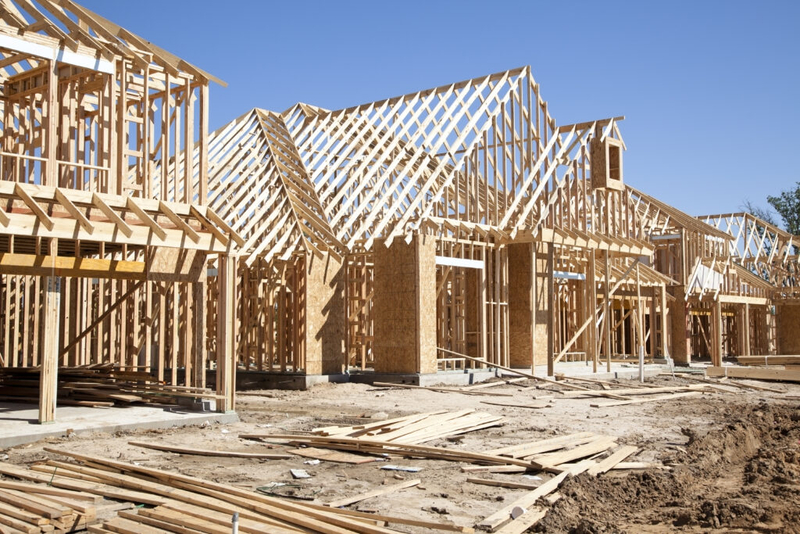
(Photo by Getty Images)
State auditors found multiple problems with the Arizona Department of Housing’s policies and training, and found that it took the department months in some cases to notify property owners of “health and safety” issues.
The report the Arizona Auditor General’s Office released this week is the second Housing Department audit in three years that has found deficiencies in how the agency operates. A 2024 audit found that, despite setting aside nearly $1.26 billion for affordable housing projects, the department had no comprehensive way to figure out if those projects were actually helping the affordable housing crisis.
The findings of the new audit mirror many of the findings from that 2024 probe, with auditors noting that the Department of Housing needs to do more to protect the safety of tenants living in buildings that receive ADOH and federal money. Auditors noted that the agency has implemented some of their previous recommendations, but many remain unaddressed.
Auditors examined properties that are monitored by ADOH as part of the Low Income Housing Tax Credit, or LIHTC, and the now defunct State Low-Income Housing Tax Credit, or STC.
While the Housing Department conducted its inspections of LIHTC properties every three years as required, auditors found it did not adequately inspect health and safety violations and often took long periods of time to report issues that were found during those inspections.
For instance, auditors looked at 126 unit inspections and noted that the agency’s inspectors did not indicate if they had looked at smoke alarms, hot water heaters, electrical panels, showers or stoves, and did not say if repairs or corrections were needed.
And when problems were found, including 45 violations on six properties that included known issues like “hot water heaters with improper piping and nonfunctioning range burners,” the auditors noted that the Housing Department did not notify the property owners.
Even when critical health and safety violations, including “urgent problems” that require fixes within 24 hours, were discovered in six properties, the agency took between 40 and 115 days to notify the property owners.
Those six properties had a combined 163 violations that included “trash inside or outside of units, missing or inoperable smoke alarms, an improperly installed water heater discharge line, and animal fees in front of a property building.”
The Department of Housing did not document that it notified the property owner of these types of violations in three out of 10 property reports that auditors reviewed. One property included “infestations of rodents and gnats, a smoking stove, and blocked escape access.” Still, the owners were not notified for 115 days.
In one example, an LIHTC property in the small eastern Arizona community of Peridot that was awarded $4.3 million in federal tax credits in 2005 had two “urgent health and safety violations” that were not reported to the “on-site property representative.”
One of those issues was an outdoor electrical outlet that “lacked proper ground-fault circuit-interrupter protection.” A GFCI is a safety device that shuts off power if a ground fault is detected that could electrocute an individual.
The Housing Department took 82 days to notify the property owner , and the issue was not fixed for another 85 days, leaving tenants likely living with the issue for 167 days — nearly six months — after it was discovered.
Auditors also found that the agency “lacked evidence” it completed verification that tenants at LIHTC housing were eligible for it. Of the 153 files they inspected, 53 lacked vital information. And six of those “did not indicate if the inspector reviewed the rent rate and if the rent was within the allowable range.”
The federal government requires that the Department of Housing report property owners who are not in compliance with LIHTC rules to the Internal Revenue Service, which can take action against them to prevent a “waste of public monies.”
In one instance, the Housing Department did not “report a bedroom window with sharp, broken glass; an inoperable range burner; and a broken sink” to the IRS.
“(F)ailure to report them to the IRS as required could prevent the IRS from taking action to address the noncompliance, such as recapturing tax credits from noncompliant owners whose properties are not providing the intended benefits of the program, potentially resulting in a waste of public monies,” the audit says.
Auditors also found that the state agency “has not established a standardized or form training process for inspectors to help ensure that they consistently conduct, document, and report the results of inspections.”
Some inspectors told auditors that the department relies on “peer-to-peer training,” which results in “inconsistent training, given that the peer inspectors conducting the training have varying practices or knowledge.”
The inspectors also said that the training they had received was not enough.
“Additionally, most of the inspectors we spoke with reported that the training they received was inadequate and that they felt underprepared to perform the inspections on their own,” the audit says.
The Housing Department, which has come under the microscope of the state legislature, previously told lawmakers that it did not find any improper payments to the property owners that take part in the LIHTC program. But auditors said that a paper trail that could demonstrate that was hard to come by.
“This supporting documentation would be necessary for the Department to verify that it did not improperly pay grantees for unallowable expenses,” auditors said. “As of May 2026, the Department had requested additional supporting documentation for 69 of 251 payment requests and had received additional documentation for 36 of them but had not yet reviewed the additional documentation it received.”
Auditors said that the department had implemented just four of 15 recommendations from the 2024 report, and only two of them had been implemented when auditors began their 2026 follow-up.
This year’s audit includes an additional 27 recommendations, of which the Department of Housing said it would work to implement.
While auditors noted that issues still persist at the agency, terminating it would hurt Arizonans who rely on affordable housing. The Housing Department, they noted, “generally awarded tax credits to properties in ZIP codes lacking affordable rental housing.” Transferring its responsibilities to another agency “could affect public health, safety, and welfare” of tenants, they warned.
When lawmakers convene in January for the annual legislative session, they will consider whether to reauthorize the Department of Housing, and for how long.
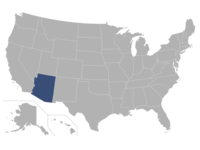
Phoenix, AZ