Center for Intellectual Freedom advisory council advances director candidates
Oct 02, 2026 | 5:21 pm ET
Description
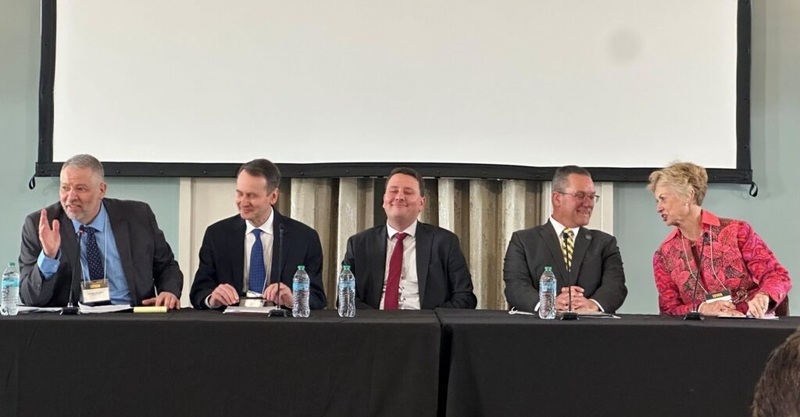
Panelists speaking Dec. 6, 2025, at the Center for Intellectual Freedom at the University of Iowa, from left, are center Interim Director Luciano de Castro, U.S. Assistant Secretary for Postsecondary Education David Barker, state Rep. Taylor Collins, state Sen. Kerry Gruenhagen and Regent Christine Hensley. (Photo by Brooklyn Draisey/Iowa Capital Dispatch)
Members of the advisory council for the Center for Intellectual Freedom at the University of Iowa met Friday to discuss next steps in the search for a permanent director and their hopes for the center’s future.
The field of applicants for the director job — currently held on an interim basis by Luciano de Castro — has been narrowed from 62 to four candidates by the advisory council, which itself has seen a reduction in numbers after 11 members resigned.
Mark Bauerlein, an English professor at Emory University and faculty member on the advisory council, was named at the council’s Sept. 25 meeting as chair of the executive committee. He told advisory council members Friday they’ve pared down director candidates from 11 to six and now to four, with “several very strong candidates” in the larger pool not making the cut.
“The candidates all provided a letter outlining how they saw the future of the center, what their thoughts were moving forward, and there were some that had actually made reference to the media coverage that the center has had,” said Regent Christine Hensley, chair of the Iowa Board of Regents committee overseeing the center. “So, I thought that all of them, the ones that we ended up with, really are looking at the center with their eyes wide open.”
Each of the candidates will remain anonymous for now, having signed confidentiality agreements, and Hensley said executive committee members involved with the search have signed nondisclosure agreements. The council’s plan is to bring the candidates to the UI campus for visits before a director is selected.
Bauerlein said he had four criteria for center director candidates, which other advisory council members said they agreed with — research in the areas of U.S. history, government and civics, administrative experience, experiences with universities similar to the UI and practice engaging with people outside of academic peers and circles, such as with members of the board of regents, donors and reporters.
Norman Johnson, former CEO of filtration system company Clarcor and new advisory council member, said something for the advisory council and board of regents members involved in the search to keep in mind is whether each candidate is flexible and a “good salesperson,” and whether they can keep all of the parties involved with the center happy.
With the finalists selected, the advisory council approved sending them to the board of regents to launch the next steps in the selection process. Hensley said a special meeting for the board has been set for Oct. 20, but adjustments are still possible.
Advisory board member and former lawmaker Liz Mathis told the advisory committee that while she didn’t approve of every candidate moving ahead in the search, she does support the process advancing. She added that the referral to the center as a “vehicle for conservative thought on what some call a liberal campus” as Hensley and others have previously said, doesn’t serve the students who will be required to interact with the center.
Students have largely been left out of conversations about the center, Mathis said, and as a UI alum and liberal arts fellow, she cares “about whether this curriculum is built around a student’s discovery and curiosity and their growth, or around an agenda decided for them before they ever walk into the classroom.”
Iowa Board of Regents President Robert Cramer agreed with Mathis’s point, saying he wants to see a shift toward ensuring the center is student-focused and instilling in them the ability to listen to both sides of an argument, disagree and debate.
“Intellectual freedom isn’t about swapping one orthodoxy for another,” Mathis said. “It’s really about teaching students to listen carefully, and to understand a position before they agree or disagree with it, as I think our advisory board has done well in this last meeting, and to disagree, when they do, civilly and on the merits, and that has to include both sides of our hardest arguments, not one.”

Des Moines, IA