New Mexico Election 2026: US House of Representatives, District 1
Sep 24, 2026 | 4:36 pm ET
Description
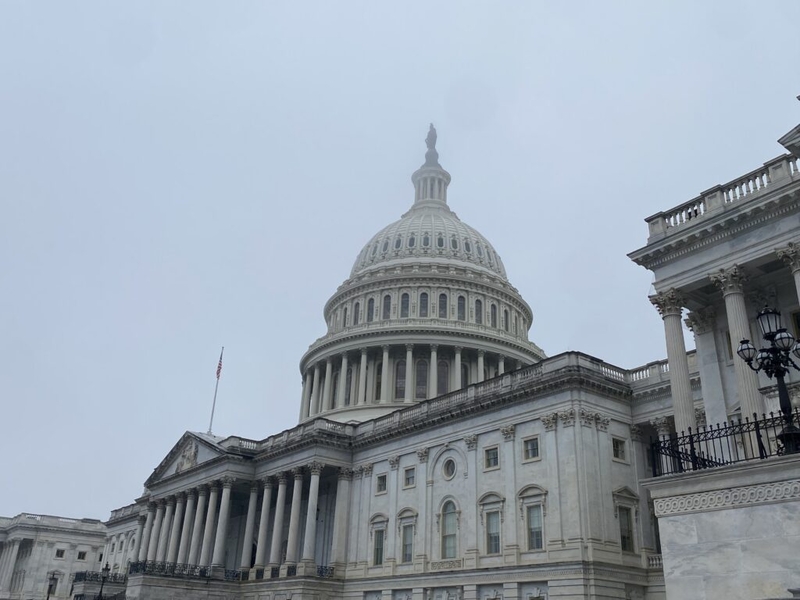
Incumbent U.S. Rep. Melanie Stansbury (D-N.M.) is seeking re-election and faces a Republican opponent, Rio Rancho compounding pharmacist Ndidiamaka “Didi” Okpareke, in the Nov. 3 general election for New Mexico’s 1st Congressional District. (Photo by Jennifer Shutt/States Newsroom)
A Republican compounding pharmacist from Rio Rancho hopes to unseat an incumbent U.S. congresswoman who has represented New Mexico’s 1st Congressional District since President Joe Biden appointed then-U.S. Rep. Deb Haaland to lead the federal Interior Department in 2021.
Incumbent U.S. Rep. Melanie Stansbury (D-N.M.) first won the seat in a 2021 special election to fill the vacancy created by Haaland’s appointment. Stansbury has long focused on water issues in her district and has been a vocal critic of the Trump administration’s moves to implement cuts to food assistance and Medicaid programs, as well as its refusal to release unredacted files relating to the late sex offender Jeffrey Epstein.
Ndidiamaka “Didi” Okpareke, a Republican Rio Rancho compounding pharmacist, seeks to oust Stansbury. She’s campaigned against Stansbury’s support for social programs, which she argues “incentivize poverty,” and has pledged to be a “hard no” on data center proposals.
The two will face each other in the Nov. 3 general election. The office has a salary of $174,000 and represents much of Albuquerque, as well as large swaths of rural counties to the southeast.
Source NM spoke with both candidates about the race. Their answers have been edited for clarity and concision.
Ndidiamaka “Didi” Okpareke

Ndidiamaka “Didi” Okpareke was born and raised in California’s Bay Area and moved to Albuquerque in the late 1990s. Her parents immigrated to the U.S. from Nigeria after surviving the Biafran War.
She has run her own business, a compounding pharmacy in Rio Rancho, for nearly 10 years and told Source NM that she believes issues of poverty and affordability, driven partly by President Donald Trump’s ongoing war with Iran, threaten New Mexicans’ ability to achieve the American dream.
She said she believes U.S. Rep. Melanie Stansbury has “incentivized poverty” by supporting social services such as the Supplemental Nutrition Assistance Program.
Stansbury has become increasingly critical of data center proposals, particularly over issues of transparency, water use and air pollution. Okpareke, similiarly, said she is a “hard no” for the time being on such developments and doesn’t believe New Mexico has the water or energy to spare.
“Have you looked at your PNM bill recently?” she said. “Me and you and every other New Mexican is facing this phenomenal increase in our electricity bill. How are we going to be able to afford having a data center in any of our communities?”
What is the most important issue facing this district?
One of the most pressing issues that New Mexico is facing right now, especially in my district, is the economy. The economy is getting really, really hard. Families are finding it hard to survive, hard to afford the basic necessities.
If elected, what piece of legislation would you prioritize sponsoring in the next term?
Term limits. I think that we should constantly have new people in Congress…so that we can have brand new ideas, innovation, creativity. There are a lot of brilliant people that can contribute to the forward progress of our nation, but if we keep having the same old leaders, we’re going to have the same old ideas all of the time.
How would you describe the impact of the Trump administration on New Mexico and what would your approach be to working with the Trump administration if elected?
Trump is going to be gone in two years and we’re going to have to move forward as a state. There are some things that he’s done positively and there are some things that this administration has unfortunately done to have a negative impact on New Mexico. Will I work with this administration? I don’t have a choice. You work with whoever is in office.
I think one of the positives is closing the border. I think that New Mexico was highly impacted by having the border open. We were impacted in a negative way. It’s supply and demand; when you have a lot of people coming into the state, we don’t necessarily have all the products and services that everyone needs and we haven’t built them fast enough. Also with the fentanyl, the drugs and the crime coming across the border, I think it was good that we closed it down.
I am a healthcare provider. I really love the fact that we have allocated $10 billion per year for the next five years to rural healthcare. I think that’s going to have a positive impact on a state like New Mexico.
The negatives; I really dislike war. I like the fact that Iran no longer has a nuclear weapon — thank God for that — but I really think that the impact on the economy has been hard for New Mexico and for New Mexicans to deal with.
What policies would you support, if elected, as it relates to border security?
I think we’ve done a good job along the southern border. I think now one of the issues that this administration is facing is the northern border. They want to make sure that is secure, as well.
National security is very important to America if we want to remain a sovereign nation. Any other policies, I would probably have to look to leadership for that.
What would you do differently than your opponent?
I would stop incentivizing poverty. I would stop creating social programs and giving people the illusion that they’re getting something from the government when, really, the truth is that these social programs are only holding people back. People are finding it hard to pull themselves out of poverty, so then we end up with a state where 40% of our population is dependent on federal dollars through Medicaid.
I would focus a lot more on economic development. How do we get jobs into the state? How do we create programs so that the youth have something to do after high school, after community college or after one of the universities in New Mexico?
You’ve campaigned on your experience as a pharmacist as it relates to New Mexico’s healthcare struggles. What sorts of changes would you advocate for, if elected?
I do appreciate what this administration is doing in terms of healthcare. Healthcare has become very expensive, and the question is why? Well, when 25 million people come into the country, those people are going to be dependent on the system — and that system is Medicaid. That drives up the cost, because we can only supply so much.
Another thing that drives up the cost is having these conglomerates, having these monopolies in the healthcare system, having these big companies that own the doctor’s practice, they own the insurance company, they own the pharmacy.
If we have our government paying for Medicaid and the cost of drugs is very high, that’s going to be a high cost for the government. But if you bring down the cost of drugs, the government no longer is paying these high costs.
Those are all causes that I will champion.
Republicans haven’t won a statewide election in New Mexico for a decade. How do you plan to compete with an incumbent Democrat?
I wonder that, too. I’m thankful that I am a child of God and God loves me and he has brought me this far.
I think that we have an amazing team. Didi for Congress is an amazing team; it’s an amazing brand. We’re staying true to who we are and you win this type of race by standing for the people. You win this type of race by having a grassroots movement that the people can really feel and understand, and I think we’ve done that.
U.S. Rep. Melanie Stansbury
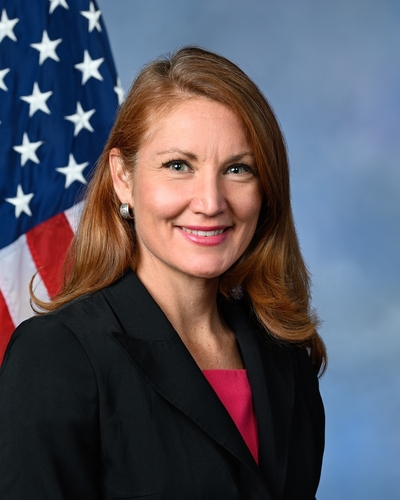
U.S. Rep. Melanie Stansbury (D-N.M.) was born in Farmington and raised in Albuquerque. Before holding elected office, she began her career as a science educator before working as a researcher and adviser on issues relating to land and water.
She worked in the federal Office of Management and Budget and the U.S. Senate in the Committee on Energy and Natural Resources before successfully running for a seat in the New Mexico House of Representatives in 2018.
Stansbury was still serving as a state lawmaker in 2021 when President Biden named then U.S. Rep. Haaland as his choice to lead the federal Interior Department. Stansbury declared her candidacy for Haaland’s seat, and has held it since, where she has become a vocal critic of the Trump administration and its refusal to turn over unredacted files related to the late sex offender Jeffrey Epstein.
As New Mexico prepares to be an early primary state in the next presidential election, Stansbury told Source NM she believes it’s more important than ever to represent her home state in Washington, D.C.
“The country is looking at us, especially as we just became an early primary state, to now help define what the politics and policies for the country should be,” she said. “It’s vital that New Mexicans get out to vote…this is how we correct course.”
What is the most important issue facing this district?
I think the most important issue facing the United States right now is the ability for everyday people to live with dignity, to be able to afford housing, groceries, healthcare and access to the basic needs that help people sustain their families.
The economy is in a spiral. The Fed just raised interest rates. People can’t afford to put a roof over their head and food on the table and Donald Trump is continuing to wage an illegal war in the Middle East that is driving up oil and gas prices.
If elected, what piece of legislation would you prioritize sponsoring in the next term?
My top priority is bringing resources home for New Mexicans.
I have always prioritized public safety, behavioral health, healthcare and the well-being of our communities. That has included fire stations and emergency response buildings all over the state.
We have a proposal right now to upgrade Rio Rancho’s sewage treatment. I secured millions of dollars to invest in irrigation infrastructure and to support our pueblos and secured both funding and authorization to protect and defend the water rights of our communities.
How would you describe the impact of the Trump administration on New Mexico and what would your approach be to working with the Trump administration if elected?
I think that Donald Trump has been catastrophic in his second term for the U.S., for the people of this country and particularly for everyday Americans and New Mexicans who are struggling to get by.
His signature piece of legislation, the big ugly bill, which he signed last year on July 4, has gutted healthcare, it gutted food assistance, it gutted social programs and it gutted educational assistance.
I am deeply proud to be from a state that has stepped up in a way that no other state has done. Between the leadership of our governor and the Speaker of the House and the historic female majority in our Legislature, New Mexico not only protected healthcare and food assistance but actually expanded and was the only state in the country that did not see a decrease of enrollment in healthcare.
What policies would you support, if elected, as it relates to border security?
As a border state, we want to make sure that our communities are safe from criminal activity on the border, whether that’s cartels engaging in violence or whether that’s human trafficking or whether that’s the smuggling of illegal fentanyl that is literally killing thousands of New Mexicans a year. I am a strong proponent of border security that addresses the violence and drug issues that are affecting our communities.
We are still seeing a rise of fentanyl deaths in New Mexico. They haven’t even installed the most basic technologies to do border screenings. They’ve diverted resources to do immigration enforcement and to illegally deport people who were in this country under asylum and visas.
You’ve been vocal about New Mexico’s issues with water insecurity, particularly as it relates to the Rio Grande and the state’s obligations under the Texas v. New Mexico settlement agreement. What action will you take on these issues if re-elected?
Bringing home additional resources for infrastructure to help our communities navigate these incredibly difficult water issues that we’re facing.
Climate change is here. New Mexico experienced the worst snowpack and the longest river drying in modern history this year. There were stretches of the Rio Grande in central New Mexico that were dry for over 90 days. That has never been recorded in modern history.
What is your most meaningful accomplishment in your current term?
Passing the federal legislation that helped make New Mexico the first state in the nation to provide free childcare and early childhood education, as well as the hundreds of millions of dollars I’ve brought home to build schools, health clinics, housing, fire stations, a veterans center.
You’ve also advocated for a greater release of files relating to Jeffrey Epstein and have criticized the federal government when it’s failed to do so. How would you pursue that in a new term?
Our plan next Congress, when we win back the House, which is essential, is to conduct comprehensive oversight over this administration. We will be investigating the president, his family and the cabinet, who have recklessly broken the law over and over again and lied to the courts. We are hoping to stand up a true investigation into the Epstein crimes and to bring forward legislation to rectify the horrific crimes that were committed against women and girls in this country.
Recently, you’ve criticized the Project Jupiter data center development for issues surrounding water use, transparency and air pollution. While that development is in another congressional district, how are you approaching these types of developments in your district?
That project impacts everyone all across the state.
New Mexico is under a court decree in the Texas v. New Mexico case that is requiring that we reduce water use. So there are fundamental questions about how we’re going to meet our water requirements in that lawsuit and if, how and why this development was allowed to move forward without resolving the issues around water and air permitting.
If you come to New Mexico and you want to operate here, you cannot steal our water, you cannot pollute our air and you must hire union jobs.
Your opponent has criticized you for supporting social services amid federal cuts, such as SNAP and Medicaid, which she says are ‘incentivizing poverty.’ How do you respond to that?
New Mexicans have experienced some of the most disastrous economic policies in years under Donald Trump. That includes the worst inflation since COVID, an illegal war with Iran that has killed and wounded dozens of U.S. service members and driven up the cost of gas and food, and illegal tariffs and trade wars that have increased the cost of housing, food and nearly every basic good.
One thing is clear: New Mexicans cannot afford to elect another rubber stamp for these disastrous policies that have increased childhood hunger and poverty in our state and across the country. That’s why every day I am fighting for New Mexico, our people and to grow our economy.
Santa Fe, NM