Iowa Medicaid Fraud Control Unit highlights efficiency; critics call for more funding
Sep 24, 2026 | 5:54 pm ET
Description
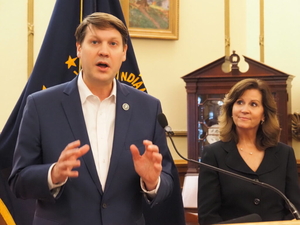
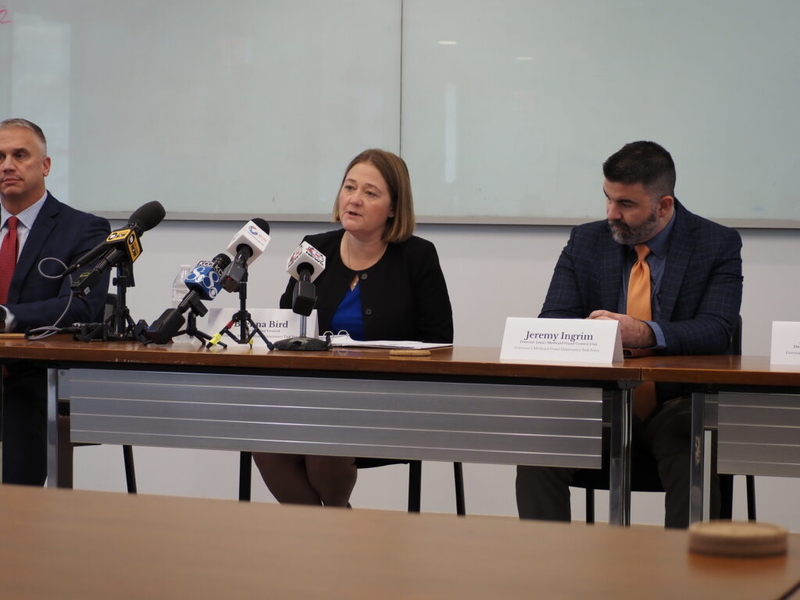
Iowa Attorney General Brenna Bird, joined by Jeremy Ingrim, director of the state Medicaid Fraud Control Unit and other members of the state Medicaid fraud task force for a meeting Sep. 24, 2026. (Photo by Robin Opsahl/Iowa Capital Dispatch)
Iowa Attorney General Brenna Bird said Thursday that recommendations about increased staffing and funding for existing Medicaid fraud elimination efforts will come at later meetings of the state Medicaid Fraud Elimination Task Force.
The task force was established by executive order July 1 by Gov. Kim Reynolds. It is charged with submitting a final report by Oct. 29, 2026 for the governor and lawmakers with recommendations on how to reduce and prevent incidents of Medicaid fraud. While the members did not deliberate on any specific planned recommendations, leaders gave updates from work groups about their efforts to find areas for improvement.
Members also got an update on work currently underway by the Medicaid Fraud Control Unit to address fraud within Iowa’s taxpayer-funded healthcare program. Jeremy Ingrim, the director of the unit, said federal evaluations and data have shown Iowa’s Medicaid Fraud Control Unit is more efficient than those in other states, “despite being one of the smallest units based on staffing and funding.”
Ingrim said in federal fiscal year 2025, Iowa’s unit was ranked 10th highest in total convictions with 37 total convictions, above the national average among all 53 units of 22. With total operating expenses for the Iowa MFCU at $1.3 million in FY 2025, he said the approximate government cost for the unit was $36,700 for each conviction, the lowest conviction cost among all units nationwide.
“In other words, the government got the most bang for its buck in Iowa for criminal convictions in federal fiscal year 2025, and the unit remains on track in the current federal fiscal year for similar results,” Ingrim said.
Iowa’s fraud control unit was created in the 1970s and exists within the Iowa Department of Inspections, Appeals, and Licensing (DIAL).
Dean Lerner, who served as director of Iowa Department of Inspections and Appeals under former Democratic Gov. Chet Culver, told reporters after the task force meeting the funding for Iowa MFCU was “woefully inadequate compared to other states with similar budgets.”
Lerner, as well as Kevin Techau, another former Iowa Department of Inspections and Appeals director, held a news conference in July calling the task force a “sham.”
Lerner said hiring additional staff and providing more funding for the MFCU would be the most effective way to tackle Medicaid fraud in the state, because 75 cents per dollar spent comes from federal funding, and he said between $4 and $5 are recovered by the unit for each dollar spent.
According to Ingrim, the Iowa MCFU has nine staff members — five investigators, an assistant attorney general, a data analyst who also serves as an auditor, a paralegal, as well as a director. The unit is authorized to have 11 total staff and currently has two vacancies.
Bird said the task force has not yet made funding or staffing recommendations for the MCFU, but said, “that would be something that would be in a final report.” She praised the Iowa MCFU is “a very efficient unit,” but said the task force’s goal was to provide new avenues to find instances of fraud.
“It’s important that we are not just reactive, but we are proactive when it comes to fighting fraud,” Bird said. “And so it is very important that we get those tips from people, and that those are investigated and followed up on — but we also need to be more proactive, looking at where the fraud may be occurring, rather than waiting for someone to discover it and report it. … Even though we have a great and efficient unit, which I do appreciate, we should take a look at everything. Everything’s on the table to make sure that we are doing what we can as a state to eliminate fraud in our state, especially when it comes to taxpayer dollars.”
Working group leaders shared ideas and discussions they had since the August task force meeting on finding ways to allow Iowans to report instances of fraud, as well as to use data and analytics to identify cases where fraud may be occurring by flagging issues like overlapping claims or unusual billing.
Ingrim also told the task force increasing enforcement of the state’s Civil False Claims Act “could increase Medicaid fraud recoveries” in Iowa. The MCFU already has an assistant attorney general who works to ensure Iowa’s participation in nationwide civil cases involving Medicaid programs in multiple states, he said, but said there could be increased efforts to expand enforcement of Iowa Code on actors attempting to present false or fraudulent claims for payment to the state of Iowa.
“Establishing procedures and coordinating available DIAL and Attorney General’s office resources to pursue violations of Iowa Code Chapter 685 may serve as a force multiplier to increase Medicaid fraud recoveries and assist in deterring healthcare fraud in Iowa,” Ingrim said.
Lerner said the Iowa AG’s office is responsible for investigating Iowa Civil False Claims Act cases. He said Bird should increase a focus on pursuing cases against care facilities that do not provide services Medicaid pays for under this law.
“There are numerous opportunities to file those cases against nursing homes that are providing woefully inadequate care to people and killing people,” Lerner said. “Those dollars that are spent on those nursing homes for Medicaid residents should be sought from the nursing homes and put back into the state coffers, and they’re not being done, and that would be one area that should be a big focus.”
Bird said while the task force will create a report on ways to reduce Medicaid fraud, it will be up to state lawmakers and the governor whether to implement their recommendations.
“This is the first step in the process, but a very important one, because we want to make sure that the solutions that we’re proposing, the ideas that task force members have about how to make things better, are things that will work and be effective, and that we are doing everything we can to eliminate fraud in Iowa,” Bird said.
Des Moines, IA