Oregon lawmakers could ban Flock, automated license plate reading cameras in 2027
Sep 24, 2026 | 5:17 pm ET
Description
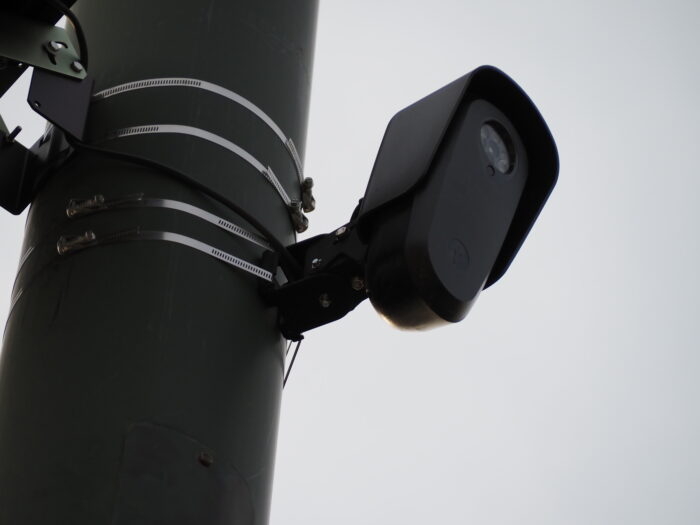
A Flock Safety license plate-reading camera is seen at Colfax Avenue and Franklin Street in Denver on Aug. 5, 2025. New legislation in 2027 could ban the use of these cameras in Oregon. (Photo by Quentin Young/Colorado Newsline)
Oregon lawmakers took action earlier this year to regulate the use of an increasingly bipartisan focus of anti-surveillance advocates nationwide: Flock cameras. Now, they could be on the verge of outlawing the technology altogether.
The push for more legislation in 2027 comes as reports of the technology’s misuse have gained bipartisan condemnation nationwide. At a U.S. Senate hearing on Wednesday, those concerns were on full display as lawmakers heard from a Florida woman testifying about her experience spending 13 days in jail after a Flock camera misidentified her vehicle in a fatal hit-and-run case.
Flock Safety, the Atlanta-based company behind the cameras, is one of many providers of automated license plate reader technology. It has drawn particular ire from civil rights groups nationwide over concerns that the camera data has falsely implicated individuals in crimes, allowed police to stalk their ex-partners and assisted immigration enforcement. In Oregon, several cities have stopped using Flock cameras over the past year, though private businesses and companies also use them.
“My constituents have been clear with me that they want to be able to go about their lives without being surveilled, and we are quickly moving into a new age in which everything we do is being tracked,” said Rep. Willy Chotzen, a Portland Democrat who serves as vice chair of the House Judiciary Committee. “People don’t like it, they find it creepy, and they want to make sure that we’re protecting our rights to privacy.”
The Oregonian/OregonLive first reported on the push by Chotzen and Rep. Alek Skarlatos, R-Winston, to introduce the legislation in 2027. Skarlatos did not respond to an email or phone call seeking comment.
This year’s law, Senate Bill 1516, was part of a larger omnibus public safety package, allowing Oregonians to sue vendors of automated license plate readers and limiting the amount of time police may hold onto the data to 30 days unless linked to a criminal inquiry or court proceeding. The regulations won the support of law enforcement leaders who cautioned that concerns over a single vendor should not outweigh the importance of the technology at large.
“The ability to share and query ALPR information in these clearly permissible scenarios strengthens interagency coordination, improves case outcomes, and enhances community safety while fully respecting Oregon’s legal boundaries and protected activities,” presidents of the Oregon State Sheriffs’ Association and Oregon Association Chiefs of Police wrote in a February 2026 letter.
It’s still too early to tell exactly how either of those groups will mobilize in response to the legislation, though they are likely to make the case that the technology is valuable to their law enforcement duties. Their executive directors did not respond to the Capital Chronicle’s request for comment.
Andrew Smith, a Flock spokesperson, defended the technology in the wake of Oregon lawmakers’ potential action.
“A blanket ban would take a proven investigative tool away from communities and officers who rely on it,” Smith said in a statement. “We supported the last session’s thoughtful, bipartisan legislation that put strong privacy, transparency and accountability guardrails in place — while preserving law enforcement’s ability to use technology responsibly to keep people safe.”
Chotzen and Skarlatos will likely also need to win over State Sen. Floyd Prozanski, a Eugene Democrat who chairs the Senate Judiciary Committee. Prozanski, whose office did not respond to requests for comment, has noted that more legislation would likely come in future sessions but has yet to commit to specifics.
“I value the tool for legitimate, lawful law enforcement purposes,” he said in January. “But I also believe that there needs to be safeguards and guardrails.”
Bipartisan opposition growing
Since the law’s passage, some progressive activists and civil rights groups warned the law didn’t go far enough and have hoped to capitalize upon opposition to Flock growing across the political spectrum nationwide. Florida Gov. Ron DeSantis in August ordered that Flock cameras be removed from the state’s highway system. Texas Gov. Greg Abbott has paused state funding for the cameras.
Law enforcement, meanwhile, are defending their experience with the technology and note that Flock isn’t the only name in the game. Privacy advocates contend that many other license plate readers are subject to the same flaws as Flock.
The Portland Police Bureau, for instance, has five automated license plate readers created by the Chicago-based tech company Motorola Solutions. They are installed on vehicles in the agency’s east precinct rather than stoplights or intersections, according to Terri Strauss, a spokesperson for the bureau. The agency has used license plate reading technology for more than a decade, Strauss said.
“ALPR alerts do not provide independent authority to stop a vehicle; officers must confirm an alert and establish their own reasonable suspicion or probable cause before making a stop,” Strauss wrote in an email. “All ALPR data is owned by the city of Portland, securely stored in compliance with Criminal Justice Information System requirements, accessible only to Oregon law enforcement, and cannot legally be shared with immigration authorities.”
Chotzen said there are “real tradeoffs” between privacy and security, but that his community wants more action when it comes to combatting surveillance. He pointed to the actions of Democrats and Republicans across the country as evidence.
“They’re asking for us to swing the pendulum back toward more privacy,” he said. “And we’re seeing across the country folks are doing the same.”
Salem, OR