State disaster cash now hitting bank accounts month after storms hit Indiana
Sep 17, 2026 | 5:00 am ET

Description
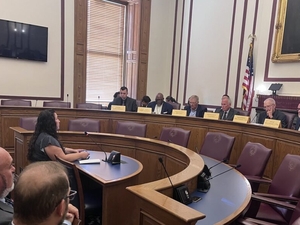
The Indiana Department of Homeland Security has reviewed 40,000 state relief applications so far and sent out more than $1 million in aid. (Photo by Niki Kelly/Indiana Capital Chronicle)
The first $1 million in state disaster aid for Hoosiers impacted by August storms has been sent out the door — either through paper checks or direct deposits.
In all, $1.7 million for about 260 homes was approved as of Wednesday by the Indiana Department of Homeland Security. From there, the Indiana Comptroller’s Office processes the payment.
The average payment is running around $4,000 so far.
IDHS eliminated its usual 90-day review period to help Hoosiers with immediate needs, such as shelter, clothing, food or replacing a mattress.
“The process for this situation, we said we’re throwing everything out that we can. There’s some stuff in statute that we just have to obviously live with right now, but we’re looking at how we can adjust that in the future to be even quicker,” Homeland Security Executive Director Jonathan Whitham said.
“But the things that we could waive or modify, we have, and so we went from 90 plus days down to we’ve got over a million dollars in the bank after really probably two and a half to three weeks from the date that we said we’re going to do this,” he told the Capital Chronicle.
Story continues below.
Severe storms rolled through Indiana starting Aug. 11 that damaged large areas of the state, including flooding and wind destruction. President Donald Trump approved a major disaster declaration for 21 counties. Others could still be added.
More than 40,000 applications for state aid have been reviewed so far. Of that about 12,000 were deemed ineligible because the address listed wasn’t the person’s primary residence or the county isn’t currently eligible for assistance.
Even with those approved, individual damage requests can be denied. This has happened when Hoosiers have sought to replace their televisions. And the department has seen some AI-generated damage photos.
“We knew this would be the biggest event for (State Disaster Relief Fund) history,” Whitham said.
The fund receives money from taxes on fireworks but it’s only about $1 million a year.

That’s why the agency, in consultation with Gov. Mike Braun and legislative fiscal leaders, set a $5,000 payment limit even though state law says the maximum is $25,000.
Whitham said in the past a typical use of the state disaster fund might involve 500 applications across one or two counties. But this event was more widespread and the fund didn’t have enough money to provide that. In fact, it doesn’t have enough to cover the estimated $80 million using the reduced cap.
Right now, state budget officials are moving money into the relief fund as needed on a rolling basis from contingency accounts and reserves.
“The $25,000 is a best-case scenario if there’s sufficient funding, and in the past in a traditional disaster has been geared toward those longer-term recovery things,” he said.
Whitham said most of the long-term needs will be met by federal assistance, such as replacing heating and air conditioning units or removing drywall and mold.
The number of applications has slowed and, about 15,000 are currently in a holding pattern, the agency said. That means they are waiting for additional information, whether it be proof of damage or banking information.
“IDHS has hosted multiple one-stop shops and mobile registration intake centers, allowing storm-affected residents to access local, state and federal resources in a single location to assist survivors with their applications,” the agency said in an email. “Processing these applications is our top priority.”
Indianapolis, IN