State lawmakers, road paving industry both concerned about lack of state road projects
Sep 03, 2026 | 5:30 am ET

Description
Kentucky road paving projects have dropped dramatically in the summer of 2026. (Getty Images)
Both state lawmakers and representatives of Kentucky’s road paving industry have strong concerns about the lack of road work that state transportation officials are awarding this summer compared to previous years.
Last month, the Kentucky Lantern reported the number of road work projects, particularly repaving, had dramatically fallen this summer compared to the previous two summers. Representatives for the road paving industry presented data Wednesday to the Interim Joint Committee on Appropriations and Revenue showing the dramatic drop in projects.
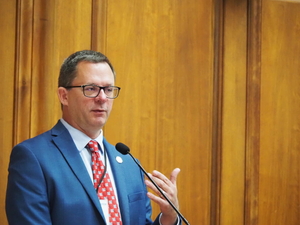
Rep. Jason Petrie, R-Elkton, the co-chair of the committee, pointed to data showing the lack of state road work in Warren County and Bowling Green, one of the fastest growing parts of the state.
“If you’re in a fast-growing place that has transportation needs and you’re not keeping pace, you’re not just falling behind. You’re really falling behind exponentially,” Petrie said.
Sen. Steve Rawlings, R-Burlington, at one point asked road paving representatives why there was such a drop off in road projects in his Northern Kentucky area given it was “high population.”
“It just looks so sad,” Rawlings said about presented data showing the drop off in projects.
Representatives of the road paving industry told lawmakers the consequences of the lack of road projects this summer have meant road paving companies have had to cut back on hours offered to road crews with some companies working four-day work weeks.
Brian Wood, the executive director of the Plantmix Asphalt Industry of Kentucky, said because of the seasonality and temperature requirements to do asphalt paving work, the state was quickly approaching a window to where it’s not possible to get repaving work done before winter.
“When we have slowdowns like we have now, the end result is deferring maintenance, declining pavement conditions, increased backlog, higher cost — all the things that we’re very well aware of,” Wood said.
Chad LaRue, the executive director of the Kentucky Association of Highway Contractors, told lawmakers Wednesday afternoon LaRue the cabinet has advertised more road repaving projects recently, but the overall number of projects is still down compared to previous years.
LaRue said he believes Kentucky Transportation Cabinet has concerns about the balance of an internal fund within the cabinet used to pay out road work projects as they happen.
“They’re kind of clipping the trees right now on their cash flow model, and so out of necessity, they feel like they’ve had to pull back in order to make sure they don’t zero out the account,” LaRue said.
Executives within the Transportation Cabinet also told another legislative committee Wednesday that the cabinet usually the internal cash fund for road work can fluctuate with money spent on active road projects, as much as $10 million a day spent.
Those directors said the cabinet usually wants to have at least $100 million of cash on hand in that internal fund; that internal fund reached a low of $32.9 million as of Aug. 19, recently rising back to above $100 million.
Shaun McKiernan, the executive director of the cabinet’s Office of Budget and Fiscal Management, told the Budget Review Subcommittee on Transportation on Wednesday that the cabinet’s goal was “put to work all of the state dollars.”
“But we also must maintain our sufficient cash level to pay for our obligations and pay our expenses,” McKiernan said. “We’re committed to advancing as many projects as we possibly can. We are constantly monitoring our cash situation so we can be in the best situation as possible to authorize additional project expenditures.”
Transportation Cabinet spokespeople did not immediately respond to an emailed request for comment Wednesday about LaRue’s comments. A cabinet spokesperson previously told the Lantern that constraints enacted in the budget by the state legislature have been the main reasons behind the lack of road projects.
LaRue told lawmakers the inflation of road construction costs have continued to outpace the state funding available for road projects, even with the state legislature adding one-time appropriations for road work.
“We’re probably at this point looking at some inflection points on the ability to properly deliver the program based on what we’re seeing from an industry side,” LaRue said.
Frankfort