Indiana BMV plans mobile driver’s license
Sep 03, 2026 | 5:00 am ET
Description
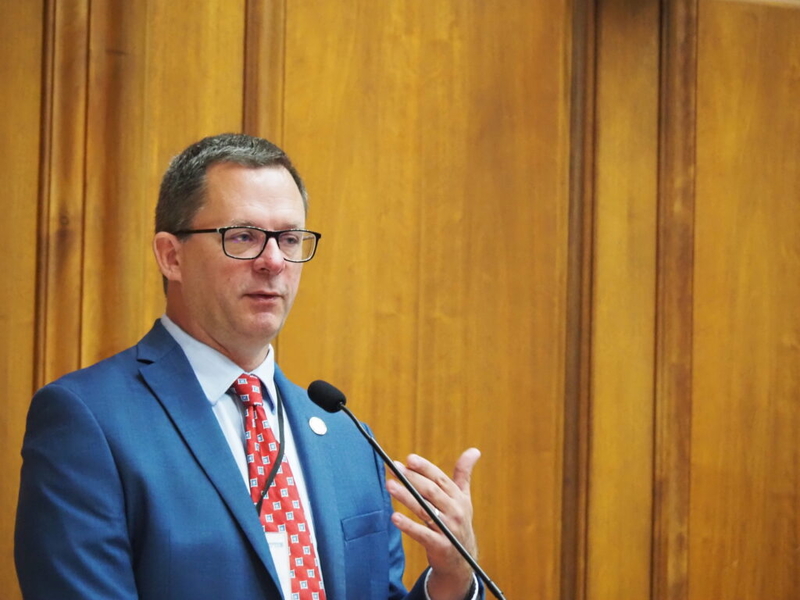
Matt Kestian, general counsel for the Indiana Bureau of Motor Vehicles, addresses the Interim Study Committee on Roads and Transportation Sept. 2, 2026. (Photo by Mackenzi Klemann/Indiana Capital Chronicle)
The Indiana Bureau of Motor Vehicles is launching an optional mobile driver’s license for Hoosiers who wish to limit what information bank tellers, bartenders and others see when asked to verify their age or identity.
The digital license would not replace a person’s physical driver’s license, but would instead grant Hoosiers the ability to verify their age or identity through a mobile application.
Popular uses include age verification to purchase alcohol or tobacco products, as well as identification for traffic stops or banking.
Hoosiers who opt in would download a mobile application, which uses digital biometrics like a face scan or fingerprint to verify the person on the phone matches BMV data on file to activate and use the license, according to Matt Kestian, BMV general counsel.
The mobile application functions similarly to tap-to-pay debit or credit cards, allowing users to share information with a mobile driver’s license reader.
“You wouldn’t be able to give your phone to your child,” he said.
Kestian told the Interim Study Committee on Roads and Transportation Wednesday the mobile driver’s license option should be ready within 18 months.
Lawmakers asked questions about a budget for the initiative but the agency said there is not currently a vendor or cost estimate.
Questions about privacy
Kestian described the mobile license as a “step forward for privacy,” as Hoosiers would be able to confirm their age or identity without sharing extra information like their home address.
“Why does the bar need to know that person’s home address?” he asked. “Right now, if they’re getting a physical driver’s license, that bar has access to that person’s address, date of birth, organ donation status, veteran status — all of the other things that may appear on a driver’s license. They don’t need it.”

Lawmakers directed the BMV to comply with international data security standards in a 2023 law, authored by committee chair Rep. Jim Pressel, to prevent law enforcement, government agencies and commercial entities from using mobile driver’s license data to track Hoosiers.
“A law enforcement agency will not be able to send a subpoena to the BMV and ask for a list of this person’s purchases or visits to various establishments,” Kestian said. “It’s designed to not have that information. It’s also designed that the officer is not going to take the person’s phone and be able to go through it.”
The digital driver’s license is the latest example of the BMV’s efforts to modernize its systems in response to an executive order from Gov. Mike Braun last April.
The agency has implemented electronic car titles and liens in recent years, Kestian said.
The mobile driver’s license will also be available for learner’s permits and state-issued identification cards.
Pressel praised the BMV’s modernization effort for giving Hoosiers “something that may be beneficial to them if they choose to use it and make their life a little bit simpler,” he said.
About 20 states offer a form of digital driver’s license and ID.
Indianapolis, IN