As sports betting surges, Virginia weighs how to curb gambling harms
Sep 03, 2026 | 5:27 am ET
Description
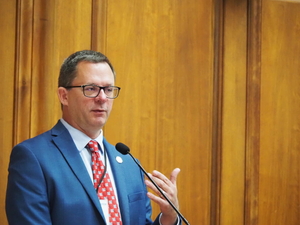
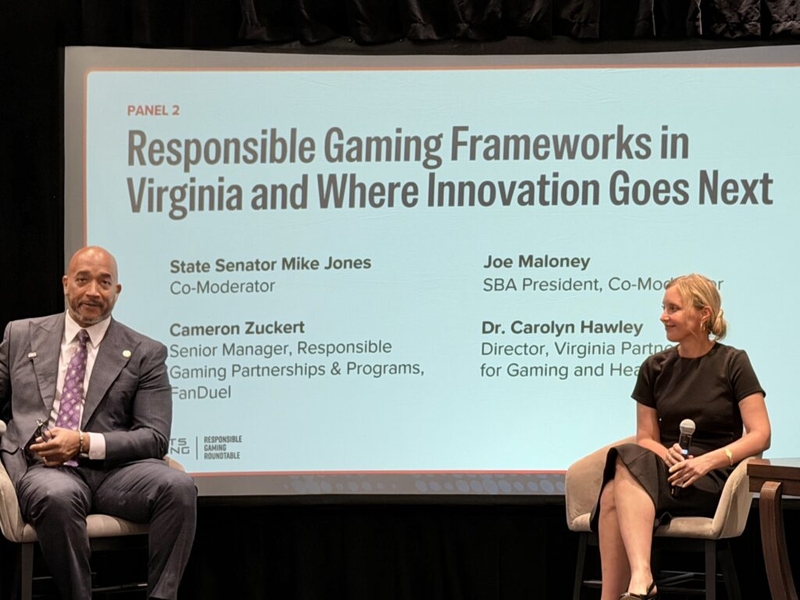
State Sen. Mike Jones, D-Richmond, left, and Dr. Carolyn Hawley, director of the Virginia Partnership for Gaming and Health, participate in a Responsible Gaming Roundtable at the Hilton Richmond Downtown on Sept. 2, 2026. (Photo by Markus Schmidt/Virginia Mercury)
As college football season gets into full swing over Labor Day weekend, sports betting companies, public health experts and Virginia lawmakers are confronting a question that has grown more pressing since wagering moved into smartphones: How can the industry keep gambling from becoming an addiction?
Representatives from those groups gathered Wednesday at the Hilton Richmond Downtown for a Responsible Gaming Roundtable hosted by the Sports Betting Alliance, an advocacy organization representing bet365, BetMGM, DraftKings, Fanatics and FanDuel — five of the nation’s largest online sports betting operators.
The discussion focused on tools that help customers control their betting, educating young people about gambling risks and connecting people with treatment when gambling stops being entertainment.
“Responsible gaming is not a regulatory obligation to us; it’s the foundation of a sustainable, durable legal market,” said Joe Maloney, president of Sports Betting Alliance and one of the roundtable’s moderators, along with state Sen. Mike Jones, D-Richmond. “Getting this right takes more than one company working on its own.”
The industry has expanded rapidly in the commonwealth since Virginia lawmakers legalized sports betting in 2020. The law took effect that July, and the first online wagers were accepted in January 2021. Lawmakers also authorized casinos in certain cities, subject to local voter approval.
Virginia now has five operating casinos and 11 approved sports betting permit holders. Casinos reported more than $102 million in adjusted gaming revenue in July 2026, while bettors wagered more than $589 million on sports in June, according to the Virginia Lottery.
Maloney said legal sports betting has generated more than $400 million in state tax revenue since its launch. But a regulated market, he argued, should be judged not only by the money it generates but by how well it protects customers.
Licensed operators verify betters’ ages and locations and allow customers to set limits on deposits and time spent gambling. Voluntary self-exclusion programs also let people block themselves from betting. Maloney said over half of online sports bettors use at least one responsible-gaming tool.
Technology offers both tools and new risks
Industry representatives said licensed online platforms can monitor betting patterns and intervene when someone’s behavior suggests a potential problem.
Cameron Zuckert, senior manager of responsible gaming partnerships and programs at FanDuel, said customers are encouraged to decide ahead of time how much they are willing to spend.
“We do a lot of work to drive awareness of not just what it means to play responsibly, but also the risks associated with problem gambling,” Zuckert said. “You don’t want to shy away from that topic. It’s a very real topic.”
Fanatics Betting and Gaming does not allow customers to wager on credit. Anthony D’Angelo, the company’s head of responsible gaming, said preventing harmful play is also in its business interest.
“We want a long-term, sustainable business, and we can’t do that if customers are on our platform playing irresponsibly, not getting the help they need and then never play again,” D’Angelo said.
Research shows the risk can be significant, particularly for younger bettors.
The National Council on Problem Gambling’s 2024 national survey found that 8% of American adults — nearly 20 million people — frequently experienced at least one indicator of problematic gambling. The rate was 17% among traditional sports bettors and 24% among fantasy sports players.
Adults ages 18 to 34 faced substantially greater risk than older Americans. Online gambling participation also rose from 15% of adults in 2018 to 22% in 2024.
Keith Whyte, founder and president of Safer Gambling Strategies, said risky gambling behavior increased during the COVID-19 pandemic alongside depression, loneliness, isolation and job loss.
The latest survey found overall indicators of problematic play had returned to 2018 levels, though Whyte cautioned that gambling expansion will always carry risks.
“You can’t expand gambling without risk, without additional casualties,” Whyte said.
He also argued that gambling education needs to reach children before advertising and celebrity endorsements begin shaping their views of betting.
“Everybody should have a conversation around gambling, especially with young people,” he said.
Adults should routinely use spending and time limits as well, Whyte added, “not because they think they have a problem, but because they want to prevent themselves from having a problem.”
Treatment and other expansion debate
Virginia has built a statewide network offering treatment, peer-recovery support, support groups and financial counseling, said Dr. Carolyn Hawley, director of the Virginia Partnership for Gaming and Health at Virginia Commonwealth University.
The program also trains treatment providers and conducts prevention work in schools and universities. Hawley said addressing gambling addiction requires coordination among the industry, government and public health system, particularly as betting companies collect more data that could help identify customers at risk.
But finding qualified clinicians remains a challenge, experts say.
“It’s one thing to have money for treatment,” Hawley said. “It’s another thing to have capacity — providers who know how to deliver that treatment.”
Virginia directs portions of sports betting and casino tax revenue to the Problem Gambling Treatment and Support Fund.
New Jersey, which legalized online casino gambling in 2013, requires operators to analyze customer data for warning signs. Platforms must contact customers whose activity shows certain markers of risky behavior, beginning with automated outreach and escalating to direct contact from responsible-gaming staff.
In Virginia, lawmakers considered another gambling expansion this year through Senate Bill 118 and House Bill 161, which would have allowed licensed casinos to offer online slots, blackjack and other games. Both chambers passed versions of the legislation but failed to resolve their differences before adjournment. The issue is expected to return in 2027.
Supporters of online betting argue that Virginians already gamble through offshore or sweepstake-style sites operating outside the state’s regulatory system. Maloney called the illegal market the most serious obstacle facing licensed operators, saying those sites offer no meaningful accountability, monitoring or statewide self-exclusion system.
Virginia Secretary of Finance Mark Sickles, a former lawmaker who has long been skeptical of gambling expansion, said tax revenue should not determine whether the state legalizes another form of gambling.
“I would not support legalizing or keeping it illegal based on revenues to the state,” Sickles told The Mercury Wednesday.
If Virginia does expand gambling, he said, lawmakers should ensure some proceeds support prevention and treatment. Sickles also endorsed including gambling in school lessons about addiction.
“I don’t think we will stop gambling by keeping it illegal,” Sickles said. “I think everyone needs to put on their work shoes and get out their pencils and figure out if there’s a way to make it happen — and everybody’s satisfied with it, and it has consumer protections in the law.”
Richmond, VA