With voters squeezed by high costs, Texas candidates race to claim affordability mantle
Sep 03, 2026 | 6:00 am ET
Description
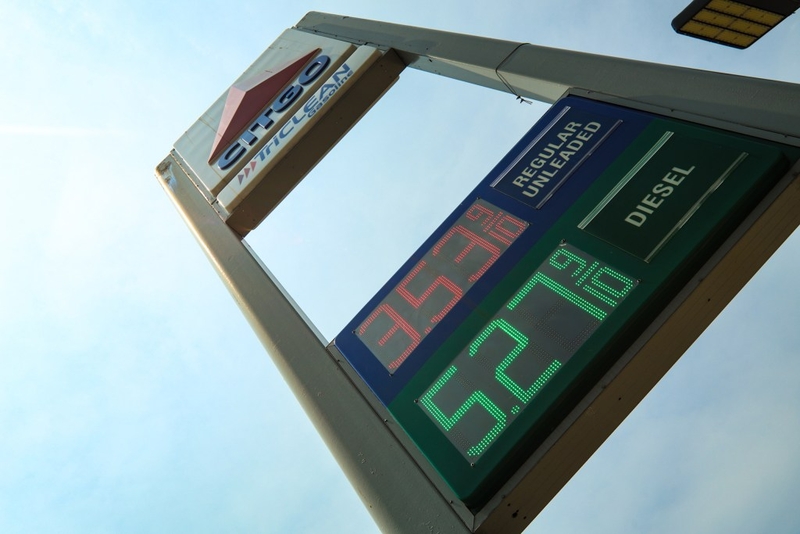
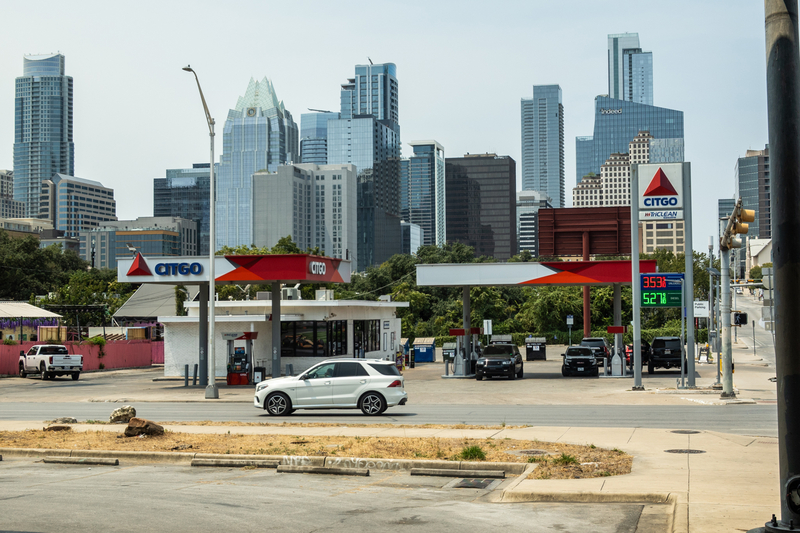
Prices are displayed at a CITGO gas station in Austin on Aug. 26, 2026. (Jacob Lujan/The Texas Tribune)
Editor’s note: Are you struggling with higher costs? If so, we want to hear from you. Fill out the form at the bottom of this story to share how rising costs have affected you.
In a state once considered one of the most affordable places in the country, candidates have popped up at barbershops and in voters’ homes vowing to tackle a new problem for Texas: its cost-of-living woes.
In ads, they’re holding bags of groceries as they bemoan how expensive food, healthcare and gas have become. On the campaign trail, they promise to cut taxes and give away money to help people thrive in Texas.
The word “affordability” is everywhere.
“Affordability has become the defining issue of this cycle and the voters want candidates to speak on it,” said Michael Adams, a professor and director of the Master of Public Affairs Graduate Program at Texas Southern University.
From housing to groceries and gas, Texans’ regular expenses have risen considerably in the past several years. As those costs have grown, Texans have increasingly said the higher cost of living is one of the biggest problems facing the state.
As Texans feel the pinch from the rising cost of living, candidates in this year’s midterms up and down the ballot and across party lines are desperate to convince voters they have the bona fides to tackle the affordability crisis.
In the state’s marquee Senate race, Republican Ken Paxton has floated tax breaks for families to help pay for health care and housing costs, and more ideas. Among the proposals from state Rep. James Talarico, his Democratic foe from Austin: abolishing the gas tax to help Texans’ transportation costs and expanding tax benefits for parents with kids.
Gov. Greg Abbott, seeking a fourth term, wants to abolish school property taxes and make it easier to build homes. State Rep. Gina Hinojosa, the Austin Democrat running to unseat him, wants to send $1,500 to every Texas household and stop Wall Street from buying single-family homes.
For decades, Texas was considered a bastion of affordability, with its relatively low cost of living used to lure residents and employers from other, more expensive states. But Texas hasn’t proven immune from the national cost-of-living crisis that’s center stage in this year’s midterm elections. Signs abound that the state’s affordability has eroded.
Among major spending categories, energy prices saw the biggest leap in the last decade — a 65% jump — driven by gas prices, surging demand, natural disaster recovery and hardening costs and expanding transmission infrastructure. Housing grew by 44% and food rose by 41%, outpacing the state’s overall inflation of 35%. Healthcare costs rose 25% from 10 years ago.
While the statewide median household income rose more than $25,000 between 2014 and 2024, it represented a 14% increase after inflation. Poverty has fallen in Texas and across the country in the past decade, but Texas still had the second-highest number of households living below the poverty line in 2024. While those higher up the income ladder are feeling the pinch from higher prices, lower income Texans have long faced difficulties making ends meet.
What’s more is higher tariffs and stricter immigration policies under the Trump administration have hit Texas harder than other states, said Ray Perryman, a longtime Texas economist, owing to the state’s bounty of international trade and reliance on immigration to fuel job growth. Those effects have been at least somewhat offset by the state’s lower cost of living and gas prices relative to the rest of the country, Perryman said.
“The whole thing is something of a perfect storm,” Perryman said.
Those higher costs have fueled unease among Texas voters. Texans’ top concern used to be immigration. But amid rising costs and slowing immigration, a plurality of Texans now view inflation and higher prices as the most important issue facing the state, according to an August poll of registered voters by the Texas Politics Project at the University of Texas at Austin. Higher prices came in as the top issue for Republicans and independents and the second most important issue for Democrats behind political corruption, the poll found.
“When you ask Texans what they think the most important problem is, a large chunk, and a large chunk across the political spectrum, say that first of all rising prices and more generally the economy are big problems facing the state and big problems for them,” said James Henson, director of the Texas Politics Project.
And while candidates in the marquee races have floated proposals to address key pain points for Texans’ budgets, some ideas might be more partisan signaling than serious proposals that would make a real difference, experts said. Some ideas, if enacted, could wind up making life more expensive, they said.
Even as voters want candidates to tackle the problem, there’s some doubt any can rein in costs.
Santiago Quinonez, a 25-year-old data analyst in Austin, said he’s had to cut back on eating out as costs rise. His younger sister now lives with him to save money on rent.
Affordability will be top of mind for Quinonez when he heads to the ballot box in November, he said, a sentiment he said was common among his family members and friends. But he’s skeptical any candidate could solve the issue.
“Instead of just telling me that they’re going to do something, have a decent, concrete plan and details about how they’re going to do it, which I don’t think anyone really has,” Quinonez said.
What’s at stake politically
Amid a national midterm environment already slated to be a difficult one for the GOP, Republicans find themselves playing defense amid a slower economy even as Texas has largely done better than the rest of the country. That poses potential peril for Republicans just as it did Democrats two years ago, when they faced bruising losses as voters felt the squeeze from inflation.
Making matters difficult: President Donald Trump’s trade war and the Iran war have driven up costs, adding hundreds of dollars in additional expenses to the average American family’s budget each year.
Texas Republicans have long touted the state’s robust economic growth, but those declarations might fall short if voters don’t see themselves benefitting from that growth, Henson said.
“I just think it’s made it harder for Republican incumbents to make those arguments, and even harder for Republican incumbents to talk about ‘the Texas miracle,’ because in several different dimensions, it’s not feeling as miraculous anymore,” Henson said.
Texas Democrats see an opportunity to paint Republicans as having presided over the state as it got more expensive while doing little if anything to stop it.
“Texas Republicans have been in office for three decades, and they got us here,” said Manny Garcia, former executive director of the Texas Democratic Party. “They’ve been paying attention to their billionaire, millionaire donors, lining up their pockets instead of making sure that regular Texans can have opportunities.”
That sentiment can be found among voters. Cydney Murry-Berry, a 33-year-old human resources director and mother of two, grew up in a poorer neighborhood in East Austin, she said, but has worked her way to a comfortable life in South Austin and a job in Westlake Hills. Even so, Murry-Berry said she feels limited in her ability to continue moving up the financial ladder amid higher costs. Child care in particular has strained her family’s budget, and they’ve had to sacrifice family vacations and nights out.
Growing up in a poorer neighborhood, Murry-Berry said, has made her acutely aware of income inequality around the city and the state, something she said will factor heavily into her vote in November.
“I’ve been able to see all levels of that,” Murry-Berry said. “It’s really unfortunate that we have had the same governor for this long and there hasn’t been changes, it’s only gotten worse. You can see there’s a lack of understanding for those that do not look like they look and make what they make.”
Still, Democrats face a damaged brand after stinging losses in 2024. Republicans argue that Texas is in a better position to weather tough economic times than bluer states — and that Democrats wouldn’t make it better.
“Democrats have never proposed any initiative to lower the cost of living; it has always been more taxes and more spending,” said Eduardo Leal, press secretary for the Abbott campaign. “Governor Abbott’s answer is to lower costs and cut taxes.”
Republicans haven’t completely abandoned culture war issues like immigration and abortion. While urban and suburban voters were most concerned about inflation and higher prices, immigration barely edged out higher costs as rural voters’ top concern, according to the UT poll. Nonetheless, social issues have taken a back seat to the cost-of-living crisis on the campaign trail, said Vinny Minchillo, a Plano-based Republican strategist.
“No one can worry about social issues if they’re worrying about where their next meal is coming from,” Minchillo said. “So in some ways, social issues are a little bit of a luxury.”
‘Fuel to the fire?’
Candidates in the marquee races have thrown out a litany of ideas to tackle high costs in a number of areas, including housing, healthcare, child care, property insurance and higher education.
Some of those ideas could move the needle, policy experts said. Others wouldn’t — and potentially could drive up costs instead.


Hinojosa wants to tap the state’s rainy day fund — essentially Texas’ savings account, which sat at a record $24.8 billion toward the end of last year — to send each Texas household a $1,500 check as a source of one-time financial relief. Hinojosa’s campaign estimates doing so would cost the state $17 billion.
That carries the possibility of driving inflation, said John Diamond, senior director of the Center for Tax and Budget Policy at the Baker Institute for Public Policy at Rice University. That’s what happened when the federal government sent $1,400 checks to U.S. families in the wake of the COVID-19 pandemic to provide financial relief and stimulate the economy, which experienced a growth in demand while the global economy was still dealing with supply chain problems.
Given that Texas is near full employment and inflation is above 2%, injecting $17 billion into the state’s economy could fuel demand and drive up prices, Diamond said.
“You really don’t want to add any fuel to the fire,” Diamond said, adding that, “$17 billion is not a massive amount, but it’s still enough to create some pricing pressures.”
Abbott’s property tax plan has drawn skepticism from tax policy experts across the political spectrum — particularly a proposal to cap how fast property values can rise, which wouldn’t guarantee lower tax bills while creating other side effects like higher housing costs.


Paxton’s proposed income-tax deductions to help with homebuying and healthcare costs would flow to those making higher incomes and would provide little or nothing for lower-income families, who already have little tax liability to deduct from, said Andrew Lautz, senior director of federal policy at the conservative Tax Foundation’s Center for Federal Tax Policy.
Talarico has proposed expanding the federal Child Tax Credit and reinstating the Affordable Care Act’s enhanced premium tax credits to lower health insurance premiums, among other tax benefits.
There’s potential for tax breaks proposed by Paxton and Talarico to backfire, Lautz said. The ideas might ease pressure on household budgets in the short-term, he said, but if the federal government ultimately has to borrow money to pay for those breaks, that can also drive up inflation, Lautz said.
“The more our debt increases, the higher interest rates go throughout the economy, and the harder it is for folks to afford to borrow, to buy a home, or to buy a car, or go to college, or for a business to finance new investments,” Lautz said.
Hinojosa disputed the idea that her plan, which would need approval from the Texas Legislature, would drive inflation. Economists who vetted the plan, she said, believe a state-level payment wouldn’t have the same effects as the federal stimulus checks because it’s at a smaller scale.
But part of campaigning is about signaling what a candidate’s values are to voters, even if the policy proposals themselves aren’t completely solid, said Garcia, the former TDP executive director.
“It starts getting people an understanding of, ‘how would you approach the next problem?’” he said. “‘Are you going to side with the corporation? Are you going to side with me?’”
Beyond the financial relief, Hinojosa sees the checks idea as a way to rebuild trust in government at a time when distrust is high.
“We have to demonstrate to people that government can do something for the people of Texas. I mean, we pay for it,” she said.
Staff writer Kayla Guo contributed to this report.
Austin, TX