Nevada problem gambling group cuts ties with national organization over Kalshi deal
Aug 11, 2026 | 8:00 am ET
Description
(Photo: Hugh Jackson/Nevada Current)
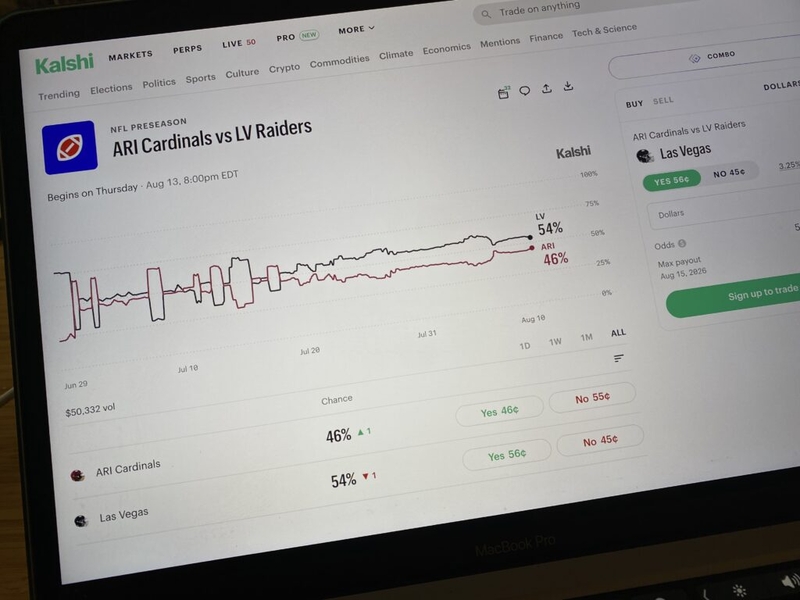
The Nevada Council on Problem Gambling confirms it intends to formally sever ties this month with the National Council on Problem Gambling over the latter’s partnership with Kalshi, a prediction market that has been banned from taking sports bets from Nevada gamblers.
The Nevada Gaming Control Board asserts in a lawsuit against Kalshi that state regulators should have jurisdiction over prediction markets. The Nevada Council has submitted amici, or friend of the court briefs in Nevada’s case against Kalshi.
Some 14 states are in litigation with prediction markets. Others have passed laws prohibiting them. In July, attorneys general from 44 states fired off a letter to the Commodity and Futures Trading Commission, asserting the federal panel lacks authority to regulate sports bets.
The CFTC, whose five members are appointed by President Donald Trump, claims it has exclusive jurisdiction over the platforms, which accept bets on almost anything from gamblers as young as 18 years old.
Trump and his sons have business ties to several prediction market platforms.
Trump’s own teleprompter operator is no longer on the job, according to news reports, after the White House learned he was making bets on Kalshi based on inside information gleaned from his position.
The Current reported in May that the National Council on Problem Gambling formed a new Financial Services and Trading subcategory to accommodate Kalshi, which put up a $2 million two-year investment to “support a strategic initiative focused on trader health and safety,” the National Council announced at the time.
The Nevada Council raised its concerns “directly with National’s leadership and gave them an opportunity to address them,” Nevada Council Executive Director Trey Delap said in a statement to the Current. “After months of discussion, we’ve concluded that this is not simply a disagreement about one company. It reflects a fundamental difference in how we believe a problem gambling organization should respond to emerging gambling risks.”
Delap says the uproar over prediction markets “has exposed a larger problem: gambling innovation is moving faster than the public-health infrastructure designed to address it. Our answer isn’t to fight yesterday’s battle. It’s to build what the field needs next.”
The organizations “are no longer mission aligned,” says Delap, who said in May the National Council’s partnership with Kalshi, “announced while significant regulatory and legal questions are being litigated… can create real public confusion. It risks looking less like neutral harm reduction and more like an endorsement of the platform itself.”
The Nevada Council sought in June to “pause” its membership, however, the national organization said that was not an option.
Delap notes other state organizations and regulators have rejected the national group for its embrace of prediction markets, and others are likely to follow suit.
“Stakeholders including gaming, treatment, regulators, and other state councils are all having serious conversations about withdrawing or redirecting their support,” says Delap.
The Evergreen Council, a problem gambling organization based in Washington state, wrote that it’s “troubled” by the National Council’s “willingness to partner with and/or accept an ‘investment’ from an entity disregarding, if not directly threatening, the sovereignty of tribal nations in Washington state and throughout the United States.”
Additionally, last month the Michigan Gaming Control Board announced it’s withdrawing its support from the National Council.
The National Council did not respond to a request for comment.
Kalshi, which once attempted to skirt state regulation by deeming its transactions as trades rather than bets, has more recently acknowledged it, with advertisements proclaiming it takes “bets” in all 50 states.
“Our decision is based on the elevated risk of harm to young people,” Delap said. “The activity on the Kalshi platform has the same effect as gambling. ‘Positions’ and ‘trades’ are euphemisms – the effect is the same as gambling, and carries the same risk of harm and suicide consistent with any other form of gambling. This risk is elevated among young people – Kalshi’s primary target.”
Kalshi allows 18 year-olds to gamble, while the National Council supports a minimum age of 21.
Gambling, once the exclusive province of Nevada, is now America’s favorite pastime, according to Fortune, which reported last month that Americans placed $166 billion in sports bets last year, eclipsing the total revenue generated by the movie, music, book and museum industries in 2025.
“Affiliation means something. We cannot lend Nevada’s name and credibility to an organization when we no longer believe we’re aligned on a fundamental consumer-protection issue,” says Delap, adding the National Council’s actions “undermine the efforts of problem gambling prevention, treatment, and responsible gambling.”
The Nevada Council was one of 35 state affiliates of the National Council.
“Words matter in prevention. If we tell young people they’re investing or trading when they’re engaging in behavior that carries gambling risk, we make it harder for them to recognize when that behavior becomes harmful,” says Delap. “A 19-year-old experiencing gambling harm doesn’t care which federal agency regulates the platform. Neither should the public health response.”
Las Vegas, NV