URI to reconsider running its own payroll amid state’s Workday troubles
Sep 29, 2026 | 6:41 pm ET
Description
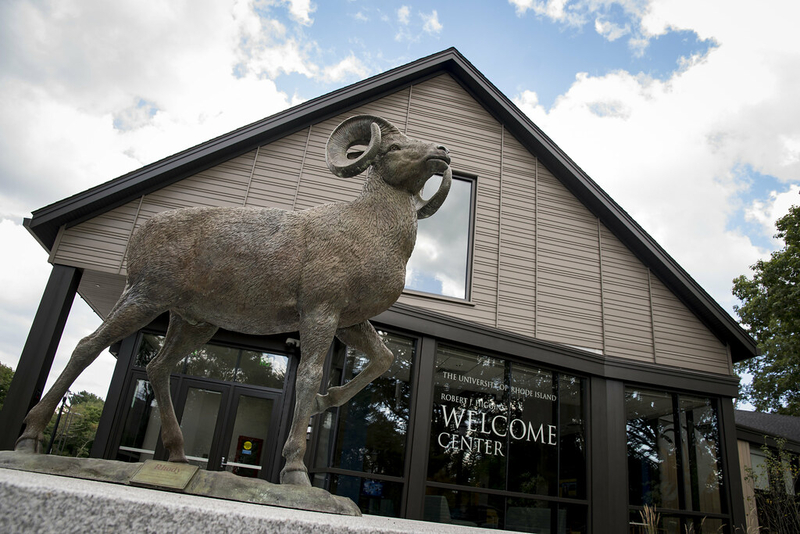
The University of Rhode Island Board of Trustees meets in the Robert J. Higgins Welcome Center on Upper College Road on the Kingston campus. (URI photo)
A colossal software overhaul of the University of Rhode Island’s (URI) administrative and payroll systems on track to launch next fall may need to change course after state officials asked university officials to possibly take over a big responsibility it previously told them not to pursue.
URI began its transition to a more modern infrastructure for its finance, human resources, payroll, budgeting, and faculty administration systems in January. Based around the Workday platform — the same software used by the state of Rhode Island to administer its payroll — the project is about halfway complete and is expected to launch in October 2027.
Abby Benson, URI’s vice president for administration and finance, told trustees during a Sept. 14 Finance and Facilities Committee meeting that the school has always managed its own administrative systems while still relying on the state for payroll.
But before the project began, URI had asked the state whether it should assume payroll processing duties for the university’s full-time employees — a decision URI needed to make early in the planning phase, so it would know whether to build around payroll or not.
“We had asked them that question explicitly a year ago, and they said no,” Benson told trustees.
After the trustees reviewed an outline of the Workday plans last November, URI embarked on its lengthy modernization process. It left payroll processing for its full-time employees to the state’s own Workday system, which experienced numerous problems after it debuted late last year.
The state’s Workday-based ERP rollout cost approximately $99 million and was completed late last year, with the firm Accenture responsible for the system’s implementation. The state’s transition from its older, often analog payroll system has led to paychecks with incorrect wages, overtime, holiday pay, benefits or deductions. There were also mislabeled W-2s which led to some state employees having to amend their tax filings multiple times during the height of tax season.
Earlier this month, the Department of Administration also attributed an almost yearlong lapse in updates to the state’s online payroll transparency portal to the ERP switchover. The portal, which provides easy lookup of any state employee’s wage and salary information, has not been updated since October 2025.
URI and state leaders meet once a month to discuss the school’s own Workday project. Recently, Benson told trustees, the university started talks with the state to determine whether the school should assume the payroll functions its system was not expecting to fulfill.
State officials have been “good partners,” Benson said. But the symbiotic relationship between the two payroll systems has generated some concern for the university, Benson suggested at the meeting: “I can’t say that there won’t be issues on the state side, just like there are issues on the state side now.”
‘Significant’ impact
This new set of potential demands on URI’s Workday timeline, Benson warned, could have “significant monetary and project schedule impacts” for the school. Benson told the trustees on Sept. 14 that the school was meeting with state officials later that week to continue discussing the two Workday systems.
On Tuesday, about two weeks after that trustees meeting, Benson wrote in an email to Rhode Island Current that URI and the state are still “closely collaborating” to determine the best ways for their newly-designed enterprise resource planning, or ERP, infrastructure to live in harmony. Both systems, Benson wrote, “involve dependencies required for successful implementation.”
“We are actively exploring with the State the best approach to address these dependencies,” Benson wrote. Asked whether that includes the possibility of URI administering payroll in-house, she added, “We’re looking at several options, including that one.”
The Department of Administration, meanwhile, declined to comment on any discussions taking place.
“While we don’t comment on internal discussions and defer any specific questions about URI’s project to the university, the State is fully supportive of URI’s Workday implementation project,” department spokesperson Karen Greco wrote in an email. “The State team’s specific role in this is to ensure the integration with the State system is secure, efficient and meeting the necessary requirements to achieve mutual success.”
Stephanie Cavanaugh, URI’s Workday program director, told trustees on Sept. 14 that the new platform will replace URI’s PeopleSoft-based human resources and finance systems, as well as the school’s current budgeting software. The school’s student information system is staying put and will integrate with Workday.
Currently, URI’s full-time employees, including those eligible for benefits, are paid via the state’s payroll system. URI’s internal systems handle the remainder of the university’s workforce, which includes several thousand part-time and non-benefit employees.
The new system is designed to track time for full-time employees while still sending payroll data to the state, which would continue processing paychecks.
“Any problem that the state has with their payroll system impacts our employees, and we’ve been managing and mitigating that for the last six months,” Benson told the Finance Committee. She suggested the state had revived the possibility of URI handling payroll “based on some of the challenges on their end.”
Benson reiterated that the problem was not the Workday software per se, which she called “a great system,” but its configuration.
“It has to do with how the software was configured,” she said. “There’s a lot of factors that go into this. There’s the software itself, and there’s the group that you use to help you implement the software and how you design the software, and that’s the process we’re in right now.”
Cavanaugh said the university’s Workday project is “generally…in a good place,” and the project remains on schedule, but added, “We cannot vary too much from that schedule and from the scope we’re currently on to maintain the current budget status.”
Functional teams working on the school’s ERP effort continue to meet weekly, she said, and the university is planning a lengthy testing period, from December 2026 to August 2027, to prepare for launch next fall.
Providence, RI