Pa. Supreme Court agrees to address whether those serving life for felony murder can seek parole
Sep 29, 2026 | 4:35 pm ET
Description
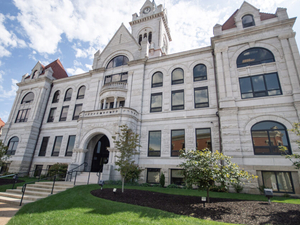
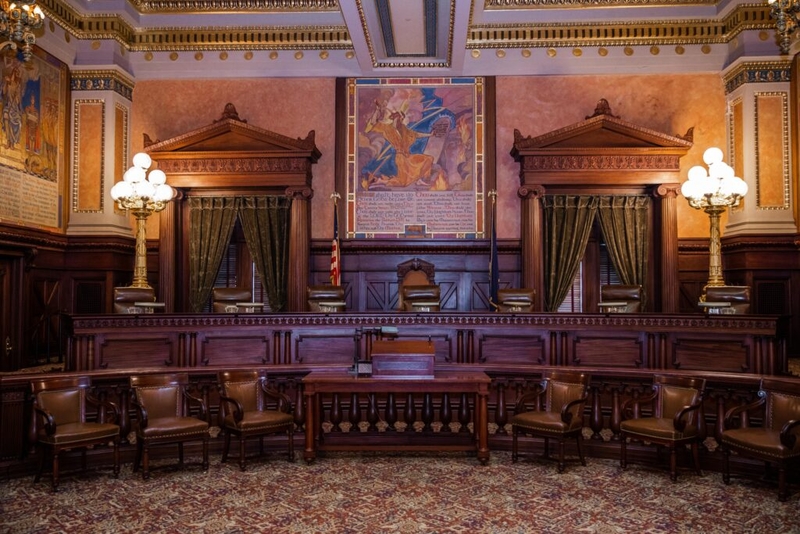
The Supreme Court of Pennsylvania chamber at the Capitol in Harrisburg. (Photo from the Unified Judicial System of Pennsylvania)
The Pennsylvania Supreme Court has agreed to address the question of whether their March decision finding mandatory life sentences for second-degree murder unconstitutional should apply in the cases of those already sentenced.
On Tuesday, the court granted an appeal petition filed on behalf of Jerome Coffey by the Abolitionist Law Center in April. Coffey was convicted in 1994, and has spent more than 30 years incarcerated. The Abolitionist Law Center claims no physical evidence linked him to the crime, that a key prosecution witness recanted a statement, and that his trial counsel provided ineffective assistance.
Second degree murder, also known as felony murder, is a charge brought when a victim dies during the commission of another felony, even if the perpetrator never intended or planned to kill. Until recently, the charge came with a mandatory life without parole sentence, regardless of the circumstances of the crime or whether the person sentenced was directly responsible for the victim’s death.
That changed after a landmark ruling in a case called Commonwealth v. Derek Lee. In 2014, Lee took part in an armed home robbery in Pittsburgh. While he was in a different room, his accomplice shot and killed the victim, Leonard Butler.
Lee was charged with second-degree murder, and sentenced to life in prison without parole. The Abolitionist Law Center represented him in an appeal that wound its way to the state Supreme Court, which found requiring a life sentence in all cases of felony murder violated the state constitution’s ban on cruel punishments.
While the court ruling found mandatory life sentences for second-degree murder unconstitutional, it did not address the question of what’s known as “retroactivity,” meaning whether it should apply to those who were sentenced before their decision.
Instead, the justices gave the state legislature 120 days to pass legislation addressing the question, but lawmakers were unable to come to a consensus by the July deadline.
Who’s serving felony murder sentences in Pennsylvania prisons?
More than 1,100 people are currently serving mandatory life without parole sentences for felony murder. More than half of them are older than 50 years old and a majority have spent over 25 years in prison.
“Mr. Coffey is one of more than 1,100 people who are waiting for the promise of the Supreme Court’s decision in Lee to be fulfilled,” Bret Grote, legal director at the Abolitionist Law Center, said in a statement. “We are determined to ensure that Mr. Coffey and all those who are serving this unconstitutional sentence have their rights vindicated and are provided the opportunity to return to their communities.”
While Coffey’s appeal petition requested the court review his sentence and the circumstances of his conviction, the court only agreed to take up the question of whether old second-degree murder sentences before the mandatory life sentence was struck down can stand.
In September, attorneys asked the high court to exercise its rarely used “King’s Bench power” which allows the justices to bypass lower courts and take up questions of immediate public importance.
According to Quinn Cozzens, an attorney with the Abolitionist Law Center, the decision to take up Coffey’s appeal appears to signal the court is taking another avenue to decide the same question, though it may end up taking slightly longer.
“Ordinarily, the briefing and argument would be done in the next six months or so,” Cozzens said, though he emphasized timelines in court cases can vary widely. “Then it’s however long the court wants to take after that” to issue a decision.
“We’re pretty happy that the court recognizes the urgency of this situation ,” he added.

Harrisburg, PA