Two years after ‘red mud’ escaped alumina refinery, LDEQ hasn’t penalized company
Aug 05, 2026 | 5:00 am ET
Description
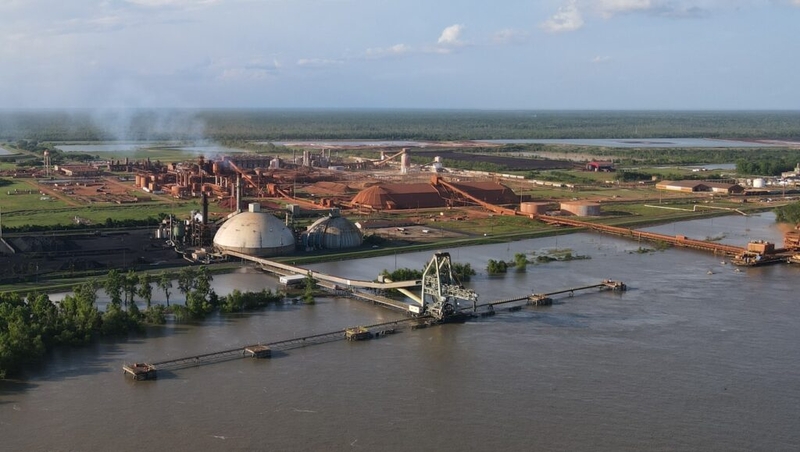
The Atlantic Alumina, a.k.a. Atalco, bauxite refinery in Gramercy, Louisiana. (Wes Muller/Louisiana Illuminator)
More than two years after environmental regulators first documented industrial ‘red mud’ waste from the Atalco Gramercy alumina refinery escaping into public waterways, the state has yet to fine or penalize the company.
Instead, the Louisiana Department of Environmental Quality remains engaged in confidential settlement negotiations with the company while a federal judge has kept a citizen lawsuit against Atalco sidelined. Meanwhile, state inspectors reported in May finding more waste from the refinery leaking into public ditches that drain to a swamp that connects to Lake Maurepas.
U.S. District Court Judge Anna St. John ruled Friday the Louisiana Environmental Action Network’s lawsuit against Atalco cannot resume while LDEQ continues its talks with Atalco. The group’s case against the refinery was filed last October, and the parties agreed to pause the suit in February.
Atalco refines bauxite, a rust-colored rock containing raw metals, into an ultra-fine white “alumina” powder used to make smelted aluminum. The process produces a large amount of waste, most of it a red sludge containing corrosive chemicals, that’s stored adjacent to the refinery in containment lakes surrounded by 50-feet-high levees.
LEAN’s lawsuit and the LDEQ’s findings are based largely on waste leaks agency inspectors discovered during a series of visits to the facility starting in mid-2024. According to LDEQ records, the waste eroded the levees and escaped offsite. Subsequent testing found high concentrations of heavy metals in water and soil samples collected from ditches leading to the Blind River swamp that connects to Lake Maurepas.
The pollution continued for several months despite Atalco’s efforts to repair its containment levees. State and federal regulators have cited Atalco multiple times for those leaks as well as for wastewater violations involving its discharge pipes into Mississippi River and workplace safety incidents.
The Illuminator detailed the extent of the pollution and its impact in a series of reports last year.
Military contract to expand Atalco refinery in Gramercy, add 500 jobs
In a May 26 follow-up visit to the alumina refinery this year, LDEQ inspectors found that the four levee breaches it documented a year earlier had been repaired, but another levee break observed in June 2025 was still present. The state also recorded that unpermitted waste material from the facility’s levee system was “sloughing off into a wooded area beyond the fence.”
The same inspection report notes water in two of the drainage ditches was cloudy and discolored with high alkalinity levels. Inspectors’ photographs show rust-colored water in one of the outfalls and a brighter pink water in another.
Atalco did address overgrown vegetation around its levees that LDEQ said was a main reason refinery workers didn’t notice erosion that allowed the waste seepage. The company also took steps to fix issues with its drainage and sewage treatment systems, the report states.
The Department of Environmental Quality can levy fines ranging from $100 to $32,500 per violation depending on its severity and the degree of risk it poses to public health or property. However, the agency often settles cases for amounts far below the maximum fine.
Following a 2017 compliance inspection, LDEQ cited Atalco for 78 violations mostly related to its air pollution permit. The state accepted a settlement offer of $75,000 and allowed Atalco to deny wrongdoing.
In 2015, regulators discovered the refinery had been unlawfully emitting mercury into the air for decades. The company, then called Noranda, was fined $95,000 and issued a state permit to allow it to continue releasing mercury, according to The Times-Picayune.
Louisiana Environmental Action Network executive director Marylee Orr said the goal of its lawsuit is to make sure LDEQ doesn’t let Atalco off with a similarly light penalty. LEAN filed its suit under a federal Clean Water Act provision that allows any citizen to seek enforcement of environmental laws, rather than financial awards, when regulators fail to act.
LEAN agreed to pause the litigation in February while it pursued settlement talks with Atalco.
Gramercy alumina refinery plans to monitor water, soil for ‘red mud’ contamination
Reached last week, an Atalco spokesperson declined to comment for this report, but the company has argued the lawsuit is unnecessary because of LDEQ’s “diligent prosecution” of the alleged violations.
In Friday’s ruling, Judge St. John, a Trump appointee, wrote that the stay was based on LDEQ’s enforcement proceedings against Atalco. The state agency is engaged in negotiations with Atalco over potential fines and sanctions that are expected to last until Oct. 13 barring any extensions. The judge ordered the parties to file a joint status report on those proceedings by Oct. 20.
LDEQ did not respond to multiple calls and emails requesting comment on the case.
In an email Friday, Orr said she was “deeply disappointed” with the judge’s decision
“There is a process for this, and it feels like the community is being shut out,” Orr wrote. “This is about protecting the community, public health and the natural resources in that area. When the court revisits this in October, I hope they decide it is fair and just for communities who are affected to have a voice.”
Opened in 1958 as Kaiser Aluminum, Atalco’s Gramercy facility is the only remaining bauxite refinery in the United States. The company bills itself as vital to national security and signed a contract with the Trump administration earlier this year to deliver alumina to the U.S. Department of Defense.
Gov. Jeff Landry said the “strategic partnership” with the federal government “will revitalize a critical industrial facility, retain skilled jobs and position America to produce essential materials domestically at a time when supply chain security has never been more important.”
Baton Rouge, LA