New Hampshire is likely to stay wedded to the regional grid. Should the relationship be reformed?
Aug 05, 2026 | 5:00 am ET

Description
A consultant's report filed in July suggested it would be cost prohibitive for New Hampshire to leave the New England electric grid, despite some lawmakers' hopes. But there are options shy of leaving the grid, experts said, to push for changes to how New Hampshire operates within the regional electricity market. (Photo courtesy ISO-NE)
With the prospect of an electrically independent New Hampshire unlikely, officials must consider how the state could find a less lonely path toward achieving its energy goals.
A Republican-backed bill passed in 2025 initially called for the state to explore leaving New England’s regional electric system, something supporters hoped would lower bills for ratepayers in New Hampshire. But the ensuing report, released in July, did not support that hypothesis. Ultimately, it concluded, sharing the grid is a net benefit for New Hampshire ratepayers — and leaving would, in fact, raise costs.
What New Hampshire might do in lieu of withdrawing, the consultants wrote, is push for change within the forest of regulatory structures that oversee electric markets in New Hampshire and New England at large.
“New Hampshire stands alone on a lot of issues with ISO-NE (the regional grid operator), but I think that’s just the way the situation is, and pulling out of the ISO isn’t going to help,” said Rep. Michael Harrington, a Strafford Republican and co-sponsor of the bill that called for the study. “… As we go forward, it’s going to be a regional issue, and it’s just difficult to get around that fact.”
Harrington and other energy experts weighed in on what changes they want to see New Hampshire push for in the coming months and years, from increased federal scrutiny of utility spending to structural modifications within the ISO itself.
Zeroing in on transmission spending
The cost of energy contributes to high electricity bills, but it’s not the only factor.
The price of moving and delivering reliable energy to customers is also reflected in the costs that hit ratepayers each month — and increasing scrutiny on those harder-to-visualize numbers would be one way New Hampshire could exert its influence to help them, said Harrington, a member of the House Committee on Science, Technology, and Energy.
New England states are already joining forces around one such example they say is underscrutinized: “asset condition projects,” which entail upgrades and replacements to electric transmission infrastructure.
When utilities recommend upgrades to distribution infrastructure, like local power lines, those projects face scrutiny by the New Hampshire Public Utilities Commission before they are approved to move ahead. Most aspects of projects dealing with transmission infrastructure, on the other hand, are regulated at the national level by the Federal Energy Regulatory Commission. One reason for this is that transmission networks are often interstate.
Yet that federal review, in the eyes of some New England policymakers, is insufficient. It is based on a “presumption of prudence,” according to the New England States Committee on Electricity — a presumption which, in Harrington’s view, bypasses the scrutiny that similar distribution-level projects must face at the state level.
The utility’s request is escalated to another level of review only if another party mounts a challenge, Harrington said.
That is not enough oversight, Harrington said. He wants to see more in-depth scrutiny of the costs involved in asset condition projects to ensure they are not excessive, because those costs — like others taken on by regulated utilities — are ultimately recovered from ratepayers.
“If no one’s watching, your pencil’s just not quite as sharp,” Harrington said.
An example of one such contested asset condition project is a proposal from Eversource Energy known as the X-178 transmission project. The work involved would take place in New Hampshire and cost about $360 million.
New Hampshire Consumer Advocate Donald Kreis is among public advocates from five New England states who filed a complaint with FERC against that project, calling for further examination of the extent of the work and saying the utility had mischaracterized the project in order to get approval for more work, and more spending, than was necessary. (Eversource denied this, saying the proposal was based on engineering assessments of the state of their infrastructure, and that its completion was necessary to continue serving ratepayers with reliable electricity.)
The X-178 project is merely a “poster child” for what has become a much larger issue, Kreis said in a phone interview on Tuesday.
“What these companies do is they just repair, replace, rebuild, and expand existing transmission facilities. They (associated costs) get put into rates automatically, and nobody scrutinizes them,” he said.
In response to alarm from New England governors and states communicated by the New England States Committee on Electricity, ISO-NE has agreed to “review” asset condition projects, Kreis said. But that new responsibility is limited, and does not give the ISO the authority to approve or reject the projects, he added.
There are other opportunities New Hampshire could pursue to drill down on spending by transmission utilities, Harrington said. That includes, he said, pushing for the prompt return of about $1.5 billion that FERC ruled this year transmission owners had overcharged ratepayers.
That ruling adjusted the amount that transmission owners are allowed to profit off their investments in infrastructure, both retroactively and in the future. But utilities, including Eversource, pushed back against that ruling, saying they would not be able to fund projects without higher returns.
Staying engaged in these evolving discussions, at both the ISO-NE and federal level, will be critical to lowering costs and protecting ratepayers, said Harrington.
“Those are really big, big issues,” he said.
Structural changes within the ISO
Kreis supported the push for the London Economics study when it was initially proposed, he said, testifying in support of the Republican-backed bill that called for it.
But during that process, he also requested additional areas of inquiry, including an assessment of whether the existing governance structure of ISO-NE was “sufficiently” transparent and “accountable to the public.”
The finished report does not take up those questions in depth, Kreis said on Tuesday. That leaves an open question about whether the structure of the ISO could be altered to allow more accountability to states and ratepayers.
Kreis thinks it could be, such as by incorporating the ISO as a nonprofit in a New England state, rather than its current incorporation in Delaware, to bring it under the purview of a local attorney general.
He also called for changes to the makeup of the grid operator’s 10-member board of directors. At present, board members are chosen through a nominating process that involves existing board members among other energy market participants and public utility commissioners. But this method of choosing board-members is “self-perpetuating,” Kreis said. He suggested changes such as increased input from each state’s governor in the nomination process or a population-based membership formula to ensure proportional membership from each state.
Megan Stone, legislative liaison for the New Hampshire Department of Energy, said the department was required to consider how its participation in the regional grid affected costs for ratepayers. Focus areas for the department include potential “reforms” to the ancillary services market, capacity market, and how long-term transmission projects are planned, she said. Reforming how asset condition projects are regulated is also a “priority,” she added.
“The report highlights some ongoing regional discussions that the Department will continue to play a role in and advocate for reforms that will reduce costs for New Hampshire ratepayers,” she said.
State-level changes hold weight, too
For Rep. Kat McGhee, a Hollis Democrat and ranking member of the House Committee on Science, Technology, and Energy, New Hampshire could also make changes within state government to ensure that its interests and concerns are adequately expressed at the regional level — and translated into local action.
“I think that looking at the ISO is a knee-jerk reaction to place the blame elsewhere, and in reality we haven’t leveraged the levers that we have,” McGhee said.
McGhee said the New Hampshire Department of Energy and Public Utilities Commission could do more to represent the state’s interests regionally.
“I think the problem for the state of New Hampshire for quite some time has been that we don’t have subject matter expertise in our energy segment of the government, so we don’t know what to ask for,” she said.
New Hampshire legislators tend to be united in their desire to lower costs for ratepayers. But without a broader, cohesive energy plan for the state, they often diverge on the specifics of how to do that, creating chaos and misdirection, McGhee said.
At the state level, aligning on a plan for increased adoption of renewable generation would help lower costs, said Rep. Thomas Cormen, a Lebanon Democrat and member of the House Committee on Science, Technology, and Energy.
Cormen also criticized how the Public Utilities Commission recently began requiring the state’s distribution utilities to procure about half of their electricity on the daily spot market, which in some instances can raise costs — although it may save money in the long term, Cormen said. Reassessing that policy could temper price volatility, he said.
Meanwhile, taking a broader look at the other factors that make energy so expensive, including costs beyond just electricity bills, would help too, McGhee said. She pointed to the high cost of heating oil, an expensive fuel that homes in the Northeast are disproportionately reliant on. Leveraging federal rebates to increase adoption of heat pumps instead of fuel oil could be one way to immediately lower energy costs for consumers, she said.
“The technology is available, and we could be investing in New Hampshire-based companies, but we don’t,” she said.
Working with neighbors
The report’s conclusion that separating from the rest of New England is not a feasible path forward was in line with Harrington’s expectations, he said on Tuesday.
The exercise highlighted just how complex the electricity market and governance structures around it really are, he said. Yet when that reality is obscured, the grid operator can become the focus of anxiety around energy prices, he added.
“Because it’s sort of an easy target to go after, a lot of people say, ‘Oh, we’ll get out of the ISO, we’re going to save all this money,'” he said. But the London Economics study, Harrington said, highlighted a variety of intricate reasons why that is not the case.
“I think hopefully, what this will do is end that debate,” he said. “Now we can concentrate on going forward with other methods … a lot of which will involve working with other states. I mean, that’s just the way it is.”
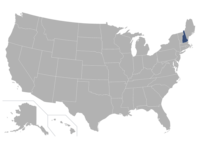
Concord, NH