As forests burn across the state, a cluster of residential fires also takes a toll
Aug 05, 2026 | 7:01 am ET
Description
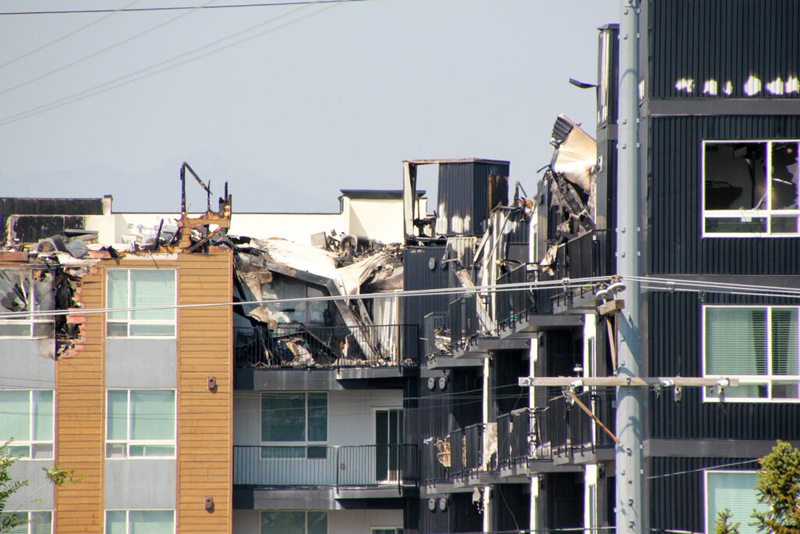
The North Union Apartments in Midvale are pictured on Tuesday, Aug. 4, 2026, after a large fire days earlier displaced residents from all 220 occupied units. (McKenzie Romero/Utah News Dispatch)
Utah’s raging wildfires have burned enough land in the backcountry to match the size of Salt Lake County this year. And along northern Utah’s urban corridor, a number of recent structure fires have also proved destructive, torching homes, displacing hundreds of people and forcing still more to evacuate.
“Collectively, it’s been a very, very busy season,” Sandy Fire Chief Ryan McConaghie said Tuesday.
The spate of house and apartment fires taking place from Cache County’s small city of Nibley to more densely populated West Jordan has kept firefighters hard at work as their departments focus on keeping them safe in this summer’s punishing heat.
And even if they sound like a broken record, city officials are urging Utahns to stay vigilant and on their best behavior, calling attention to this summer’s tinder-dry conditions.
“We try to tell people, again: If you’re pulling trailers, try not to be dragging chains,” said Nate Cochran, spokesperson for Unified Fire Authority. “If you are smoking, try not to flick your cigarette butts out the window. If you are doing any type of barbecuing or outdoor fires — anything like that — making sure you have a water source with you.”
He noted firefighting agencies help each other out when backup is needed, but said if they get spread too thin, response times may stretch out a somewhat longer.
McConaghie and Cochran said their agencies have been stocking up on electrolyte supplements and keeping a close eye on crews to help ensure they do not overheat as they battle blazes in scorching temperatures.
“We try to cycle guys into what we call ‘rehab,’ let them take their gear off, cool down, hydrate up, and then just really watching those work cycles,” Cochran said.
But the high temperatures can still take a toll. Cochran said a Unified firefighter was treated for heat exhaustion last week after attacking an aggressive apartment fire in Midvale that tore through the building’s roof and top floor, displacing residents of more than 200 apartments.
Thankfully, the agency serving unincorporated areas of Salt Lake County and the city of Eagle Mountain hasn’t recorded any major injuries this summer, Cochran added.
But some residents have been severely affected by the fires. Two people in Sandy were hospitalized and a cat was killed in a house fire this week that was sparked by a candle, McConaghie said.
He and Cochran agreed that while blazing outside temperatures don’t seem to intensify house fires, gusty winds will carry them quickly to other properties. And in an indirect result of hotter weather, overworked air conditioning units can also place stress on mechanical equipment that can lead to fires, they said. As for the cause of the Midvale fire, officials cited a mechanical issue but haven’t released further details.
McConaghie said it’s fortunate his community is not experiencing the level of devastation seen in the Pacific Northwest. In Spokane, Washington, and its surrounding areas this week, hundreds of homes and other buildings were leveled and more than 65,000 people were told to evacuate because of wildfires. Officials there said Monday they arrested a man suspected of arson.
With a focus on the potential for devastating wildfires where Utah neighborhoods meet rugged terrain, state lawmakers created a program to assess fees on homeowners in those zones and allow them to trim down that expense by taking steps to mitigate fire risk. Inspectors are expected to start visiting properties in coming weeks.
Salt Lake City, UT