Elliott Pritt withdraws from House ballot; law prohibits GOP to fill vacancy for November election
Aug 04, 2026 | 4:28 pm ET
Description
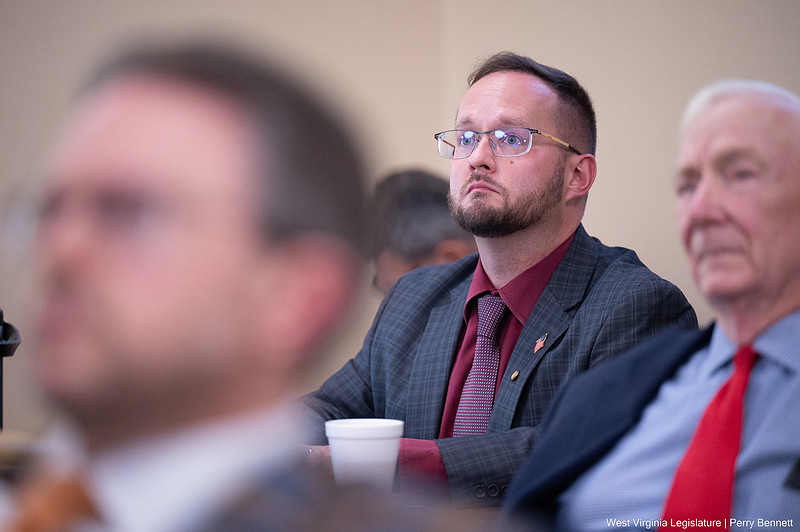
Elliott Pritt, a Republican, withdrew his name from the ballot for the House of Delegates District 50 race. Pritt recently resigned from the House after being charged with enticement of a minor in Fayette County. (Perry Bennett | West Virginia Legislative Photography)
Elliott Pritt, disgraced former Republican House member arrested last month, withdrew his name from the ballot for the November election. He was seeking reelection to the House of Delegates in Fayette County.
“The Office of the Secretary of State received formal notice of the withdrawal this afternoon,” West Virginia Secretary of State Kris Warner’s office said in a news release on Tuesday.
Pritt, a public school teacher, was arrested July 22 and charged with enticement of a minor as a federal crime. He has not yet entered a plea and is currently held in a Kentucky correctional facility.
A 2024 state election law does not permit the Republican Party to fill the vacancy on the general election ballot created by Pritt’s withdrawal.
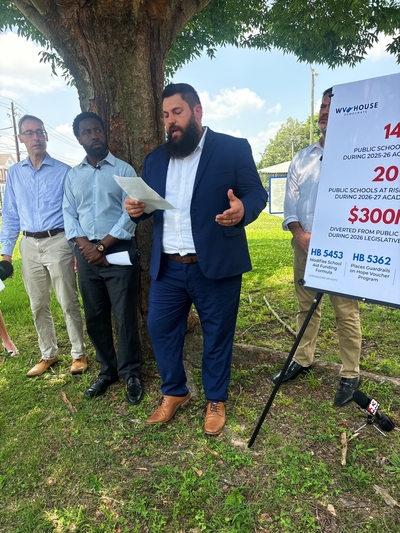
Matt Anderson, a special education teacher, is the Democratic challenger in the race.
“I feel that my job is to instill the trust back into District 50,” said Anderson, 37. “It’s under unfortunate circumstances that this race has taken this turn, but we’re going forward.”
A criminal complaint said the family of a 15-year-old female reported that their child had been sexually abused by Pritt, leading to the charges.
Pritt, 36, allegedly communicated with the girl online online games and apps before asking her to meet him in his classroom at Oak Hill High School to engage in sexual activity, which occurred on five to 10 occasions, according to the complaint.
Pritt was first elected as a Democrat to the House in 2022. He switched to the Republican party in 2023. He resigned from the House last week in a one-sentence letter to House Speaker Roger Hanshaw.
Withdrawing from the ballot is a separate process, and West Virginia code permits a candidate for the general election to withdraw by filing a notarized statement of withdrawal with the Secretary of State no later than the close of business on Aug 11, 2026.
A Republican-sponsored bill prohibits political parties from replacing a nominee late in the election process, thus restricting how the party can deal with Pritt’s seat. It went into effect last year.
Josh Holstein, chair of the West Virginia Republican Party, declined to comment for this story.
Warner said the Secretary of State’s office “has very little authority to exercise discretion in candidacy matters.”
“The law in this instance is clear. Because the Legislature removed the opportunity for political parties to select replacement candidates on the ballot when a vacancy is created by withdrawal, there is no alternative option to replace the candidate on the ballot,” Warner said.
The West Virginia State Election Commission is scheduled to meet Aug. 7 to consider eligibility challenges for candidates currently on the 2026 General Election ballot. The commission had planned to discuss Pritt’s candidacy but that specific issue is no longer on the agenda due to Pritt’s voluntary withdrawal.
Pritt ran unopposed in the May primary. Anderson received more votes in that race.
Anderson plans to continue knocking doors in the area and talking with residents about his campaign.
“My approach hasn’t changed,” he said. “I’m just going forward talking to everybody … trying to have those hard conversations that we have to have with each other to kind of bring a sense of, I guess, normalcy back.”
The West Virginia Republican Party disavowed Pritt from the party and support of his candidacy in a unanimous vote last week.
Charleston, WV