Florida’s no-children-at-drag shows law upheld by federal appeals court
Aug 04, 2026 | 5:20 pm ET
Description
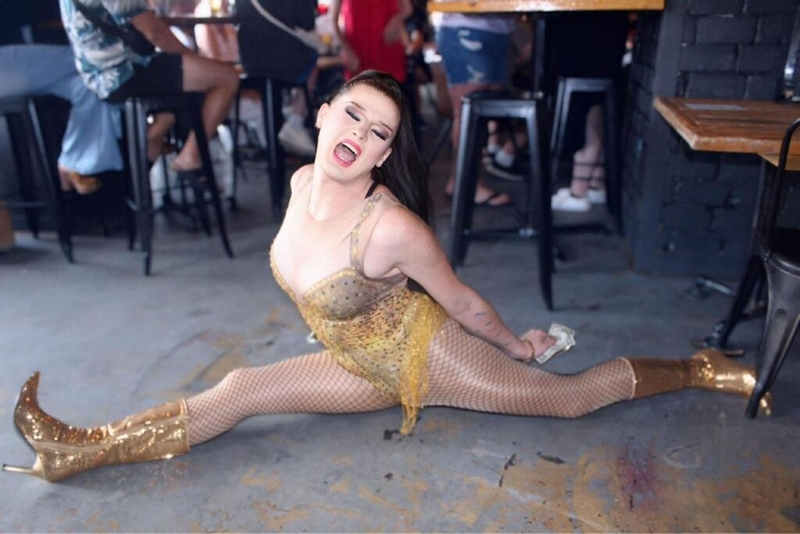
Rose Duvall performing at Drag Brunch of Bay County Florida on Sunday April 26th 2026 (Photo credit: Kassy Byrd)
A federal appeals court has upheld a Florida law banning children from attending drag shows, a measure put in place with the support of Gov. Ron DeSantis.
In an 8-5 opinion handed down Tuesday, the majority ruled the law was constitutional, while those on the dissenting side criticized the measure as overreach.
“The act is a straight forward regulation of obscenity,” wrote Judge Andrew Brasher, who was appointed by President Donald Trump, on behalf of the majority. “Preventing children from attending adult live performances obscene for them is rationally related to Florida’s interest in safeguarding the well-being of minors.”
DeSantis posted on X that “this shouldn’t even be controversial, yet our law protecting kids required to fend off lawsuits and win a case before a divided appellate court.”
The Legislature in 2023 passed SB 1438, the “Protection of Children Act.”
The law threatens fines, loss of operating licenses, and criminal penalties against any venues that expose any “child” to “lewd” performances, even if the child has parental consent.
Dissenting opinions
Hamburger Mary’s is a chain restaurant with locations across the nation including in Florida. The restaurant’s Orlando location (which closed in 2024) hosted drag shows including “family friendly” performances to which children were invited. Its parent company filed the underlying lawsuit seeking to bar DeSantis from enforcing the law.
Judge Robin Rosenbaum issued a scathing 27-page page dissenting opinion criticizing the majority for upholding the statute, which she described as wielding a “Titanic-sized iceberg of chilling power” against freedom of speech.
“Today our Court embraces mess-around-and-find-out (“MAFO”) First Amendment jurisprudence. Under this form of jurisprudence, a citizen can learn whether a law prohibits their speech only by taking a wild guess, presenting their speech, and then seeing if they get arrested and face imprisonment, thousands of dollars in fines, and loss of their business license,” she wrote.
“And it doesn’t tolerate statutes that create prosecutorial skeleton keys allowing “policemen, judges, and juries” to unlock penalties and punish speech on “an ad hoc and subjective basis. Yet today we endorse [the law] even though it’s a MAFO statute that does all these unconstitutional things.”
Rosenbaum, appointed by former President Barack Obama, also took aim at the majority for weighing in on the availability of universal injunctions in overbreadth cases. In her opinion, Rosenberg said it “should go without saying, of course,” that the court shouldn’t consider the scope of an injunction it isn’t upholding.”
Rosenberg wasn’t the only judge to dissent with an opinion.
Judge Nancy Abudu concurred with Rosenberg’s lengthy dissenting opinion but drafted her own focusing on what she said was the growing tendency of judges “as demonstrated in the majority’s opinion” to ignore legislative history in their analyses of state laws.
“Legislative history is not a competing authority to statutory text, but a source of context that can illuminate statutory purpose, help reveal and resolve interpretive ambiguities, and guard against selective or contextual readings that distort legislative design,” he wrote in her nine-page dissent.
Abudu noted that a review of the legislative history shows that both DeSantis and bill sponsor then Rep. Randy Fine had espoused “anti-drag motivations that precipitated the Act’s introduction, debate and passage.”
A review of the legislative history also, she said, showed the state understood the law was vague and “would lead to uncertainty for Hamburger Mary’s and similar establishments, thereby chilling protected as well as unprotected expression.”
An analysis for the bill prepared by the legislative staff cautions the bill’s “indeterminate scope could lead venues to cancel performances based on a justified fear of prosecution simply for engaging in otherwise lawful behavior. That concern goes to the heart of Hamburger Mary’s challenge: the Act’s ambiguity does not merely create difficult line-drawing questions; it encourages speakers to selfcensor,” Agudu wrote.
A three-year legal journey
Following passage of the law in 2023, Hamburger Mary’s sued the state alleging the law violated its free speech and was vague, and sought an injunction, which U.S. District Judge Gregory Presnell granted.
The state appealed to a three-judge U.S. Court of Appeals for the 11th Circuit panel, which affirmed the lower court decision in a 2-1 opinion.
The DeSantis administration appealed to the U.S. Supreme Court, asking it to reinstate the law pending the legal challenges, but the justices declined to do so in a 6-3 ruling, with justices Clarence Thomas, Samuel Alito, and Neil Gorsuch dissenting
The case wound up back before the 11th Circuit, which agreed to hear it en banc, with all circuit judges participating.
“After additional briefing and with the benefit of oral argument, we are convinced the district court erred in preliminarily enjoining the enforcement of the Act,” a majority of the court opined.
Tallahassee, FL