Black Hills highway project pits safety against scenery as public comments pour in
Aug 04, 2026 | 4:22 pm ET
Description
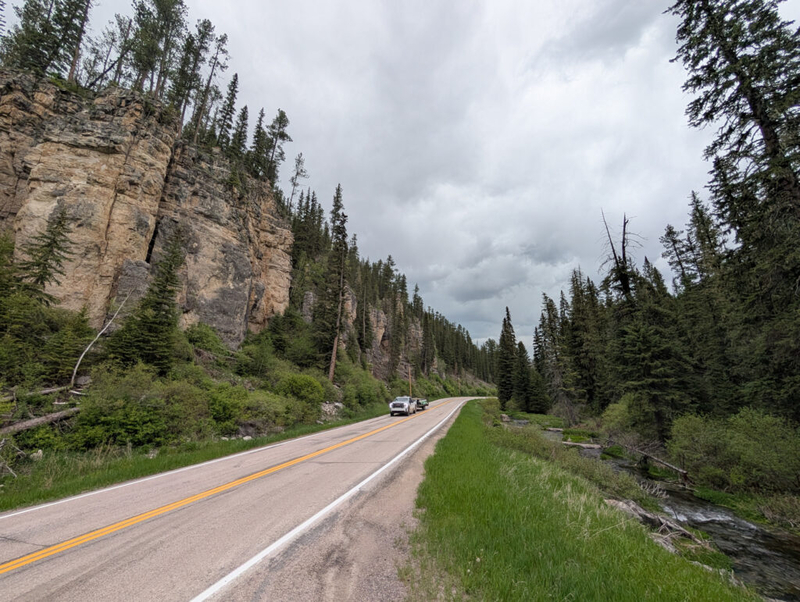
A vehicle drives down U.S. Highway 85 with the Spearfish Canyon cliffs on its right and Spearfish Creek on its left. (Courtesy of Paul Horsted)
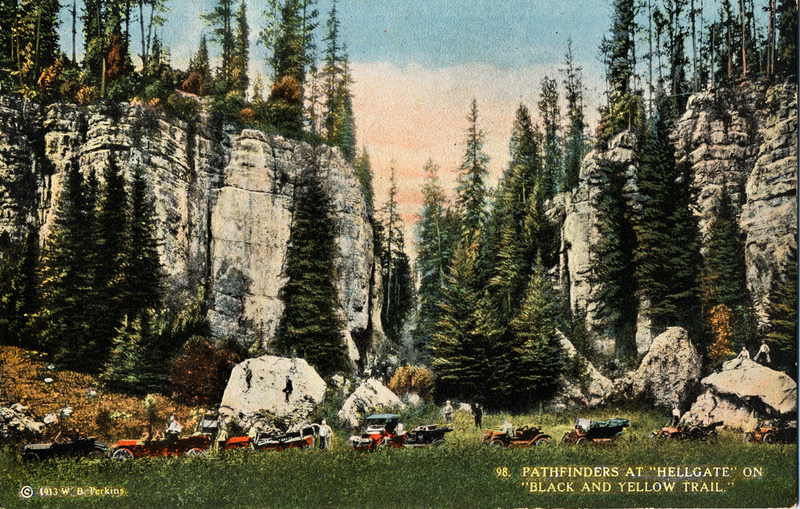
Paul Horsted calls himself a “re-photographer.” He takes new photos at historic places to show what has and hasn’t changed.
His projects have included photography books retracing the 1874 Custer expedition into the Black Hills, and pairing historic photos of Yellowstone National Park with modern ones.
“There’s a joy to that for me,” he said.
Horsted, of Custer, and dozens of other people who appreciate the beauty of the Black Hills are worried about changes that could be wrought by a state highway project. The South Dakota Department of Transportation plans to reconstruct a 16-mile stretch of U.S. Highway 85 from the Wyoming border to the intersection with U.S. Highway 14A at Cheyenne Crossing, which includes picturesque stretches through a canyon cut by Spearfish Creek.
The department says the $47 million project will make the road safer for locals, commuters and visitors. But a surge in public concern about the project’s potential impact on the scenic character of the area led the department to extend the public comment deadline from June 19 to Sept. 4. The department has received more than 200 comments so far regarding the latest version of the proposal.
Horsted walked near the highway earlier this summer. He saw snails and butterflies, and trout swimming in the creek.
“We can’t stand in the way of all development and progress, but something is always lost along the way,” Horsted said. “That’s what some of us are longing for and aiming to preserve as much as we can when it comes to this project and the incremental development that comes with it.”
The organizer of opposition to the project is David Miller, who grew up in Deadwood and lives in Rapid City. He chooses not to live within the Black Hills, he said, hoping to leave as little impact on the forest as possible.
“We would sacrifice a lot of what makes this place what it is for speed and convenience,” Miller said of the highway project.
State says balance needed between beauty and safety
U.S. 85 has been regraded, resurfaced or repaired 10 times since 1950, but hasn’t been touched since 2010. The department says the roadway is in poor condition, and the project would also widen lanes, add paved shoulders and extend “clear zones” — buffer areas just beyond the road’s edge — to increase safety in case of run-off-the-road crashes.
The goal is to find a balance between traffic safety and preserving the Black Hills, said Mark Malone, department project manager.
“Having a safer highway and an aesthetically pleasing highway do not have to be mutually exclusive,” Malone said in an email.
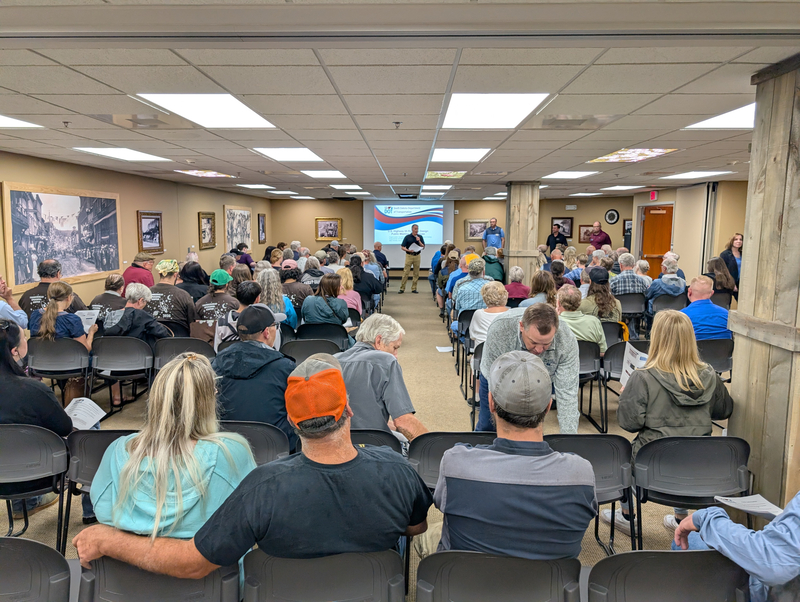
Engineers have been refining the proposal since a June open house. In an email to Miller, Malone said the team plans to “take a closer look” at a segment of the project to “identify areas where centerline shifts may not be necessary.” As of June, the proposal had eight locations where the road would be realigned.
In Spearfish Canyon, there’s little room to maneuver. Any shift toward the canyon walls risks disturbing rock faces and vegetation, project critics say, and any shift toward the creek risks encroaching on the waterway and its banks.
Malone said that as the department “develops alternatives or refines current options” it will seek to minimize work near the creek and “strive to reduce impacts” to landowners along the road.
About 600 vehicles traverse the highway each weekday, and 850 per day on weekends. The speed limit is 55 mph in most stretches, though curves have slower advisory speed limits.
The June proposal calls for roadway adjustments to provide a “consistent design speed,” Malone said.
“This inconsistency on the existing roadway creates issues for driver expectations for unfamiliar drivers as well as leads drivers either speeding up or slowing down,” Malone said. “The variations in their speed, especially the large differential between vehicles, create safety concerns and lead to crashes.”
Between 2020 and 2024, 77 crashes resulted in one fatality and 31 injuries, a crash rate more than six times higher than the statewide average for “similar facilities” — roads of comparable type and traffic volume — over that time period. The roadway’s crash rate is 9.07 crashes per million vehicle miles traveled. A comparable roadway is U.S. Highway 14A, which has a crash rate of 1.27.
About a third of the crashes involved motorcycles and more than one-fourth involved wild animals. Vehicles left the roadway in about 60% of crashes.
Most of the crashes happened in optimal driving conditions, during daylight hours when the road was dry. More than half occurred between June and September — a period that includes the annual Sturgis Motorcycle Rally — and about one-third involved turning or lane changing.
Concerns about ‘incremental development’
Horsted, Miller and others opposed to the project are sensitive to the potential impacts on the environment after witnessing other recent road construction in the Black Hills — particularly on U.S. 385, a $72 million project from Deadwood to Hill City that widened lanes, extended shoulders, straightened curves and required clearing trees and blasting rock.
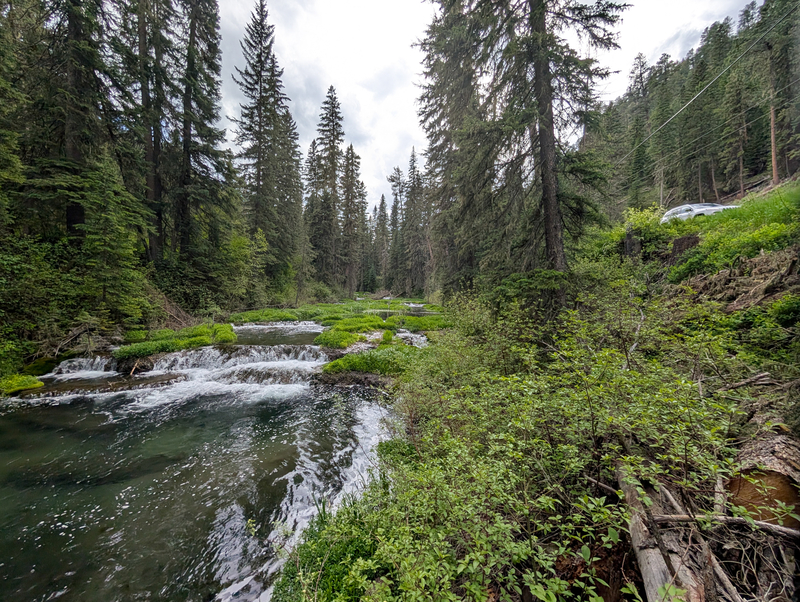
Such reconstruction favors convenience over land stewardship, Horsted said, potentially turning U.S. 85 into “just another strip of pavement through the Black Hills.”
Horsted wonders if widening the road and shoulders is the only way to make the highway safe, or if reduced speed limits or other traffic-calming measures could work.
Not everyone opposes the project. Robin Nichols Miller, a local who drives on U.S. 85 daily, said the road is a hazard.
“There are no shoulders on this road, so if someone slides or runs off it, they will more than likely incur a rollover crash,” Nichols Miller wrote in response to a social media post by Horsted.
She added that some crashes have blocked traffic for hours and that existing pullouts are often too short for large trucks or campers to pull over and let other traffic pass.
“Progress and growth, whether in population or visitors, requires making things safe for everyone,” Nichols Miller said. “Many of us who drive or ride this road on an almost daily basis recognize the road needs to be made safer and can’t wait for them to get started.”
Horsted hopes the department will host another public meeting given the public interest and the potential changes being considered. The department has said it does not plan to do so.
“We’re on guard,” Horsted said. “I hope the Department of Transportation will listen carefully.”

Pierre, SD