‘What did we do wrong now?’: Rural Iowa schools weigh impact of ESA expansion
Jul 31, 2026 | 5:05 pm ET
Description
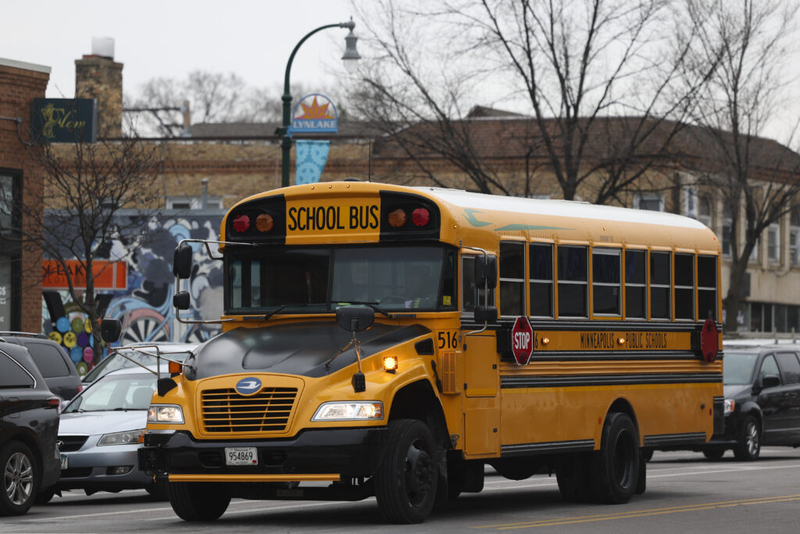
Rural public school districts are grappling with the effects of Iowa's funding of Education Savings Accounts, which cover tuition and other costs of private K-12 schools. (Photo by Ellen Schmidt/Minnesota Reformer)
As Iowa’s Education Savings Account program continues to expand to include all K-12 families, rural public school districts are still trying to determine how the scholarships will affect their classrooms, budgets and enrollment.
Supporters argue ESAs give families more educational choices, while critics say the program diverts money away from public schools that remain the center of many rural communities.
Gov. Kim Reynolds signed the ESA program into law in 2023, allowing eligible families to use public funds toward private school tuition and other expenses. Eligibility for the program has expanded each year. For the 2026-27 school year, all Iowa K-12 families are eligible to receive ESAs.
Joshua Brown, president of Iowa State Education Association, said many public schools have had to make difficult financial decisions that include cutting elective programs or cutting core curriculum teachers.
“You have situations like what was happening in Boone, where they’re eliminating their 100‑year orchestra program to ensure that they can still offer the core curriculum,” Brown said. “Other schools are eliminating a second-grade classroom teacher and just combining classes, which is going to increase class size.”
Brown said in the most drastic cases, rural schools have had to merge with other districts to streamline resources and reduce costs, or choose to only have an elementary school and then their secondary programs go to another district.
Creston
Creston, a town of more than 7,500 people, has two private schools along with its public school district.
Deron Stender, superintendent of Creston Community Schools, said Creston schools only lose a handful of students to private schools each year, but small changes still have a major financial and structural impact.
“Each year we see maybe three to five more kids go than in previous years,” Stender said. “In a district of my size, three to five kids is still a significant number. $8,000 is roughly what a student is worth when they go someplace else.”
Stender said the implementation and expansion of the ESA program has created new challenges for retaining staff and stabilizing the district’s finances.
“We’ve always been challenged with finding and retaining qualified employees, especially in rural communities,” Stender said. “Having two private schools in my community has increased that challenge for us. We lose some of our best teachers because they’re able to pay them the same or more.”
Southeast Valley
Brian Johnson, superintendent of Southeast Valley School District in Webster County, said the “narrative” surrounding public school educators, and laws regarding public schools have led to staff losses for the district.
“The negative narrative that I believe is being spread really affects a lot of these people that have dedicated their lives to educating kids, and it just seems like some of the storylines or some of the laws that are being passed are tough for people to swallow,” Johnson said.
Johnson said most of the students that leave Southeast Valley end up being homeschooled, as there are no private schools in the Southeast Valley District.
Johnson said Iowa public and private schools “play by different rules,” despite both receiving public funding, and that’s “unfair.”
“I know there’s a lot of frustration every spring or winter when the legislative session meets because I get asked like, ‘What now? What did we do wrong now,’” Johnson said. “Why do private schools and public schools, if they’re getting the same amount of funding, not have to follow the same rules or laws or guidelines?”
Market-based competition
Shane Vander Hart, communications director for Iowa Alliance for Choice in Education, said the ESA program allows for competition between public and private schools, which encourages both to be better.
“Ultimately, I think school choice will help improve public schools because it’s forcing them to be competitive,” Vander Hart said. “The majority of Iowans will still send their kids to the public school, but public schools might have to rethink their approach and the legislators might have to rethink the approach to school finance. School districts and school boards, in particular, will have to look at how many, for instance, non-teaching staff they employ.”
Brown argued that the idea of market-based competition does not match what families are seeing in much of rural Iowa, saying there is no accountability for how private schools are using ESA funds.
“The issue with that logic is that we’re not playing by the same rules,” Brown said. “Private schools receiving ESAs have no accountability for how they’re using these funds, and no oversight to ensure that they are following all of the state laws.”
Brown added that in many rural school districts, parents have to make difficult decisions, saying public schools are not properly funded by the state.
“The only choice a parent has is to go to their public school that’s underfunded, or go to an online private school where their student doesn’t have the opportunity to connect with other students,” Brown said.
Vander Hart argued concerns about public school districts losing funding are overstated, saying public schools still receive approximately $1,600 in per pupil funding for ESA recipients who leave public schools.
“They’re still getting money for students they’re not even educating,” Vander Hart said. “This idea that public schools should get money for students that aren’t attending there anymore is something you could argue, but I’m not very sympathetic toward that view.”
Stender said Creston receives nearly $1,200 in per pupil funding for students who leave for private schools, but state laws lock that money into specific categorical funds, such as money for “gifted and talented” or supplemental teacher salaries.
“We could use those $200,000 to hire two or three people to help with our behavioral or mental health issues,” Stender said. “Right now, the way it’s categorical, we can’t do that.”
Des Moines, IA