Hearing for Project Jupiter data center’s air quality permit application rescheduled to September
Jul 31, 2026 | 4:24 pm ET
Description
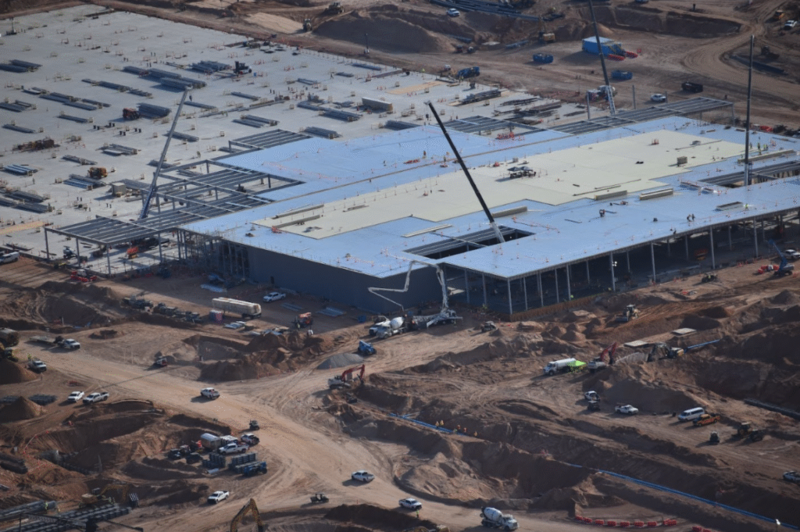
Aerial photos taken on June 26, 2026, show the construction site for Project Jupiter, the Oracle and OpenAI data center project planned for southern New Mexico. (Courtesy of Alexa Reynaud, Food & Water Watch, with aerial support provided by LightHawk)
A public hearing over whether the New Mexico Environment Department should issue an air quality permit for the controversial Project Jupiter data center is being rescheduled to September, according to newly filed documents.
The hearing officer presiding over the matter had previously scheduled the hearing to begin in October. At a scheduling meeting this week, attorneys representing Project Jupiter’s developers requested that the hearing begin earlier, arguing that the October hearing date would risk giving New Mexico Environment Department staff too little time to make a final decision on whether to issue the permit before their Nov. 23 deadline.
Max Shepherd, the hearing officer, told attorneys gathered at the scheduling hearing that he was not going to reschedule it. He said he would keep the October hearing date and examine his options to push out NMED’s Nov. 23 deadline.
However, two days later when NMED published his written scheduling order on its website, it showed he rescheduled the hearing by more than a month. It is now set to begin Sept. 14 and “continue as necessary” at the Sunland Park Multi-Generational Center.
“What happened between Monday morning, when he denied their motion for a new schedule, and Wednesday night?” Colin Cox, senior attorney at the Center for Biological Diversity’s Climate Law Institute, which has intervened in the case, told Source NM. “It’s highly concerning.”
Cox on Friday filed a new motion requesting that Shepherd revert back to the previously scheduled October hearing date.
Maslyn Locke, senior attorney for the New Mexico Environmental Law Center, who has represented residents in lawsuits related to Project Jupiter, said the air quality permit case is among the most complex — and fast-moving — air quality complex cases she’s seen in her career. Under the revised scheduling order, she said attorneys will not have enough time to review the “thousands” of pages of the administrative record, catch their expert witnesses up to speed and prepare for oral arguments by the time the hearing begins in less than two months.
“Rushing this through is going to create more problems,” she said. “The department is neglecting the fact that once this thing is built, it’s really impossible to undo it.”
Shepherd, the hearing officer, when contacted by Source NM, said he could not comment on the rescheduling.
A spokesperson for the state Environment Department in a statement said the department “remains committed to meeting its statutory deadlines no matter the hearing date.”
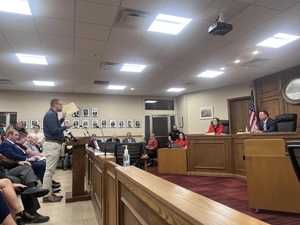
At Monday’s scheduling meeting, Jennifer Bradfute, an attorney representing Project Jupiter developer Yucca Growth Infrastructure, argued that the hearing needs to happen as soon as possible.
Bradfute said her client would stand to lose $325 million per month, beginning in November.
“This project will start to abandon employment opportunities in New Mexico and there are many kids from the labor unions who want to be placed in jobs,” Bradfute said during the meeting. “We really do need this to go to hearing as soon as possible. The state is at jeopardy to lose the project entirely, and I’m not blowing smoke as I state that.”
At a Doña Ana County Board of Commissioners meeting earlier this week, Executive Vice President of Oracle Cloud Infrastructure Mahesh Thiagarajan and STACK Infrastructure Chief Development Officer Bobby Hollis presented the project’s latest job numbers days before an annual report on the matter was due.
Hollis said at the meeting that the project employed nearly 700 New Mexicans during its ongoing construction. To date, it has employed nearly 2,800 construction workers and generated $734 million of contracts with New Mexico suppliers, according to their joint presentation.
The duo also told commissioners that they’re committing to 100% carbon-free energy matching by 2031.
County commissioners had previously set a Friday deadline for Project Jupiter’s developers to file an annual jobs report. However, that report was not readily available Friday afternoon.
In an email to Source NM, a Doña Ana County spokesperson said the report would contain personally identifying information for Project Jupiter employees and that county leaders “will be working with our legal team to get a form of the summary posted on the county’s website as soon as possible.”
Santa Fe, NM