Family of woman shot by police suing Fort Lee, police over 2024 killing
Jul 14, 2026 | 10:03 am ET
Description
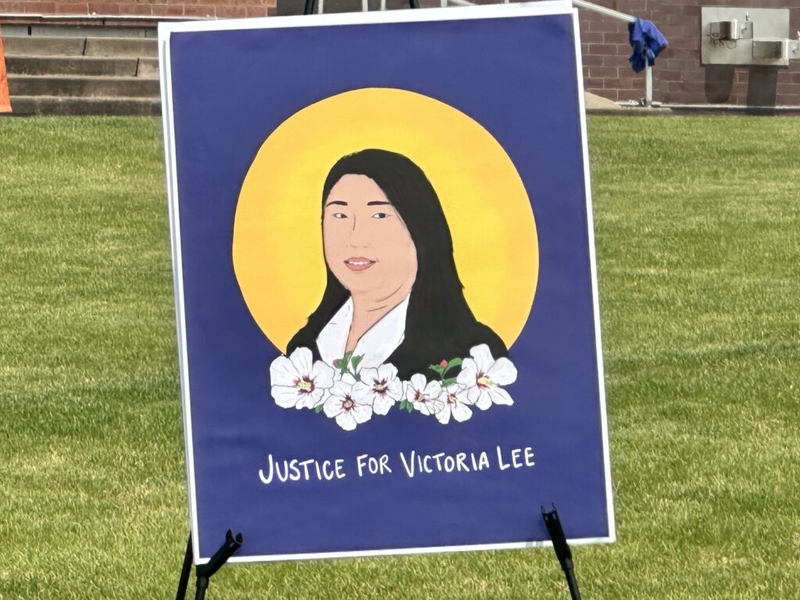
A Fort Lee police officer shot and killed Victoria Lee in 2024. Her family is now suing over her death. (Photo by Sophie Nieto-Munoz | New Jersey Monitor)
The family of a Fort Lee woman shot and killed by police nearly two years ago filed a wrongful death lawsuit on Tuesday against the borough and five of its police officers, alleging they violated the victim’s constitutional rights and federal law.
Victoria Lee’s family says she was experiencing a mental health crisis in the early morning hours of July 28, 2024, when police broke down the front door of their apartment and shot Lee as she approached them with a knife in her hand.
“Victoria was in need of mental health services. Instead, she received a law-enforcement only response — and it ultimately killed her,” the 73-page complaint states.
Her death came shortly after other high-profile police killings, like Najee Seabrooks in Paterson and Andrew Washington in Jersey City, who both were also experiencing mental health crises when they were shot by police.
The deaths renewed calls for revamping how authorities respond to mental health calls. Shortly after Lee’s killing, then-Attorney General Matthew Platkin issued a new directive requiring police to involve a supervisor when responding to barricaded individuals and mandating the presence of mental health professionals and less-lethal weaponry.
The Lee family lawsuit accuses Fort Lee police of excessive force, warrantless entry, and civil conspiracy, and alleges Lee’s killing represents a violation of the federal Americans with Disabilities Act and the Rehabilitation Act. It says the borough’s dispatch policy automatically sends multiple armed officers to any call involving an “emotionally disturbed person” with no option to send a mental health expert, while medical calls receive paramedics and no police officers. That policy denied Lee an opportunity to obtain the same result provided to callers without mental health disabilities who seek assistance from 911, the complaint says.
Fort Lee officials could not immediately be reached to comment.
A state grand jury in July 2025 declined to indict Tony Pickens Jr., the Fort Lee officer who shot Lee.
Lee’s brother called 911 just after 1 a.m. the day of the shooting and requested an ambulance to take her to a mental health clinic (she was diagnosed with bipolar disorder in 2016), according to the complaint. Lee’s brother said she was having a “mental breakdown,” the complaint says.
The dispatcher told him an ambulance and officer would be sent, the complaint states, but the brother said he believed “police would only make things worse.” When her brother called a second time, he mentioned Lee was holding a knife but not threatening anyone with it, and the dispatcher said the request for authorities could not be canceled.
The complaint alleges that Pickens, the first officer to arrive at the Lee apartment, spoke to the family in an “accusatory tone.” Five more officers arrived in the hallway outside the apartment within minutes, and the officers “hurriedly decided” to break down the door, the complaint says.
“Pickens replied right away, ‘I’ll go less lethal,” the lawsuit states.
When the officers opened the door, they found Lee holding a small knife. Officers loudly yelled for her to “drop the knife,” but the lawsuit claims they did not give Lee a chance to do so.
“Within three seconds of breaking open the door, Pickens shot Victoria point-blank in the chest from a few feet away,” the lawsuit says.
At least one cop said “‘f–k’ repeatedly,” while another officer said, “handcuff her, handcuff her” as Lee lay bleeding on the ground, the complaint alleges. Some members of the department administered “lackluster medical care,” asking Lee’s mom to bring them towels, since EMS was not near her apartment when Lee was shot, the complaint says.
The lawsuit notes that Bergen County participates in the state’s Arrive Together program —which pairs police with mental health screeners — but Fort Lee did not at the time of the shooting.
Lee’s mother and brother are also seeking damages for emotional distress from witnessing the shooting and not being allowed to see Lee until she was pronounced dead. In the lawsuit, Lee is remembered as a 25-year-old who enjoyed making music and spending time with her close-knit family.

Trenton, NJ