Hawaiʻi County Council Candidates Rake In Thousands Ahead Of Primary
Jul 14, 2026 | 6:01 am ET
Description
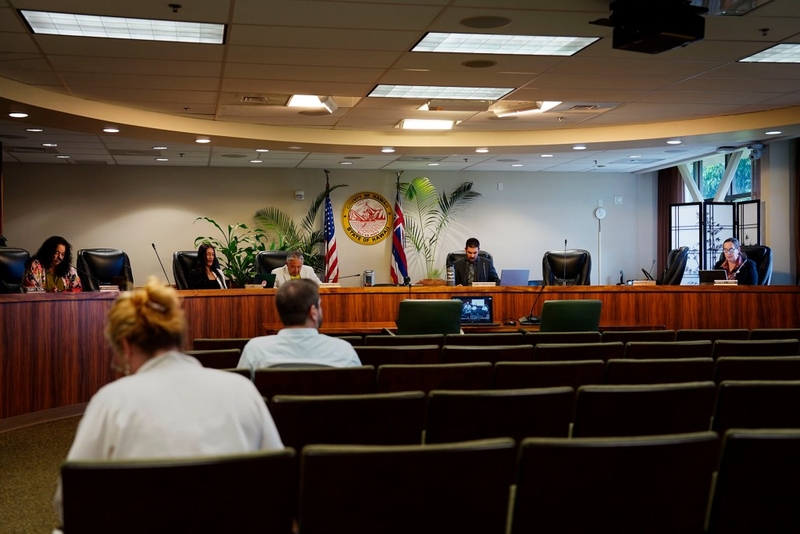
Photo courtesy of Honolulu Civil Beat
Candidates for the nine-member Hawaiʻi County Council have raked in over $131,000 in campaign contributions over the last six months in the final push before the August primary.
The funds are critical to reaching constituents, often going toward mailers, signs and campaign events to get their names and platforms out to voters. Candidates who raise the most tend to win elections, but money isn’t always a clear indicator for who will win, former council chair Valerie Poindexter said.
“What counts is what you're out there doing in the community,” she said. Grassroots campaigning, Poindexter added, can sometimes be more successful in getting votes than raking in large donations from unions and political action committees.
Five candidates raised more than $10,000 each between January and June 30, including Ren del Rosario, JoNelle Fukushima, Jennifer Kagiwada, Wendy Botelho and Manu Powers. Of those, only Kagiwada is an incumbent.
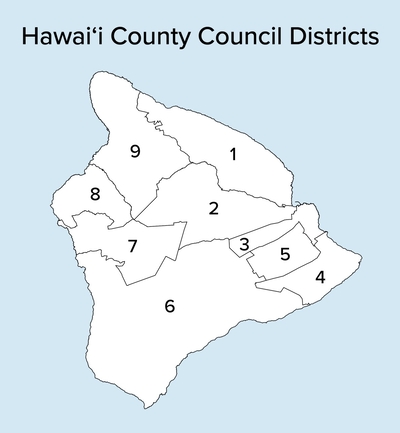
Powers — who is running for the District 7 seat which covers parts of North Kona from Kailua-Kona to Kahaluʻu-Keauhou — raised the most over the last six months, with nearly $21,000 in contributions from 39 contributors.
All of her donations came from individuals, including numerous small business owners in Kona. Powers didn’t receive any money from PACs or influential labor unions. She said that was intentional. While she accepted endorsements from unions and PACs like the International Longshore and Warehouse Union and Huli PAC, a Big Island-based grassroots organization, she said she declined their donations.
“We're running an authentic campaign and speaking with an authentic voice, and no matter what the intention is,” she said, “the narrative can sometimes be blurred by accepting funds from a PAC or a union.”
She’ll face off against Mark Henriques and Eddie Ombac for the District 7 council seat. Henriques didn’t raise any money this election period. Ombac raised over $6,000, including $2,000 from the Hawaii Realtors PAC.
Ombac said he understands why voters are apprehensive toward candidates who accept corporate and PAC money. But he said he wouldn’t let his donors influence his policies.
“I appreciate all the support that we can get, but I'm not part of the old boy network. I’m not down for that,” he said.
District 7 includes the island’s primary tourism and industrial area and is the second largest population center. Along with countywide issues like cesspools, affordability and climate change, the district faces declining businesses in Kailua-Kona village, has been inundated with short-term rentals and has significant traffic congestion.
Powers spent nearly $16,000 between April 26 and June 30 — the most recent campaign finance reporting period — and a total of over $26,000 so far this election. She’s spent the money largely on banners, mailers, t-shirts and other campaign materials including her website. She had just over $4,000 on hand at the end of last month.
Though Powers raised the most since April, she stands in second place for funds raised during the entire election period. Heather Kimball — who is running for reelection for District 1, which covers the Hāmākua coast — has raised the most.
Kimball raised nearly $3,125 between April 26 and June 30. Those funds largely came from individuals, though she did accept $500 from the Plumbers & Pipefitters PAC and $150 from Hamakua Land & Cattle. She’s raised just over $34,000 this election period overall and spent $24,000 so far, with $12,611 cash on hand at the end of last month.
She said she’s never felt beholden to entities that support her campaign and has never been influenced as a council member by her contributors. She’s also returned donations from non-individuals who have been involved with council legislation, but she declined to say which organizations.
“Clear and clean elections are important without the influence of big money and it's unfortunate that the system that we're under doesn't provide more protections and clarity to the public,” Kimball said. “It's much less of an issue at the county level.”
Kimball will face off against former UFC fighter BJ Penn and del Rosario for the District 1 seat. Penn hasn’t received any contributions and del Rosario raised just over $10,000. Del Rosario’s largest contributors were ILWU Local 142 and the Hawaii Realtors Political Action Committee.
Del Rosario was largely self-funded for most of his campaign. He’s started receiving donations in recent months but was $5,200 in debt as of June 30 after spending over $17,000 so far this election and raising almost $14,000. He took out $17,500 in loans this reporting period, according to his disclosure.
“I feel like it's worth it, you know. Even if it is my money,” del Rosario said.
He said he always planned to be self-funded and while he’s grateful for the recent large donations from unions and PACs he doesn’t feel beholden to them. He’s received the maximum allowed donation per candidate – $2,000 — from Hawaii Realtors PAC and ILWU Local 142. Hawaiʻi Realtors is giving more than any other group so far this election, spreading $104,500 across numerous candidates as of June 30. ILWU is the second largest donor at $72,000 overall.
“We're not going to change course and none of them have told me how to run my campaign or to change any of my priorities because if they did, I wouldn't accept their money,” del Rosario said.
Penn did not respond to requests for comment.
Unions, PACs and organizations spent over $30,000 on the council election over the last six months. Though influential labor unions and organizations tend to spend the most on candidates for the state House and Senate, Poindexter says spending on council candidates has been the norm for a while.
“Everything is connected to the council,” she said. Wage increases for the fire and police departments have to be approved by council members, for instance, and the council influences development and sets policy that impacts labor unions and their workers.
Some candidates, Poindexter said, will decline taking money from unions or special interest groups because it can create a perception amongst voters that candidates will be beholden to them if they are elected.
“There's a lot of voters who have a lot of respect for declining money because they feel you're independent from any special interest group,” Poindexter said.
Candidates tend to deny donations from corporations more than unions, she said. Though unions also spend millions to influence public officials with donations, candidates accept their donations because unions represent working class citizens and voters, she said.
“I definitely went after (union) endorsements because it's a lot of our working people here. They fight for fair wages and fair labor practices, so you need that,” Poindexter said.
Unions also provide boots on the ground for campaigning, she said, which can help get candidates' names out there. Union members will help candidates door knock, sign wave and make calls to voters. Though Powers declined union donations, she said she has accepted their help at a recent sign-waving event.
“I was really moved," Powers said, “to see working people who just finished their work day come out and support.”
Council member James Hustace, who represents District 9, and Council Chair Holeka Inaba, who represents District 8, are running unopposed. Hustace raised over $4,000 between January and June and spent over $800 during that time. Inaba reported receiving no contributions since January and spent over $650.
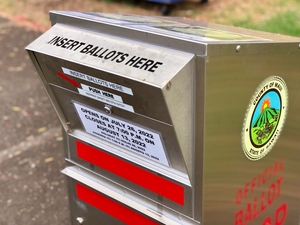
The primary will take place Aug. 8. Candidates who receive more than 50% of the votes will win outright. Otherwise, the top two candidates will advance to the Nov. 3 general election. Primary ballots are expected to arrive by mail starting July 21.
Read the 2026 candidate Q&As here.
Honolulu, HI