Maui Is Pushing The State To Double Down On Palm-Killing Beetles
Jul 09, 2026 | 6:01 am ET

Description
Photo courtesy of Honolulu Civil Beat
Maui and Lānaʻi may be next in line to receive special protections from coconut rhinoceros beetles after community and council members called on state officials to step up.
The Lahaina Community Land Trust has asked the Board of Agriculture and Biosecurity to approve stronger safeguards against the destructive invasive species when it meets later this month, and the Maui County Council on Tuesday unanimously passed a resolution formally urging the state agency to take action.
Molokaʻi had to make a similar push to get interim rules in place last year as one of the only islands without an infestation. It's become an increasingly frustrating experience for residents who want the Department of Agriculture and Biosecurity to be more proactive as new hotspots for the pests are discovered and concerns mount over the beetles' potential to further spread.
“The burden should not fall upon Maui communities to prove infestation after the fact,” land trust treasurer Kapali Keahi told the board in June. “Every month of delay allows opportunities for the CRB to spread.”
The board and agency staff don't consider the bug's latest detections on Maui and Lānaʻi — a half-dozen beetles since April — to be an emergency, but the agency has agreed to work with the community. That non-emergency determination effectively delayed new regulations by at least a month.
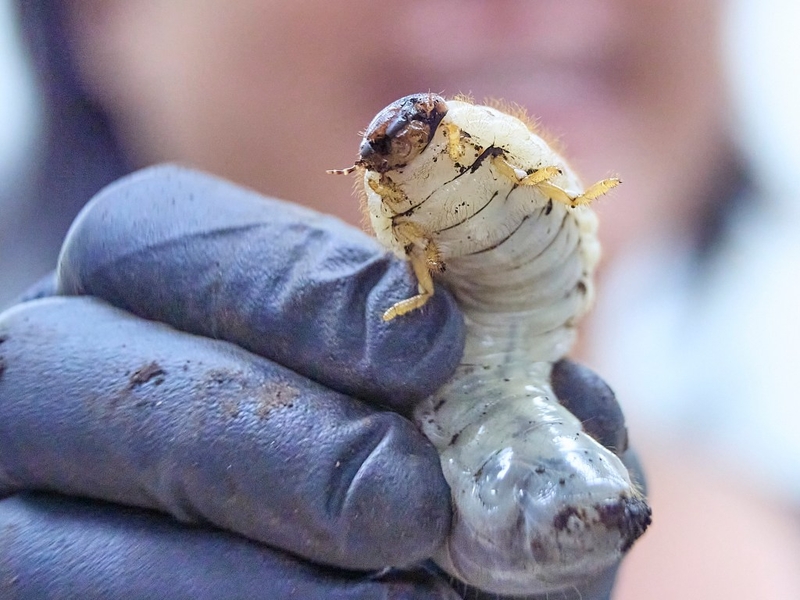
Once the department and Lahaina Community Land Trust have hashed out the interim rules, the board will decide whether to implement them. Those rules, if adopted, will last for a year and will likely clamp down on the inbound transport of plant materials that could harbor beetles or their larvae — the most well known method of transporting invasive pests — mimicking the interim regulations for Molokaʻi.
"We need to plug the holes right now," Autumn Ness, the land trust executive director, told Maui County Council members Tuesday. "This is an imminent threat. We need to implore the department to take on these rules at the next meeting."
The agriculture department has for years faltered in implementing such rules though, whether it's for coconut rhinoceros beetles or other species, such as little fire ants.
"The community has obviously been able to do this. That’s the way it’s been moving for the past couple of years," state Plant Quarantine Manager Jonathan Ho told Civil Beat. "If we had staff dedicated to rule-making, we wouldn’t be so reactive."
The agency has consistently raised concerns about how increased regulations might impact plant sellers who rely heavily on interisland commerce. But now, as the department leads the state’s biosecurity efforts, communities are rankled by the agency’s apparent reluctance to do its job, despite invasive pests figuring at the top of farmers' concerns statewide.
“It's silly that it falls into the hands of civilians and local community organizations and nonprofits to actually do the job of this state department,” Jodie Rosam, Hawaiʻi Wildlife Fund’s plant program specialist, told Civil Beat.
What Is An Emergency?
The state’s denial of Maui and Lānaʻi’s initial request has raised questions about how the department determines what constitutes an emergency. The agency has yet to use its emergency declaration power that the Legislature gave it last year as part of a multimillion-dollar omnibus bill intended to quell mushrooming pest populations.
Department staffers told the biosecurity board that neither island's situation constituted an emergency situation, justifying their stance in part by saying similar rules have failed to keep the beetles off Molokaʻi. State entomologist Chris Kishimoto also noted that the beetle has already been in Hawaiʻi for about a decade, mostly on Oʻahu.
“It’s almost like they forget that our islands individually have the greatest biosecurity barrier known to science – that’s the ocean,” Ness told Civil Beat. “They’re willingly and knowingly poking holes in that fence for reasons I cannot figure out.”
The department also took issue with Lahaina Community Land Trust's request to exempt the state's rare plant program from the rules. The program is focused on preserving and proliferating loulu palms, an endemic species targeted by the coconut rhinoceros beetles. State botanist Matt Keir said the beetle is the biggest threat to the species he's seen in his 25 years on the job.
The other part of the problem is the potential impact on businesses, Ho said. "To take away rights and impede commerce and all those things," he said, the bar "needs to be very high."

Ho said creating a clear process is “something we need to work on” to help the board decide and justify its decisions for the public. But denying Maui and Lānaʻi’s emergency request was not a decision made lightly, he added.
Council members aren't buying it. Council member Tamara Paltin, who introduced the resolution, said she wanted everyone to be held accountable — including state biosecurity leaders and Gov. Josh Green —for the spread of the invasive pest.
Their resolution -- to be transmitted to key leaders, including Gov. Josh Green -- urges the department to take emergency measures to crack down on the beetles before it’s too late. It forecasts "long-term cultural, ecological, and economic damage, costing millions of dollars in mitigation efforts."
Those impacts will be central to a two-part town hall series on the beetles that the county is hosting Thursday and next Monday.
'Much More To Do'
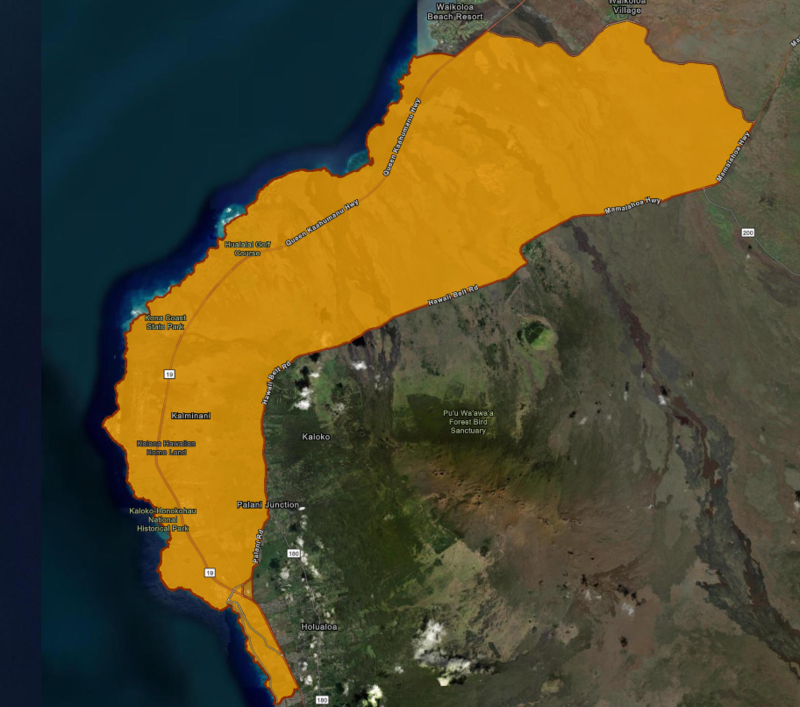
The state biosecurity board in March approved a petition to quarantine parts of Hawaiʻi island’s Kona coast, where the coconut beetles have become entrenched and threaten to spread.
A compliance program was a key facet of the interim regulations within the infested area, requiring plant nurseries and agricultural businesses’ staff to be trained in best practices for mitigation work. If any potential host materials move outside the area, they must move according to rules outlined in the compliance agreements or risk a fine of up to $10,000.
The Big Island Invasive Species Committee has conducted training for 16 businesses so far, though just eight have obtained compliance agreements due to miscommunications over paperwork. Those operations represent "only a fraction" of the businesses in the quarantine area, committee program manager Franny Kinslow Brewer said.
Keahole Agriculture Park, run by the state agricutlure agency, is home to 40 businesses alone. Then there are myriad landscaping businesses and big box stores, including Home Depot, Lowe’s and Walmart.
Nothing has been enforced due to the delays, despite the rules taking effect July 1.
The compliance agreements will end up relying on a high degree of trust because of the lack of staff on the Big Island. Ho compared the program to how speed limits are policed.
It’s “not a foolproof plan,” but it’s one way to try to mitigate the beetles’ spread, especially in light of the agriculture department’s chronic staffing issues, said Keith Weiser, deputy commander of CRB Response, a University of Hawaiʻi team focused on containing the beetles.
“There’s much more to do than we have the capacity for,” he said.
Hawaiʻi County Council members and representatives at the Capitol are also calling on the governor to whip the biosecurity agency into shape, having sent letters to his office this month. Rep. Jeanné Kapela, whose district covers Captain Cook on the Kona coast to Kurtistown to the east, was among them.
"There's a huge fear" of the beetle's potential destruction across the island, Kapela said, which would have commercial, agricultural, environmental and cultural ramifications.
The governor's office deferred comment to the state agriculture department.
Rosam has already seen coconut rhinoceros beetle damage to endemic loulu palms in Kona and is starting to see them move upland. There, she said, they threaten more genetically significant trees.
The letter includes specific requests, including better informing the public about the rules, ensuring everyone knows it's a mandatory process, start enforcing the compliance program and designate a biosecurity staffer to oversee the program.
"I sent that letter to try to push the department," Kapela said, "but also trying to educate community members because there’s certainly more that we can all be doing."
"Hawai‘i Grown" is funded in part by grants from the Stupski Foundation, Ulupono Fund at the Hawai‘i Community Foundation and the Frost Family Foundation. Civil Beat’s coverage of climate change and the environment is supported by The Healy Foundation, the Marisla Fund of the Hawai‘i Community Foundation and the Frost Family Foundation.
Honolulu, HI