What we know about the semitrailers at Salt Lake City’s ICE-owned warehouse
Jun 08, 2026 | 7:01 am ET
Description
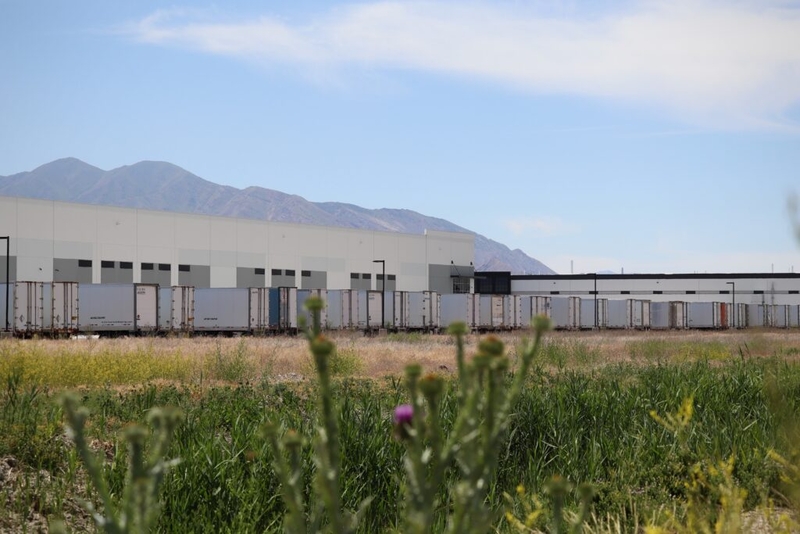
Semi-trailers are pictured in a rear parking area of a Salt Lake City warehouse purchased by the federal government in March for use as an immigrant detention center on Wednesday, June 3, 2026. (Annie Knox/Utah News Dispatch)
Utahns gathering every week at a mega-warehouse to protest its planned use as an immigrant detention center noticed a shift taking place there in recent weeks. Semitrailiers appeared in its rear parking lot in late May and seemed to grow in number after that, raising suspicion that the largely dormant property might finally be transforming to hold people rather than goods.
“We don’t really concentrate on what’s parked out back, but I was like, ‘I don’t remember seeing those there, and this is supposed to be paused,’” TJ Young, one of the demonstrators, recalled thinking.
U.S. Immigration and Customs Enforcement bought the property for $145.4 million in March, one of its priciest purchases, just days after the firing of former Homeland Security Secretary Kristi Noem. Her successor, Markwayne Mullin, paused new warehouse deals as the agency scrutinizes contracts from Noem’s tenure. The department hasn’t said what the shift means for the Utah project and did not address questions about the trailers in a statement to Utah News Dispatch.
“As with any transition, we are reviewing agency policies and proposals,” the department said in an unattributed statement mirroring past comments to news outlets in other states.
A private company, however, shed more insight on the trailers that numbered more than 50 last week. The Swiss train manufacturer Stadler borrowed a rear lot at the warehouse to store trailers during a period of construction at the company’s own property nearby, a spokesperson for the company confirmed Friday, without giving a timeline.
“Only the area of the exterior parking lot was borrowed for a very limited time frame, no interior space,” spokesperson Charlotte Thalhammer said in a statement Friday. “Stadler has no information about the land, the building, or future plans of the mentioned property.”
Thalhammer said Stadler has started moving the trailers back to its own property, in what she described as an ongoing process.
To Young, who’s been trying to keep pressure on public officials and a spotlight on what she and fellow protesters call a proposed “concentration camp,” clarification from the company came as a relief.
“That’s positive, that’s good,” Young said Friday. “I mean, that’s what we want to hear, is that just some random company is storing stuff there, and it’s not actually unloading stuff into the government-owned building.”
Seeking answers, Salt Lake City hears crickets from feds on planned ICE warehouse
A spokesperson for Salt Lake City Mayor Erin Mendenhall said it’s also the understanding of her office that the trailers belong to a company using the lot on a temporary basis.
After a meeting with ICE officials in March, Mendenhall shared details on their plans to house 7,500 to 10,000 people in the warehouse, as in similar “hubs” in Texas, Georgia and Pennsylvania. Making counter moves to block the Utah facility from coming online, the Salt Lake City Council voted to place new limits on water use and block privately-run prisons and detention centers within city boundaries.
NBC News reported in May that the Trump administration is considering selling some of the expansive ICE warehouses it bought this year, but said no final decisions have been made.
The 830,000-square-foot Utah facility falls within one of the state’s most diverse ZIP codes, and the change in ownership raised concerns there about stronger immigration enforcement in the area.
It also caught leaders in Democratic-leaning Salt Lake City and Salt Lake County by surprise. Mendenhall and Salt Lake County Mayor Jenny Wilson condemned the project as inhumane and unworkable with the surrounding water and sewer systems. Utah Sen. John Curtis, a Republican, also joined in with criticism, calling out the “back-door negotiations” between the federal government and a mysterious company that sold the property.
In its statement to Utah News Dispatch, the Department of Homeland Security indicated it intends to change that approach, pointing to past comments from Mullin pledging to work with leaders of local communities “and make sure that we are delivering for the American people what the President set out.”
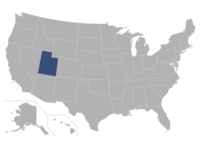
Salt Lake City, UT