Nevada HOA law is unnecessary and puts homeowners at risk of foreclosure, says critic
Jun 08, 2026 | 8:00 am ET
Description
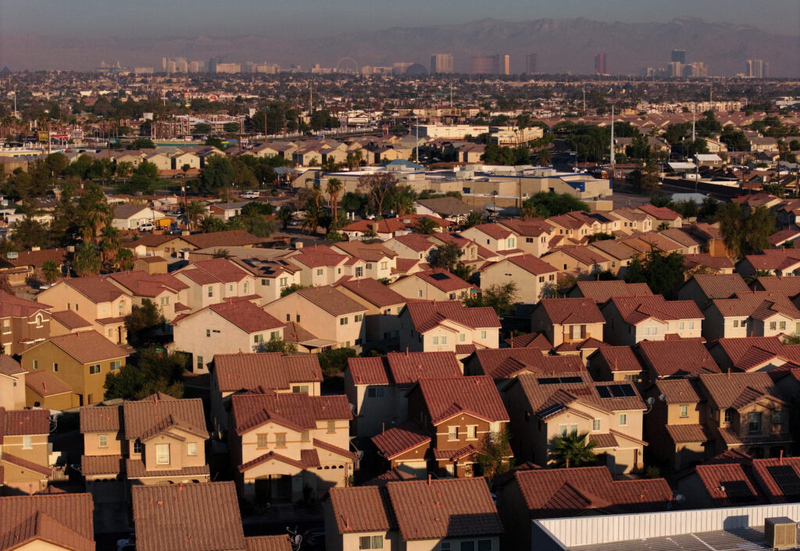
About half the state's homes are subject to homeowners’ associations. Wielding powers generally reserved for government tribunals, HOAs can assess fines, deny property rights, and even foreclose. (Photo by Justin Sullivan/Getty Images)
A law that allows homeowner associations in Nevada to levy unlimited fines for violations that threaten the health, safety and welfare of communities is unnecessary and places homeowners in the perilous position of losing their homes for an infraction that has yet to be defined by regulators, says a vocal critic of HOAs.
The Nevada Division of Real Estate’s Communities in Common Interest Commission is meeting this week, beginning Tuesday, to discuss tweaks to that regulation and others.
“When the law was first written, there was no definition of what constitutes an imminent threat to health, safety, and welfare. It became obvious that they needed one,” says Southern Highlands homeowner Mike Kosor.
Current law says the CIC Commission “shall adopt regulations establishing the criteria used in determining whether a violation poses an imminent threat” to health, safety, and welfare, and establish limitations on the amount of fines.
That hasn’t happened.
“The commission has tried but failed to do so after several tries,” says Kosor. “Now it’s giving it another spin.”
Homeowners found to have violated their association’s rules can be fined $100 per incident and up to $1,000 a year, except fines for health, safety and welfare violations. There is no cap on fines for HSW violations. And, unlike other fines imposed by HOA boards, an unpaid levy for a HSW violation can be collected via foreclosure.
A workshop to establish rules is scheduled for this week. It’s the third workshop in seven months.
The commission previously rejected a proposed cap of $10,000 for HSW violations.
It was not clear Friday what proposals the commission might consider. The commission may set criteria for what constitutes a violation of HSW, such as discharging a firearm in one’s backyard, and determine fines in keeping with the severity of the violation.
Currently, an HSW violation is “anything the executive board wants to say it is,” says Kosor, who contends the law is unnecessary. If a homeowner’s actions are “a real imminent threat to health, safety, and welfare, we have the public authorities to go out and mitigate it.”
Allowing HOAs to impose fines for imminent threats to public safety opens the door to a sanctioned form of vigilante justice, he suggests.
Foreclosure, “is not a safety remedy,” Kosor notes, but rather a collection measure of last resort that takes months.
“A true danger to health, safety, or welfare requires a cure-focused remedy,” he says. “The association should seek direct abatement, emergency relief, injunctive relief, court intervention, municipal or code-enforcement assistance, or another remedy aimed at correcting the dangerous condition.”
He suggests the latest endeavor to define HSW violations is a backdoor effort by the HOA industry – primarily association management companies and attorneys – to rein in homeowners who are deemed aggressive or as bullies by their association or industry professionals. He cites recent failed legislative efforts to establish “anti-bullying” provisions to protect HOA board members.
State Sen. Melanie Scheible, while presenting a 2023 HOA bill, asserted an antibullying provision was justfied because “some of the actions that we’ve taken to protect HOA members have gone a little too far and expose executive board members and their employees to harassment,” including death threats and vandalism.
Sections of the legislation addressing bullying were eventually removed. The language was revived in 2025 legislation, but failed again.
Being labeled a bully by an HOA doesn’t take much, Kosor contends. Homeowners, he says, “go to the association and ask for records. Next thing you know, they are there two or three times in a week, because they’re given the runaround on why records aren’t available.”
Kosor says the legislative measures amounted to an assault on the First Amendment and would have chilled opposition to HOA governance. He says such a law would be “a rainmaker for the attorneys and management companies.”
Kosor, who has gone to the mat with his HOA, Southern Highlands developer Garry Goett, and the state, and spent more than half a million dollars in legal fees along the way, acknowledges he’s been accused of bullying HOA industry representatives.
“So I’m sensitive here,” he said.
More than 600,000 Nevada homes – about half of those in the state – are governed by one of some 3,700 HOAs. Few homeowners pay much attention to their HOA. Kosor thinks that’s a mistake and urges residents to get involved.
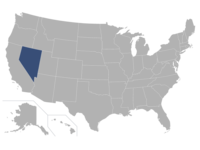
Las Vegas, NV