Fifty for 150: ICE raids meatpacking plant in Greeley in 2006
Jun 05, 2026 | 6:00 am ET
Description
(Photo by Quentin Young/Colorado Newsline)
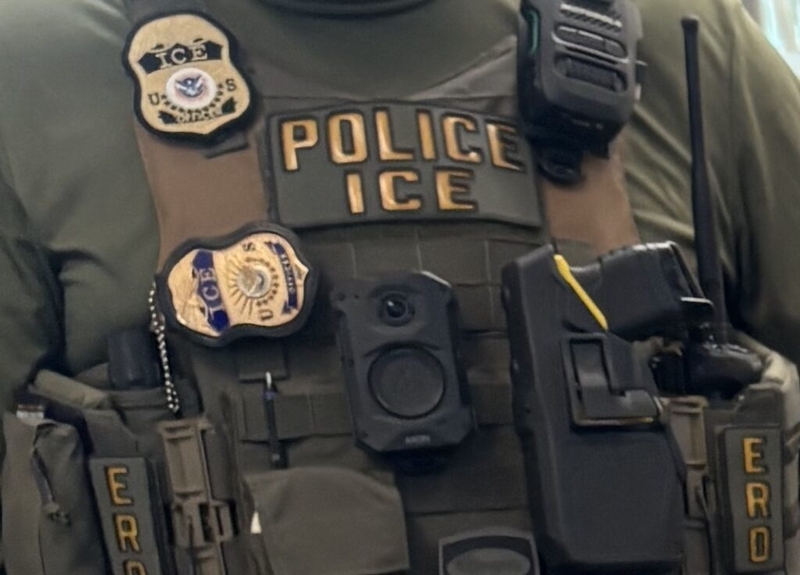
Two decades before federal immigration agents achieved infamy pursuing the Trump administration’s crackdown on undocumented residents, they spearheaded an early act of controversial enforcement as part of a coordinated raid at six meatpacking plants in states around the country, including Colorado.
This story is part of Colorado at 150. Each Fifty for 150 story focuses on an event that helped define Colorado over 150 years of statehood. Newsline is publishing one Fifty for 150 story in reverse chronological order until the sesquicentennial, Aug. 1, when the final of 50 stories, about the declaration of statehood, will appear.
Throughout 2006, Immigration and Customs Enforcement personnel had been investigating Swift & Co. meatpacking plants. They claimed to have gathered evidence that workers were using stolen identities of citizens to obtain work.
On Dec. 12 that year, ICE officers raided the plants, including one located in Greeley. Called Operation Wagon Train, the coordinated action was the largest instance of workplace immigration enforcement in U.S. history.
The operation netted 1,300 arrests, including about 260 in Greeley. That was roughly 10% of the Colorado plant’s workforce, a huge blow to a large employer that was a key component of the Weld County economy.
“It just puts a fear in the entire community. We don’t know what is going to happen,” Paul Hungenberg, co-owner of Hungenberg Produce, told The Denver Post days after the raid. “We need this workforce. We just can’t get anyone else to do this work.”
Some legal experts in the aftermath of the raid noted how it exemplified civil rights abuses that can accompany immigration enforcement.
“These workplace immigration raids are representative of Fourth Amendment exceptionalism for immigrant workers in the United States,” according to a University of California, Davis analysis. “It is not that the Fourth Amendment has no application in this context, but rather that privacy expectations about immigration status in the workplace have been eroded.”
The raid transformed the meatpacking industry, which subsequently turned to refugees in an attempt to develop a “deportation-proof workforce,” according to a High Country News report.
“The mass arrests of undocumented immigrants inspired big meatpackers … to rebuild as an economy of refugee labor,” the report said. “The resulting shift in small-town demographics also gave rise to a predictable backlash that eventually coalesced into a new era of nativism — and culminated a decade later in the 2016 election of Donald J. Trump.”
The use to which Trump has put ICE since he was elected president for a second term has only amplified aspects of the Swift raids that many observers found disturbing, such as civil rights abuses, economic disruption, family distress, cultural degradation and its massive scale.
In the year following the raid, and at least partly because of it, the Brazilian-owned behemoth JBS acquired the Swift plant in Greeley. Troubled relations between immigrant workers and the workplace persist. The vast majority of JBS employees are foreign-born.
“They’re really good about bringing in folks from different countries that don’t know their rights yet or are here seeking asylum,” Kim Cordova, the president of United Food and Commercial Workers Local 7 told Newsweek.
In March, workers at the plant went on an unfair labor practices strike. It was believed to be the largest strike at a U.S. meatpacking facility in decades.
Denver, CO