Fifty for 150: World’s first recreational marijuana sales begin in Colorado in 2014
Jun 03, 2026 | 6:00 am ET
Description
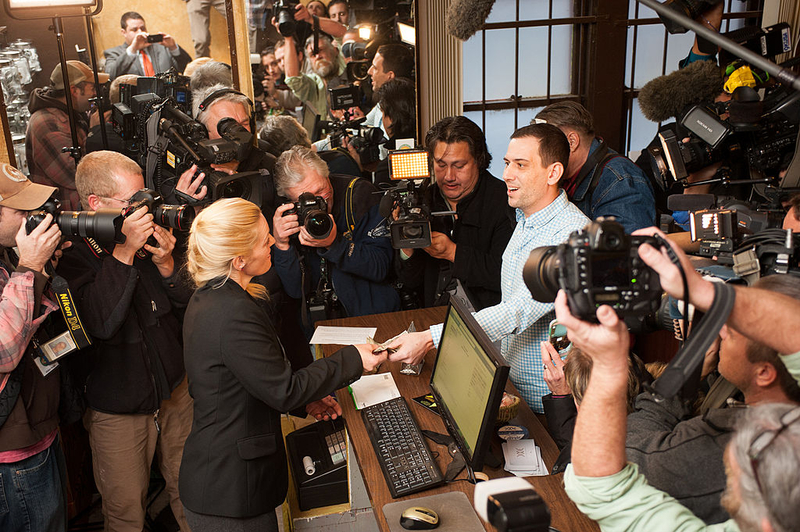
Sean Azzariti, a veteran of the Iraq war, makes the first legal recreational marijuana purchase in Colorado from advocate Betty Aldworth at the 3-D Denver Discrete Dispensary on Jan. 1, 2014, in Denver. (Photo by Theo Stroomer/Getty Images)
Colorado became a tourist destination for cannabis users in 2014, when the first legal recreational marijuana sales in the world began in the state.
This story is part of Colorado at 150. Each Fifty for 150 story focuses on an event that helped define Colorado over 150 years of statehood. Newsline is publishing one Fifty for 150 story every weekday in reverse chronological order until the sesquicentennial, Aug. 1, when the final of 50 stories, about the declaration of statehood, will appear.
Legalization in Colorado marked the beginning of what would become a national shift in attitude toward the recreational use of marijuana. Now, about half of states in the U.S. have legalized recreational marijuana.
Colorado voters approved Amendment 64 in 2012, making recreational marijuana sales legal for adults 21 and over.
While the amendment made Colorado the first state to legalize marijuana recreationally, California first legalized marijuana for medical use in 1996. Colorado voters passed Amendment 20 in 2000, which made marijuana legal for medical use in the state.
The Denver Post reported that thousands of people waited in line for hours on Jan. 1, 2014, to make a purchase at marijuana dispensaries throughout the state. Some people drove across the country to celebrate the occasion.
In the first year of marijuana legalization, Colorado businesses sold $700 million worth of marijuana.
Then-Gov. John Hickenlooper signed into law several measures that created the Colorado Marijuana Code between the passage of the measure in 2012 and dispensaries opening in 2014.
Colorado counties and towns can set their own rules around the sale and consumption of marijuana. For example, Denver established its own Office of Marijuana Policy shortly after recreational sales began. Colorado Springs, the second largest city in the state, only permitted recreational sales starting in 2025.
There are strict requirements around the packaging and labeling of marijuana products. People making a purchase must present a valid ID proving they are age 21 or older. Dispensaries and their employees must be licensed with the state’s Marijuana Enforcement Division.
Colorado Gov. Jared Polis in 2020 issued 2,732 pardons to people convicted of possessing up to 2 ounces of marijuana. The Colorado Legislature passed a law that created “social equity licenses” to help people of color — who are disproportionately incarcerated for drug crimes and vastly under-represented among cannabis business owners — enter the commercial marijuana industry.
In the 10 years prior to legalization of recreational marijuana sales in 2014, Colorado Division of Criminal Justice records show more than 16,000 guilty findings for possession of up to 2 ounces of marijuana.
The Legislature has consistently tweaked state laws around recreational marijuana as the industry has continued to evolve. Most recently, as the rate of contaminated products has increased in dispensaries, legislators this year considered a measure that would have asked Colorado voters to overhaul the required testing regime for certain marijuana products. It would also have changed how marijuana is taxed, but the bill died.
Denver, CO