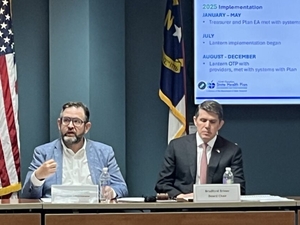
Litigation over Wyoming’s beleaguered Star Plunge could last ‘years,’ owner says
Jun 09, 2025 | 6:23 am ET

Description
Photo courtesy of WyoFile
The legal battle over a popular swimming spot in Hot Springs State Park could last years, Star Plunge owner Roland Luehne wrote in an open letter last week, casting renewed doubt over the reopening of the pools.
The Star Plunge closed to the public in January after Luehne’s latest management agreement with Wyoming State Parks expired. The facility’s future has been in dispute since last spring, when Wyoming State Parks selected a new operator to take over from the Luehne family after 50 years — a decision the family is fighting in court.
In an open letter sent to press outlets this week, Luehne said the prolonged court proceeding “might be the point.”
“The State of Wyoming knows they can drag this out in Court and make things incredibly expensive for the Star Plunge to fight,” he wrote.
Wyoming does not and never has wished the state park facility to be closed, Division of State Parks Deputy Director Nick Neylon told WyoFile.
“We have no control over how long the litigation takes,” Neylon said. “It’s in the hands of the judge, and we can’t have any effect.”
In a December court ruling on the case, Laramie District Court Judge Catherine Rogers denied Luehne’s request to continue operating after Dec. 31, but prevented the state from enforcing the section of its management agreement that requires Luehne to remove — or tear down — his facilities upon expiration.
That leaves the facility closed to the public, Neylon said.
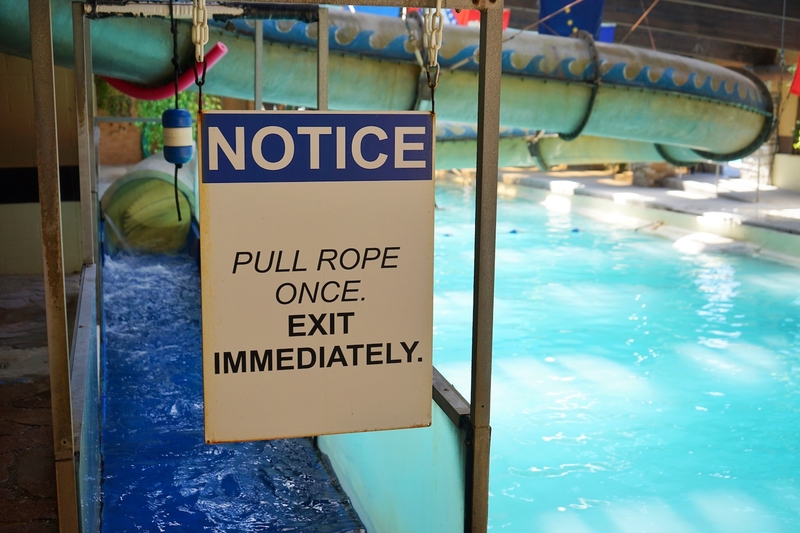
Luehne wrote that the state is being unreasonable in its refusal to let him reopen under a new short-term management agreement.
“The refusal of the Wyoming State Parks to allow the business to continue to operate, while the civil cases make their way through the court system, is causing significant economic harm to our community, including loss of revenue to local restaurants, hotels, and our entire tourism industry,” Luehne wrote.
The state has, however, “proposed to him that we find a third party to operate the facilities” temporarily while paying Luehne rent, Neylon countered. “We have offered to reopen the facilities to help the local economy there in Thermopolis and Hot Springs County. I don’t know if Mr. Luehne is going to accept that offer.”
The back-and-forth illustrates the polarizing tenor of the fight, which will ultimately shape how Thermopolis evolves into the future.
The battle hits the courts
At its core, the dispute between Wyoming State Parks and Luehne is most simply understood as a landlord-tenant disagreement.
The Luehne family has been operating the Star Plunge since 1975, when Wolfgang and Christine Luehne bought it and took over a 50-year concessionaire lease. Their son, Roland, bought it from them in 2012.
Guided by a vision for an updated and cohesive park laid out in a 2016 master plan and a new law that mandates long-term leases in state parks, Wyoming State Parks last spring announced it had selected Wyoming Hot Springs LLC as the next leaseé through its request-for-proposal process. Wyoming Hot Springs LLC’s primary representative, Mark Begich, a former U.S. senator from Alaska, also purchased in late 2023 the park’s other aquatic facility, the Tepee Pools.
The selection promised to effectively evict the Luehne family from Star Plunge. Luehne has been operating on a string of short-term management agreements since 2008, with his most recent expiring at the end of 2024.
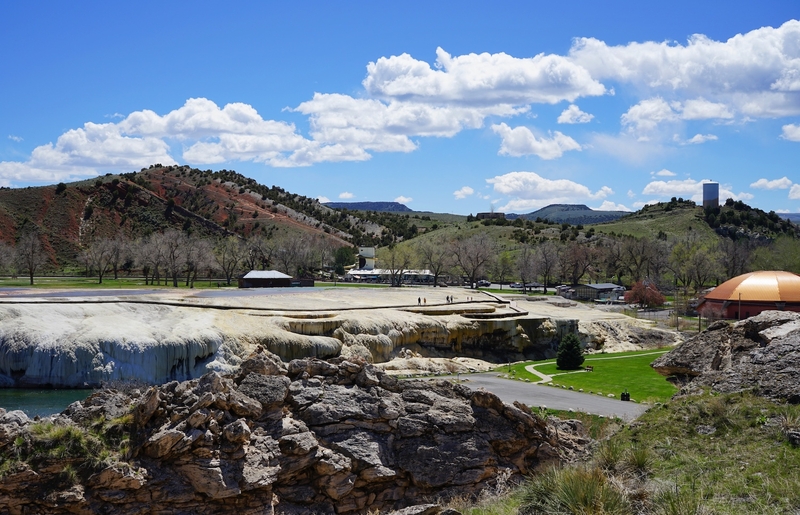
The state wants reinvestment in the park’s facilities, it says, to ensure safety and fulfill its potential as a destination as Wyoming’s most-visited state park. The 1,100-acre park on the banks of the Big Horn River includes hiking trails, playgrounds, two hotels and hot springs as well as a hospital, library and other buildings. Wyoming Hot Springs showed the most promise in fulfilling the state’s vision with its winning bid, it determined.
Luehne contested the process in a pair of lawsuits filed by his company, C&W Enterprises. They accused Wyoming State Parks of exceeding its authority and violating regulations. Luehne argued the state is attempting to dislodge him without fairly compensating him for the improvements. Luehne’s supporters have been vocal on social media and in public meetings in their opposition to the state’s process.
The state, meanwhile, has defended its process in court filings and statements.
In the nearby town of Thermopolis, where the economy relies in part on tourism generated by the park’s therapeutic hot springs, the issue has created a stir. Some see the new operator as a good opportunity to spruce up the park’s aging facilities and boost the community’s profile. Others believe it will Disney-fy the beloved park and leave a local family in the lurch.
Since the facility closed in January, businesses, swimmers and others have worried about the mounting economic impacts it’ll have on the typically busy summer season.
Visitors can still soak at the park. The state-run bathhouse offers free soaking, and the Tepee Pools adjacent to the Star Plunge contain a similar inventory of pools and slides.
The judge has yet to rule. In the meantime, another park concessionaire, the owner of the Hot Springs Hotel, Big Springs Spa, Inc., filed a motion to intervene in the case as a plaintiff. That hotel also operates under a short-term management agreement.
Big Springs Spa does not have standing, the state argued in subsequent filing.
As the summer season opens, Star Plunge remains closed to the public, though maintenance is ongoing.
An open letter
Luehne’s letter intended to “set the record straight,” he wrote. In it, he accused the state of malfeasance and asked that it redo the bidding process in good faith.

“The State of Wyoming contrived a plan to take millions of dollars of property that they admit that I own and give it to someone else without giving me a penny for my property,” he wrote.
That is incorrect, Neylon said.
“He went from the 50-year lease that expired in 2008 to a series of year-to-year leases, finally to management agreements, and every document that he signed had the same language in it that says, ‘at the end of that period, he’s responsible for tearing down those buildings,’” Neylon said.
State Parks’ intention is to raze the buildings for the benefit of future park users, he continued.
“When those buildings were constructed, it was expected that they would have approximately a 50-year lifespan,” he said. “They far exceeded that lifespan. Our intention is to remove those buildings and build a new facility.”

Cheyenne, WY