Controversial oil lease sale in Alaska wildlife refuge draws limited interest
Jun 05, 2026 | 7:42 pm ET
Description
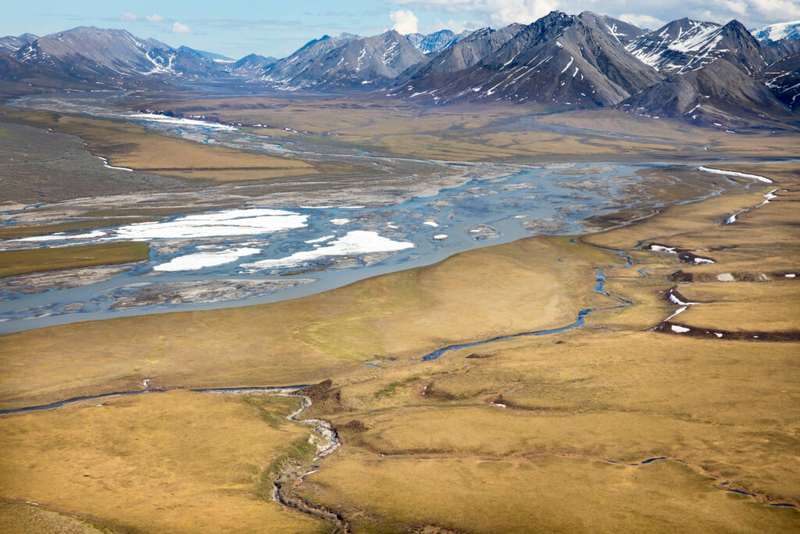
The Canning River, seen here in 2018, flows from the Brooks Range into the Beaufort Sea along the western edge of the Arctic National Wildlife Refuge. The river marks the boundary between the refuge, which is managed by the U.S. Bureau of Land Management, and state land on the North Slope. Results of an oil lease sale that offered 58 tracts in the refuge's coastal plan drew bids on five tracts. The highest-dollar bid was for a tract right at the Canning River edge of the refuge's border with state land. (Photo by Lisa Hupp/U.S. Fish and Wildlife Service)
A controversial oil and gas lease sale in the Arctic National Wildlife Refuge drew one big bid Friday from an independent Anchorage-based natural gas producer, along with a smattering of other bids from a state economic development agency.
HEX Energy LLC, which produces natural gas in Cook Inlet but has never operated on the North Slope, bid $1.7 million for a single lease bordering state territory on the western edge of the refuge’s coastal plain.
In all, five of the 58 tracts on offer received bids, all from HEX or the Alaska Industrial Development and Export Authority, the state government’s economic development agency. HEX was the apparent winner of two tracts in total, while AIDEA was the winner of three, according to preliminary results. High bids for the sale totaled $3.74 million.
The sale was held under requirements of the sweeping tax and budget bill passed by Congress last year and known as the “One Big Beautiful Bill Act.” The law mandates at least four ANWR lease sales through 2035, each offering at least 400,000 acres.
It was the third lease sale since 2021. In the first of those lease sales, held in the last days of the first Trump administration, no major oil companies bid and AIDEA was the main participant. In the second lease sale, held in 2025 in the last days of the Biden administration, there were no bids. AIDEA still holds six leases it acquired in 2021, but the agency has not done any exploration work on them.
The tract for which HEX bid $1.7 million is the same one that drew the only oil company bid in the first ANWR lease sale held on Jan. 6, 2021. In that sale, Regenerate Energy, a subsidiary of Australia-based 88 Energy Ltd., bid $770,000. At the time, the company said it bid on the lease because it was close to a prospect called Yukon that it was exploring on adjacent state land. Regenerate Energy relinquished the lease in 2022.
After Friday’s sale results were revealed, development supporters and opponents had contrasting reactions: drilling boosters celebrated the results, while drilling opponents characterized the sale as a flop similar to the previous ANWR auctions.
Trump administration officials deemed the sale a success.
“While the history of this area is long on policy, a new era of active leasing and exploration is just beginning to unfold,” Kevin Pendergast, Alaska state director for the BLM, said in wrapup comments at the conclusion of the bid reading.
“We look forward to learning more about the subsurface of the area as leaseholders pursue exploration and ultimately to the next phase when, like the NPR-A to the west, this area’s full potential begins to be revealed and responsible development takes shape,” he said, referring to the National Petroleum Reserve in Alaska, which is also managed by the BLM and where there is active oil development and production underway.
“This lease sale is another important step toward restoring American Energy Dominance and responsibly developing the vast resources Congress directed us to make available in the Coastal Plain,” Pearce said. “The previous administration did everything in its power to discourage industry from development in the Coastal Plain. The strong industry interest we saw today reflects confidence in Alaska’s resource potential and the Trump administration’s commitment to providing certainty for investment.
Inupiat organizations based on the North Slope, the majority of which support oil development in the refuge because of its potential economic benefits, also characterized the sale as successful.
Among them is the Arctic Slope Regional Corporation, the Inupiat-owned regional corporation that holds mineral rights in about 90,000 acres within refuge boundaries.
“Today’s lease sale in the Coastal Plain sets the stage for strengthening the North Slope economic foundation and Iñupiaq cultural self-determination for generations to come,” Rex Rock Sr., Arctic Slope’s president and chief executive officer, said in a statement.
Opponents of oil development in the refuge said the sale was an economic bust that indicated the futility of trying to drill for oil in an area prized for its environmental value.
Opponents include the Gwich’in Steering Committee, which represents Gwich’in Athabascan tribal members in northeastern Alaska and northwestern Canada that have long opposed oil development in the region.
“The results of today’s lease sale speaks for itself. Yet again, no major oil and gas companies showed up to bid, because they know that drilling in the Arctic Refuge is a losing proposition,” Kristen Moreland, executive director of the Gwich’in Steering Committee, said in a statement. “We will continue to fight the Trump administration’s leasing program, and work with our friends and allies to protect this sacred and irreplaceable landscape from development of any kind.”
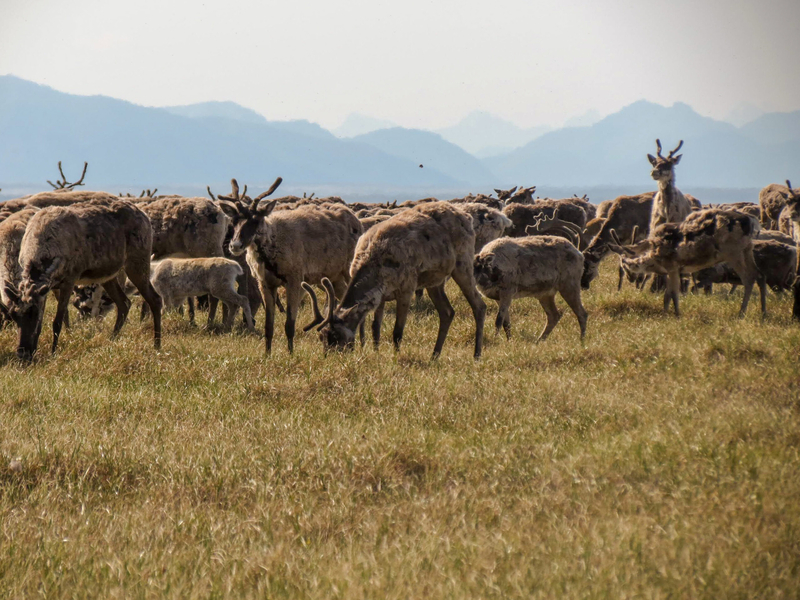
Gwich’in tribal members are concerned in large part about impacts to the massive Porcupine Caribou Herd, which crowds into the refuge’s coastal plain to give birth and nurture calves. The coastal plain is a relatively narrow strip of land wedged between the Brooks Range and the Arctic Ocean, a contrast to the much wider flat areas elsewhere on the North Slope.
Another organization, Taxpayers for Common Sense, was among those that criticized the sale on fiscal grounds.
Several organizations cited the environmental risks of the oil development being pushed by the Trump administration and its allies.
“This administration is brutally sacrificing eons-old habitat for mother polar bears and cubs, calving grounds for caribou and nesting habitat for millions of migratory birds all in the name of oil and gas gains that may never be realized,” Nicole Whittington-Evans, Defenders of Wildlife’s senior director of Alaska and Northwest programs, said in a statement.
As drilling opponents vowed to continue their fight to prevent development, AIDEA has been planning to start work on the leases it already holds.
AIDEA last month approved $190 million in spending on its ANWR program, most of which is to support a plan to conduct seismic surveys on its refuge leases.
Seismic surveys use slow-moving vehicles that send sound waves deep into the ground while traversing across the surface. The seismic signals are analyzed to help map out geology and try to identify oil and gas reserves.
Scientists from the University of Alaska Fairbanks have warned that seismic surveys in the refuge coastal plain would cause long-lasting damage to the tundra and permafrost below. In a report issued in 2019, they pointed to unreliable snow cover and lack of freshwater sources for ice roads, leaving tundra less protected against industrial vehicle traffic. That is a contrast with conditions on the western side of the North Slope, where snow cover is more consistent and freshwater sources more abundant, the report said.
HEX, though its current operations are in the Cook Inlet region, has demonstrated ambitions to expand to the North Slope.
The company, which recently consolidated its Cook Inlet-based operations, bid for six tracts in the March lease sale in the National Petroleum Reserve lease sale, but it did not win any of them.
That National Petroleum Reserve lease sale, unlike Friday’s Arctic refuge sale, drew strong interest from larger oil companies with established North Slope operations. The petroleum reserve sale in March drew a record $163 million in high bids, but there is a pending legal dispute about whether some leases were sold legally.
Editor’s note: This story is corrected to reflect the fact that AIDEA was the apparent winning bidder on three tracts and HEX Energy Ltd. was the apparent winning bidder on two tracts. The updated story also includes the $3.74 million sum of total high bids.
Juneau