Washington’s largest utility moves to add more wind power
May 21, 2026 | 6:22 pm ET
Description
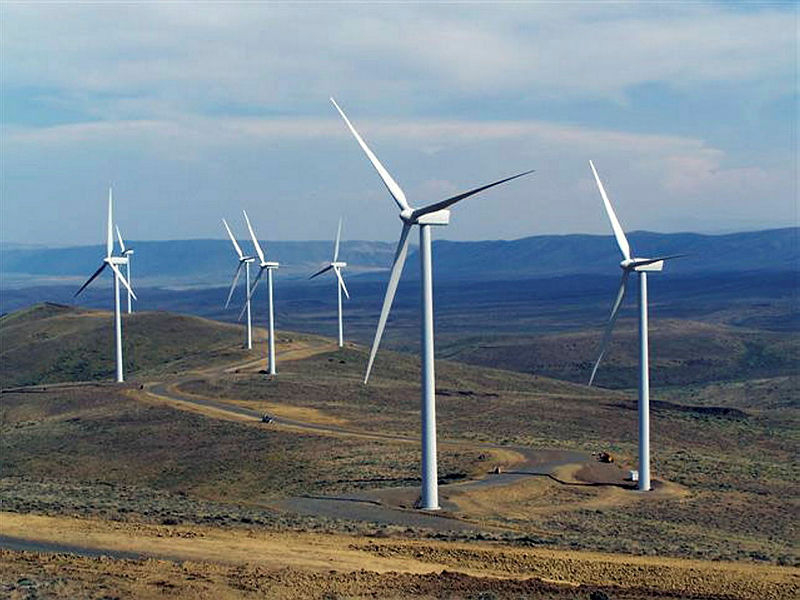
The Wild Horse Wind and Solar Facility about 16 miles east of Ellensburg in central Washington is part of Puget Sound Energy's clean energy portfolio. (Courtesy of Puget Sound Energy)
Puget Sound Energy is adding a wind farm in Klickitat County to its clean energy portfolio, the latest move in the utility’s transition to become greenhouse gas neutral by 2030, as state law mandates.
On Tuesday, the company signed a long-term contract with Avangrid to move nearly 200 megawatts of power from a wind project called Big Horn I onto the grid. That’s enough power to electrify 70,000 homes annually, according to PSE.
“We are excited that this latest agreement with Avangrid helps us meet some of the most ambitious clean energy laws in the nation while delivering on our customers’ expectations,” said Craig Pospisil, senior vice president and chief development officer of Puget Sound Energy.
But the state’s largest investor-owned utility still has a long way to go to completely decouple itself from greenhouse gas emissions. And electricity rates are rising for customers as it works toward that goal.
The wind farm will only cover around 12% of the utility’s remaining clean energy needs and it won’t begin power generation for at least a couple of years.
As is, roughly 58% of PSE’s overall electricity supply comes from clean energy resources, up from 26% in 2019. The remainder is made up of natural gas and other unspecified resources, a spokesperson for the utility said this week.
Big Horn I has been in operation since 2006. It is sited on over 14,000 acres of land and part of a larger renewable energy complex operated by Avangrid, a clean energy subsidiary of Europe’s largest utility.
The site, located east of Goldendale and just north of the Columbia River, is in need of an upgrade. Avangrid will undertake work to extend its useful life and bring the wind farm into a “like-new” condition. It’s expected to be back in operation by fall 2028.
“This project is another milestone in our continued investment in the state’s energy economy,” said Jose Antonio Miranda, Avangrid’s chief executive officer.
It’s not the first time Puget Sound Energy has purchased power from Avangrid. The companies have agreements on two wind projects in Oregon, Golden Hills and Klondike III, and a solar farm in Klickitat County called Lund Hill.
Under the state’s Clean Energy Transformation Act, all utilities must provide electricity that is greenhouse gas neutral by 2030, meaning that all energy sources must be renewable or free of emissions. Wind, solar and nuclear are among the energy sources allowed under the law. If that target isn’t reached, companies will have to pay to comply through energy credits or investing in clean energy projects.
In December last year, the law required utilities to remove coal from electricity supplies. Puget Sound Energy complied, but meeting the 2030 phase will be a bigger lift with the company facing major challenges beyond its control, according to spokesperson Andrew Padula.
Those difficulties include persistent growth in electricity demand, permitting and siting hurdles, barriers in connecting renewable resources to the grid, and a change in a federal tax law that will make renewable and non-emitting resources more expensive to build after 2030, said Padula.
The utility serves about 1.2 million electricity customers.
“Of particular concern are increasing costs and the impacts on our customers,” said Padula. “As PSE does not have access to federal hydropower, our CETA compliance costs are much higher than other utilities in the state.”
Olympia, WA