Vermont enacts the country’s first ban on herbicide linked with Parkinson’s disease
May 28, 2026 | 2:11 pm ET
Description
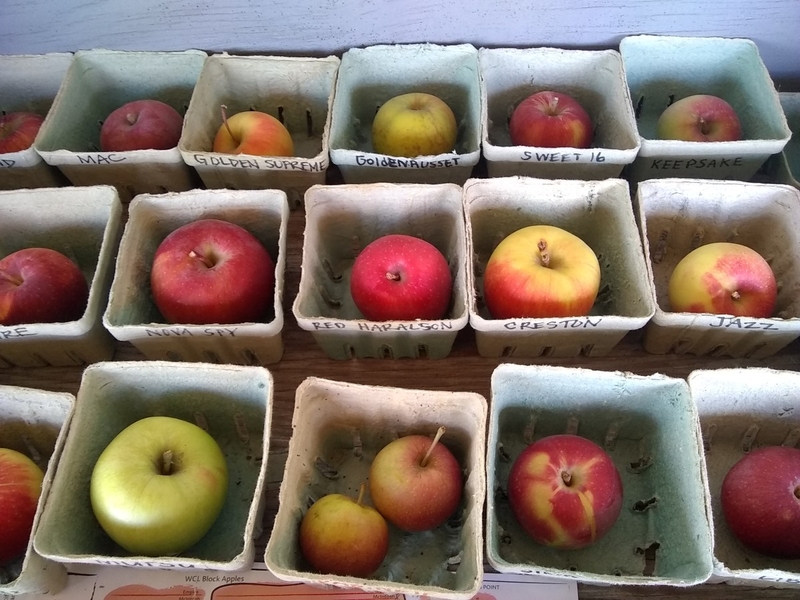
Some of the varieties of apple at Champlain Orchards in Shoreham. Photo by Katie Jickling/VTDigger
Vermont became the first state in the country Tuesday to ban the sale and use of paraquat, an herbicide that has shown strong association with the onset of Parkinson’s disease.
“Governor (Phil) Scott signed this bill into law because he understands the harmful impacts paraquat has on the health of Vermonters,” Amanda Wheeler, a spokesperson for the governor, wrote in a statement. “Many farmers have already transitioned to alternatives, and the phase out of the usage over the coming years will help those who do currently use it, identify alternative options.”
Rep. Esme Cole, D-Hartford, who sponsored the bill, agreed, calling it a “beautiful step in the right direction.” Yet, she hopes other states follow soon.
“We’re the first in the nation, but the last in the world, so it’s kind of a mixed feeling,” she said.
More than 70 countries — including China and those in the European Union — have banned the chemical, which is used to kill weeds and grasses in the cultivation of crops like apples, berries and cotton.
“In Vermont, paraquat is used very little,” said Steve Dwinell, the director of the Plant Industry Division at the state’s Agency of Agriculture, Food & Markets, “So it’s not going to have much of an impact at all — except for those few farmers who use it for some very specific things.”
Those few farmers are primarily apple and berry growers, who use it on young trees that are competing against grass to establish themselves in the ground. They may also use it to fight dogwood borers, which chew around the base of young trees.
The new law leaves room for those fruit growers to receive exemptions from the secretary of agriculture to continue buying and using the chemical until the end of 2030.
Still, the prevalence is small — in 2023, the agency reported sales of the chemical totaled merely 14.5 gallons. In 2024 they totaled 107.5 gallons. (For a sense of scale, that’s the volume of water that goes into flushing a toilet about 80 times.) The most common form of the chemical comes in 2.5 gallon bottles. Because farmers use so little, in such concentrated amounts, it’s likely, Dwinell said, that a farmer can go through a year without needing to re-up their supply.
Though he did not have an exact number, Dwinell estimates that there are only about 20 farmers who use paraquat in Vermont.
Vermont has 1,300-1,500 acres of apple orchards, according to testimony from UVM extension school fruit tree specialist Terrance Bradshaw. Apples are Vermont’s third largest agricultural product, after dairy and maple.
In March, the company that produces Gramaxone, the most common version of the herbicide, announced that it would stop producing the chemical by the end of June; the company faces thousands of lawsuits for the chemical’s purported link to Parkinson’s disease.
Still, the use of the chemical in the United States has grown. About 35% of large commercial farms in the country use the herbicide. It tripled in prevalence between 2006 and 2017, according to reporting in the New Orleans news outlet The Lens. Though Gramoxone will no longer be on the market, generics will be.
Its popularity is largely attributed to the fact that it is less abrasive on the plant than a glyphosate, like Roundup, said Rep. Greg Burtt, R-Cabot, who sat on the committee that originally weighed this bill. Glyphosate penetrates a young plant’s bark, killing the plant alongside the weeds.
Burtt runs his own orchard in Cabot and uses paraquat on his plants.
“If anybody’s going to get Parkinson’s, it’s going to be me,” he told VTDigger in an interview.
But, he argued, there’s just not enough evidence that establishes the link between the pesticide and the illness to justify removing such an essential part of his operation. He ultimately opposed the bill when an amended version came back to the House floor from the Senate, though he voted for the version that his committee passed.
“It’s always on my radar that I need to do this in a careful way. I want to be able to hang out with my kids when I’m old, but at the same time, if we’re going to do this, (let’s do it) in a manner that sets the right precedent, where we’re not eliminating tools out of our toolbox unnecessarily.”
The EPA has strict guidelines on how to use the chemical because it has such immediate toxicity to humans — separate from the potential long-term harms.
The state agency of agriculture regulates pesticide use along these federally prescribed guidelines. Four field inspectors work to monitor compliance for paraquat and other chemicals, so incorporating these additional regulations should not be a large lift for the agency, Dwinell said.
Farmers like Burtt need a special license to buy paraquat and apply it on their land. Every three years, they need to take a special online training course.
When Burtt applies the herbicide, he wears special protective equipment and keeps the spray close to the base; he doesn’t spray when it’s windy, for fear of the volatilized compounds killing the tree he’s trying to protect, and to keep it from reaching neighbors.
Burtt feels like the exemption does leave sufficient room for growers to adapt, although he said that whatever the alternative becomes, it is likely to be something more costly — like chip mulching or hand-weeding.
“It’s just one more thing to make it more difficult to be profitable,” he said.
Dwinell, with the agency of agriculture, said that between now and the exemption’s end in 2030, his department is going to work with the University of Vermont to try out different products and recommend alternatives to paraquat.
Burtt worries about the relative advantage growers in upstate New York or elsewhere in the Northeast will now have over Vermont’s growers. It would be better, he thinks, if there were a nationwide ban that could even the field.
“If you buy peanut butter, you’re helping to continue to have paraquat,” he said. “If you buy cotton, you’re going to continue to promote the use of paraquats, so Vermonters will still be (interacting with it) as long as it’s on the market.”
Cole, the lawmaker who sponsored the bill, thinks that the ban can give Vermont’s growers a relative marketing advantage as certified paraquat-free growers.
She thinks the evidence linking use of the chemical to Parkinson’s disease has been overwhelming. Though direct causation is challenging to show — since humans are exposed to a litany of environmental toxins and hazards, and it would be unethical to isolate a clear control group — a number of studies have shown strong association for exposure and the onset of the disease.
Beate Ritz, a professor of epidemiology at UCLA, recently spoke with the radio program Science Friday and explained that the chemical prompts a type of oxidative stress in cells, which then impairs cells’ ability to turn food into energy.
“You can compare (it) to rusting of a car, where molecules are rusting, or the membranes of cells are, basically, becoming rancid, like fat becomes rancid when it’s out in oxygen for too long,” Rtiz told Science Friday, which is syndicated on National Public Radio.
When asked specifically about Vermont’s pending law, Ritz said, “I think it’s really time that somebody has the courage in the U.S. to do what you just said, which is ban paraquat. Paraquat should have been banned 25, 30 years ago.”
Read the story on VTDigger here: Vermont enacts the country’s first ban on herbicide linked with Parkinson’s disease.
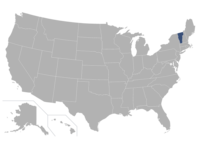
Montpelier, VT