Trump ‘slush fund’ echoes scorned 19th-century spoils system, academics say
May 29, 2026 | 3:48 pm ET
Description
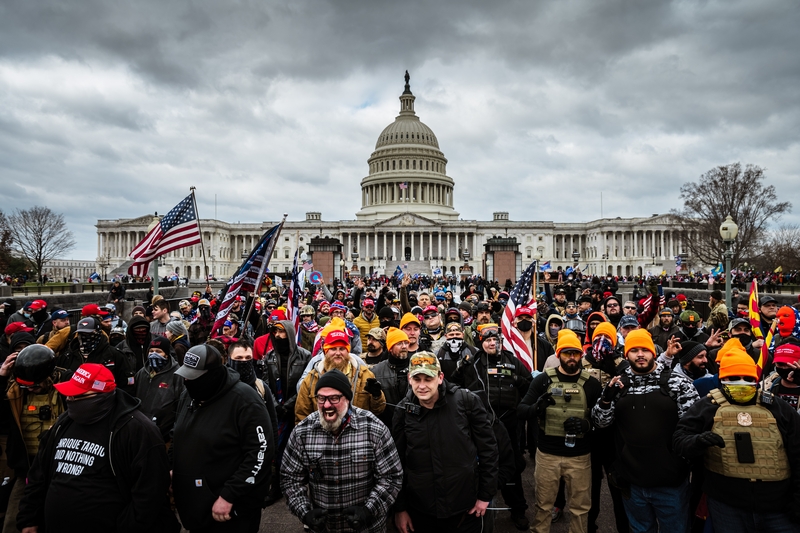
A mob of Trump supporters gathers in front of the U.S. Capitol Building on Jan. 6, 2021 in Washington, DC. An "anti-weaponization" fund was created by the Department of Justice in May 2026 that could make payments to those who took part in the Jan. 6 attack. (Photo by Jon Cherry/Getty Images)
President Donald Trump’s extraordinary $1.776 billion fund to pay off allies and others who say they have been wronged by past administrations has drawn widespread condemnation by opponents, including some Republicans, who characterize it as an act of brazen corruption.
But the Trump administration’s push to reward its supporters also harkens back to an earlier era of American cronyism, experts say, while expanding the frontiers of political favoritism.
From the early years of the United States until well into the 19th century, a spoils system dominated the federal government. Presidents handed out jobs to supporters, filling the bureaucracy with workers who had demonstrated loyalty to the administration in power.

Trump’s political idol, President Andrew Jackson, replaced large numbers of federal officials after his 1829 inauguration, for instance. One appointee to a role at the Port of New York made out with more than $1 million, valued at tens of millions today.
The comparison isn’t exact. The spoils system was associated with the distribution of government jobs to political allies, a practice called patronage. Trump’s new fund would instead deliver taxpayer dollars directly to favored individuals.
Yet, academics who have studied the spoils system and the presidency see parallels between the past and present — with a desire to reward allies and build allegiance at the center of it all.
“It seems to me that may be the common element here,” said Sidney Shapiro, a professor of law at Wake Forest University who wrote before the 2024 election that Trump wanted to reinstate the spoils system. “It appears President Trump is thinking about using the fund to reward people unfairly punished, but I think in his mind it’s unfairly punished because they were trying to support him.”
Five-member board to be named by Trump
The Department of Justice announced the “anti-weaponization fund,” which critics call a “slush fund,” on May 18 as it moved to settle a lawsuit Trump had filed in his personal capacity against the IRS over the leaking of his tax returns by a former agency contractor.
The suit placed Trump in the extremely unusual position of effectively negotiating with himself because he has erased the DOJ’s post-Watergate tradition of independence from the White House.
Even before the settlement, the Justice Department under Trump had taken actions that would have been unheard of in other recent administrations. For instance, federal prosecutors have brought a case against former FBI Director James Comey and tried to pursue criminal charges against New York Democratic Attorney General Letitia James.
The DOJ has also obtained an indictment against the Southern Poverty Law Center, a frequent critic of GOP politicians.
Trump’s settlement agreement provides for the creation of the fund overseen by a board of five members chosen by acting Attorney General Todd Blanche, who previously served as Trump’s personal attorney. Trump can fire the members for any reason.
The fund’s board will have the power to make decisions about payments, as well as issue formal apologies. Claims submitted to the fund must be processed by Dec. 1, 2028, prior to the end of Trump’s term.
Jan. 6 rioters line up
A bevy of Trump supporters and hangers-on have said they plan to apply for compensation. They include individuals who stormed the U.S. Capitol on Jan. 6, 2021, disrupting Congress’ certification of President Joe Biden’s Electoral College victory. Trump previously pardoned rioters when he took office in January 2025.
Former Proud Boys leader Enrique Tarrio, who was convicted of seditious conspiracy and sentenced to 22 years in prison before Trump pardoned him, predicted on a recent podcast that a “lot of J6ers are going to spend their money on firearms.”

Trump has cast the fund as an act of magnanimity on his part because the settlement agreement doesn’t include a monetary payout to him.
However, Blanche also signed a document barring any additional scrutiny of the president’s past tax history, a move that shields him from audits. The New York Times and ProPublica reported in 2024 that Trump could have owed $100 million if he lost an audit battle over improper tax breaks.
“I gave up a lot of money in allowing the just announced Anti-Weaponization Fund to go forward. I could have settled my case, including the illegal release of my Tax Returns and the equally illegal BREAK IN of Mar-a-Lago, for an absolute fortune,” Trump wrote on Truth Social, referring to the FBI search of his Florida residence in 2022.
“Instead, I am helping others, who were so badly abused by an evil, corrupt, and weaponized Biden Administration, receive, at long last, JUSTICE!”
Trump has adopted a “patrimonial” approach to governing, James Pfiffner, a professor emeritus at George Mason University who has studied the presidency, wrote in an email to States Newsroom.
Benefits, like federal contracts, go to those who are loyal, Pfiffner wrote, and the government is treated as if it were a family business and the state’s resources were his personal property.
The “anti-weaponization fund” represents an extension of that approach, Pfiffner wrote, but also goes further than past presidents. He wrote that he could think of no past precedents in the modern presidency for such a blatant use of taxpayer money to potentially reward loyalists.
“At least in the spoils system, the people hired by the government were working and presumably doing their jobs,” Pfiffner wrote. “The beneficiaries of this fund have done nothing to earn their benefits, and presumably some will be rewarded for having committed crimes to overturn the 2020 election.”
Congress began curbing the spoils system after the 1881 assassination of President James Garfield by a spurned job seeker.
Over the next two decades, many federal positions were moved into a civil service system. While the federal government still includes some 4,000 political appointees today, the vast majority of the bureaucracy is staffed by civil servants.
Critics and defenders in Congress
But it’s unclear whether Congress will block Trump’s fund, despite an intense backlash.
Anger among Republican senators has stalled action on budget legislation funding immigration enforcement, which Democrats would have used to force votes on amendments to block the fund. Democrats have introduced multiple bills aimed at halting it.
“Congress cannot stand by while Trump turns the federal government into a political operation for his friends and cronies,” Sen. Michael Bennet, a Colorado Democrat, said in a statement.
Obstacles exist to congressional action. Even if Republicans who control both chambers voted with Democrats, Trump could veto bills passed placing restrictions on the fund, which would require two-thirds majorities in the House and Senate to override.
And some GOP lawmakers have defended the fund.
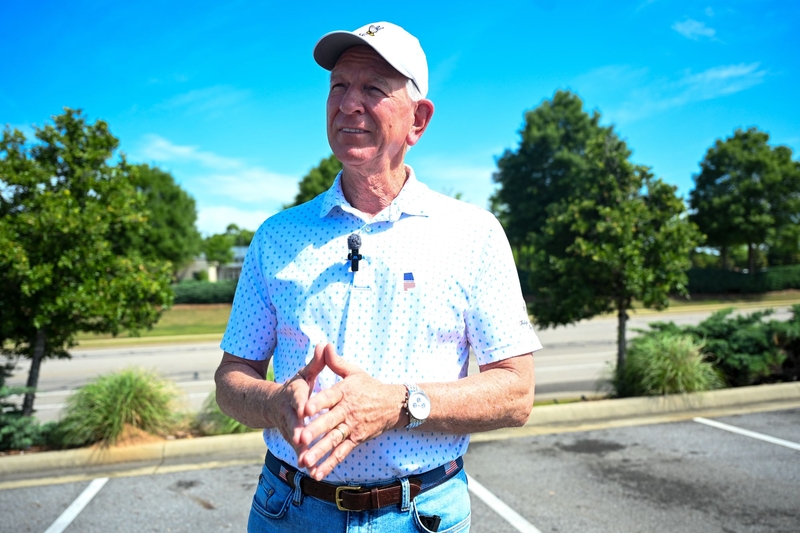
On May 21, Sen. Tommy Tuberville, an Alabama Republican, objected to a unanimous consent request by Sen. Alex Padilla, a California Democrat, to pass a bill that would prohibit payments to Jan. 6 rioters.
“Thankfully, acting Attorney General Todd Blanche and the Trump Department of Justice established a standard and lawful process to hear from American citizens who suffered lawfare or weaponization under the Biden administration,” Tuberville said on the Senate floor.
Lawsuits have been filed challenging the fund and how it’s structured. Two police officers who defended the Capitol on Jan. 6 have sued, warning that rioters could use the money to organize.
Fund blocked temporarily
On Friday, a federal judge in Virginia ordered the Trump administration to halt work on the fund for at least two weeks while she considers ordering a lengthier pause.
The decision came in a lawsuit brought by a former federal prosecutor fired by the DOJ and a California professor who was charged but acquitted of assaulting a federal officer after protesting an immigration raid.
Legal advocacy groups also argue Congress didn’t intend for federal money to be used for these kinds of payoffs.
“Another commonality is we the taxpayers are funding both,” Shapiro, the Wake Forest professor, said of the spoils system and the Trump fund. “We certainly fund the jobs that people have and now we’re funding this fund.”
All States Newsroom content is free to republish. Read our republishing policy for more information.