Alaska Legislature votes to improve preparedness and response for stroke, heart attack emergencies
May 29, 2026 | 2:00 pm ET
Description
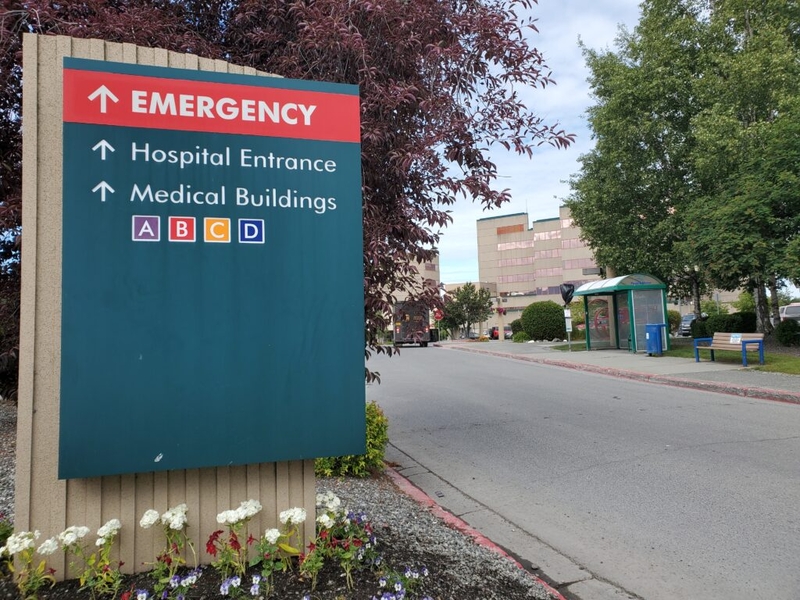
A sign, seen July 11, 2025, directs visitors to the entrance of Alaska Regional Hospital entrance and adjacent medical buildings. (Photo by Yereth Rosen/Alaska Beacon)
The Alaska Legislature approved a package of legislation aimed at improving the state’s coordination and emergency medical services response for strokes and heart attacks, including prompting school districts to offer CPR training for all Alaska students.
Noting Alaska’s unique challenges with geography, transportation and emergency services resources, the bill’s sponsor Rep. Genevieve Mina, D-Anchorage, said the goal of the legislation is to streamline responses to intervene in what’s known as the “golden hour” — the 60 minutes following a traumatic injury or medical event — particularly for strokes and heart attacks.
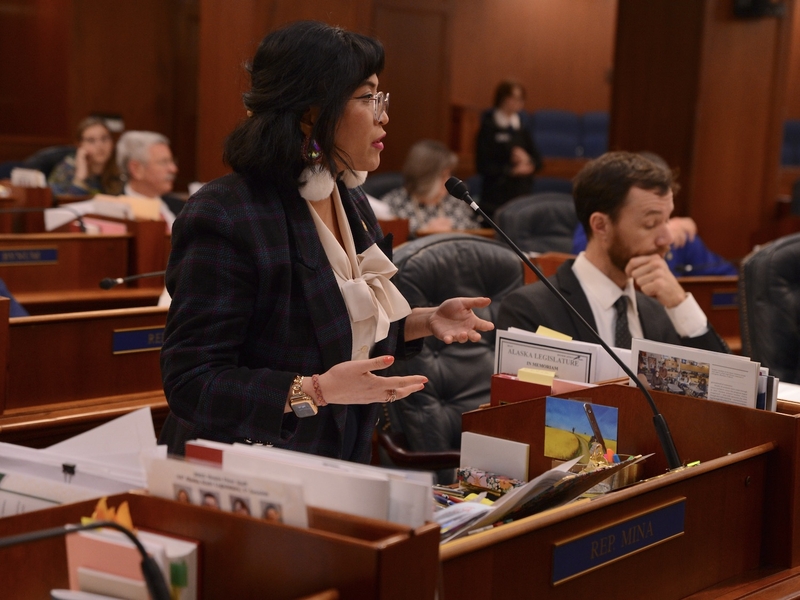
“The issue is that in Alaska, we do not have a system of care for these time-sensitive emergencies for strokes and heart attacks,” Mina told senators at a May 7 hearing.
Lawmakers approved the package, which combined a pair of bills, in the final days of the legislative session by a total vote of 49 to 10, with Rep. Delena Johnson, R-Palmer, abstaining. The combined bill now goes to Gov. Mike Dunleavy for consideration.
If approved, the bill would designate strokes and heart attacks to be included in the Alaska Department of Health’s Office of Emergency Services trauma system, and require the state to develop a coordinated system of care with first responders, transport agencies, hospitals and clinics. That includes developing standardized protocols and training for all first responders, establishing statewide guidelines based nationally accredited standards and procedures and communicating a patient’s condition to receiving hospitals or clinics.
“There are now best practices and improved technology for addressing severe strokes and heart attacks and designating stroke centers and severe heart attack centers, but no one is coordinating these hospitals, these provider organizations, and communities on improving this care,” Mina said.
In 2022, 744 Alaskans died from trauma, 217 died from strokes and 510 died from cardiovascular disease such as a heart attack, according to data provided by Mina’s office.
“At least 41 states have or are finalizing regional or statewide stroke and heart attack protocols to ensure that patients are transported directly to level one stroke centers,” she said. “This bill will help reduce transfer times throughout our state to meet this golden hour, which will in turn help improve outcomes and cost savings to the state.”
“We can’t change when a patient arrives at a hospital. We can help improve these workflows to diagnose the case and make this decision-making process more efficient,” she added.
The state’s expansion of the trauma system is estimated to cost roughly $250,000, according to a state fiscal note, which includes a new public health specialist position, travel and IT system enhancements.
The Alaska Stroke Coalition, Guardian Flight — which provides air and ground ambulance services — and Providence Hospital in Anchorage penned letters of support for the legislation that said improving coordinated, standardized emergency response systems will be a “win-win” for patients and providers.
“Even the smallest delays in care can have huge consequences for the person experiencing a stroke,” wrote members of the executive team with the Alaska Stroke Coalition. A stroke is defined by a damage to the brain caused by interruption of blood supply, according to the U.S. Centers for Disease Control, and permanent brain damage can occur within four to six minutes.
“Treatment delays of just 15 minutes can mean the difference between leaving the hospital capable of independent living or permanent reliance on others for the activities of daily life,” they wrote.
“A third of the patients who experience stroke are under the age of 65 and most of these patients can never return to work, resulting in both a loss of income potential and a significant reliance on medical resources for support,” they noted. “In a state like Alaska where our demographics skew younger, this has a profound impact.”
The window of response to heart attacks is equally critical.
Another bill added by senators to the legislative package would “encourage” school districts to provide hands-on training in cardiopulmonary resuscitation education, known as CPR, in health education for kindergarten through 12th graders.
Sen. Elvi Gray-Jackson, D-Anchorage, sponsored the bill. “When administered immediately, CPR can more than triple a person’s chance of survival,” she told lawmakers at a March 23 hearing.
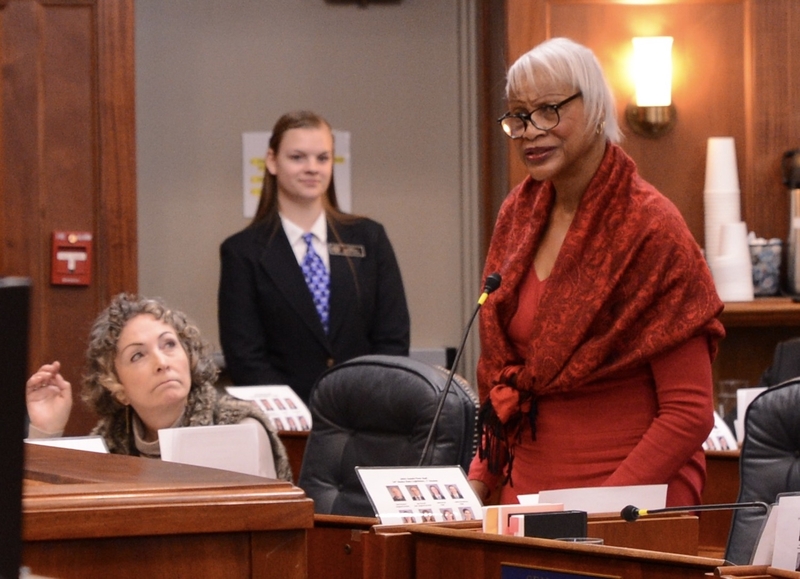
“This legislation aims to strengthen health education in our schools by equipping students with the knowledge and the skills that they need to respond effectively in emergencies,” she said, and recalled that CPR has been necessary in the Capitol building more than once.
“And those moments lives were saved simply because someone nearby had the training and the confidence to act,” she said.
Doug Schrage, fire chief for the Municipality of Anchorage, testified in support of the bill and noted the CPR skills students learn can be applied in school settings or at home.
“We know that most cardiac arrests occur in the home and believe a student of any age that has been trained in CPR is likely to be home and can provide lifesaving care. There are many examples where a student has provided CPR in the home,” he said.
Survival rates for heart attack are quite low, Schrage noted, but with hands-on CPR chances improve.
Jason Dolph, a safety officer with the Anchorage Fire Department, testified to lawmakers about his first day on the job as a firefighter, when he entered a home where no one was trained in CPR.
“There was a man laying on the couch, he was gray in color, and around him was about eight family members, and none were performing CPR or attempting any other life-saving measures. And you have to ask yourself, why? Why would a family member not be willing to, or to help, or engage? And it was simply because they didn’t know what to do, no one had ever trained them in CPR. They never had the opportunity,” he said.
Dolph said equipping children with the skills and confidence to be responsive bystanders will help improve outcomes.
“During my career, I’ve responded to more than 10,000 emergency calls and incidents, and in that time I’ve made this observation that when responders arrive and no bystander is performing CPR, we most often have negative results, despite our best efforts, and despite advancements in medicine,” he said.
The bill directs the Alaska Department of Education and Early Development to determine which grade levels are required to receive the training and develop the appropriate curriculum, based on evidence-based, national standards.
If approved by the governor, the legislation would take effect in July 2027.
Juneau