US Supreme Court ruling restores NH law blocking use of student IDs at polls
Oct 22, 2026 | 6:52 pm ET
Description
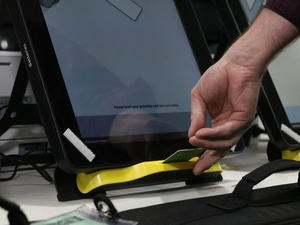
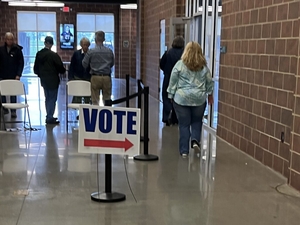
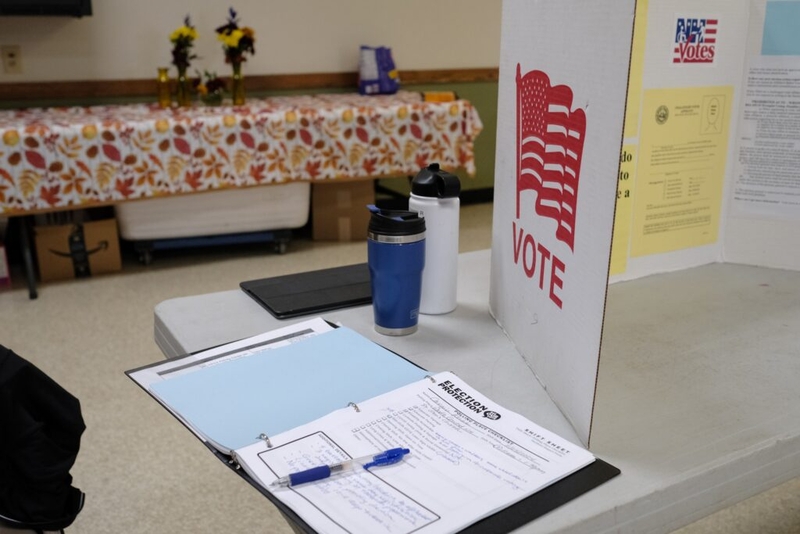
All New Hampshire voters will need to produce a government-issued form of identification when voting in the midterm elections next month. (Photo by Will Steinfeld/New Hampshire Bulletin)
New Hampshire high school and college students will be barred from using their school identification cards to vote Nov. 3, after the U.S. Supreme Court overruled a New Hampshire federal judge Thursday evening.
The court’s ruling, which was unsigned, restores a 2026 New Hampshire law that removed the school ID cards from the list of acceptable documents to prove identity at the polls.
The restoration of the law means that all New Hampshire voters will need to produce a government-issued form of identification when voting in the midterm elections next month.
Republican state lawmakers passed the law arguing that it would close off the potential for voter fraud using false or out-of-date student ID cards. Opponents said the restriction would deprive some young voters without passports or drivers licenses with an easy means to vote, and potentially disenfranchise those who could not get to the Division of Motor Vehicles.
The Supreme Court’s decision Thursday reversed an order issued by a New Hampshire judge earlier this month.
Judge Joseph Laplante of the U.S. District Court of New Hampshire had issued a preliminary injunction Oct. 2 freezing the law for the general election, after a voting advocacy group, Open Democracy, sued to block the law.
Open Democracy and other plaintiffs argued the student ID ban violated the 26th Amendment, which lowered the voting age to 18, and created an unlawful burden on voting in violation of the First and 14th Amendments. Defending the law, the state called it a reasonable measure to reduce fraud and increase confidence in elections that did not unlawfully burden the right to vote.
In his order, Laplante wrote that he did not believe the plaintiffs would succeed on the merits of their lawsuit. But he ruled that erroneous guidance from the New Hampshire Secretary of State’s Office given to local election officials in April had caused confusion and necessitated a pause on the whole law.
After the New Hampshire Attorney General’s Office appealed that injunction, the First Circuit Court of Appeals upheld the freeze. The state Attorney General’s Office then requested a stay of Laplante’s order Oct. 15.
In granting the stay Thursday, the Supreme Court majority did not detail its reasoning, but the court docket indicated that Justice Ketanji Brown Jackson had written a dissenting opinion. That opinion was not immediately available Thursday evening.
Concord, NH