Turtle Bay’s Tiniest Residents Could Thwart Luxury Resort Plans
Jun 22, 2026 | 6:01 am ET
Description
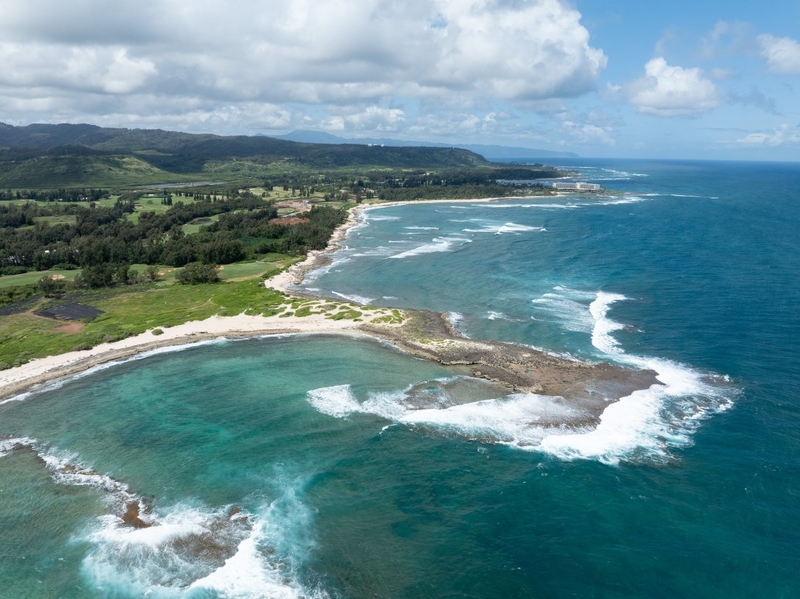
Photo courtesy of Honolulu Civil Beat
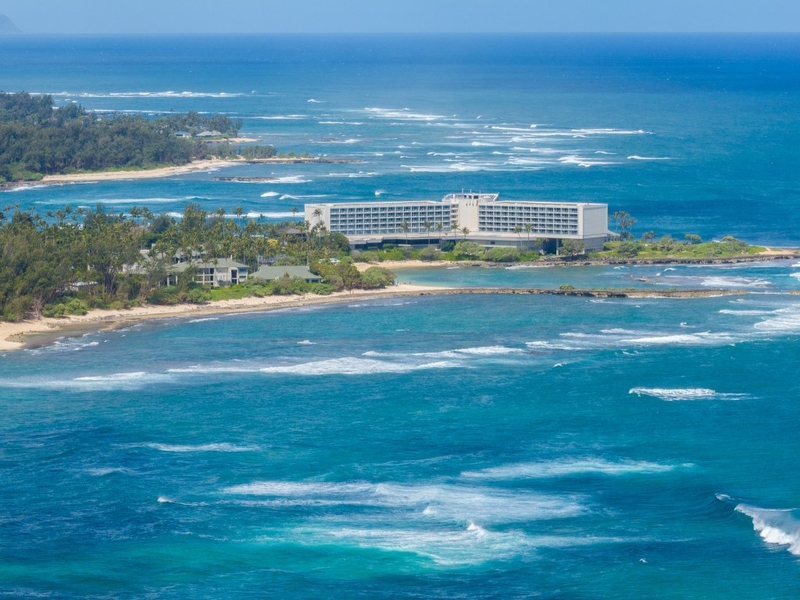
A multibillion-dollar corporation's plan to build a 375-room luxury resort on 50 acres of North Shore coastal real estate has run into an unexpected hurdle in the form of some of Oʻahu's smallest and rarest residents — the Hawaiian yellow-faced bee.
Declared endangered nearly a decade ago, nalo meli maoli have managed to hang on in pockets of habitat and, recent surveys show, extend their range along the coastline around the popular Turtle Bay Resort.
That's heartening news for environmental groups working to restore the insect population, but their presence could slow plans for new hotel development, because the endangered listing comes with powerful federal caveats that can have major implications for development and construction.
The David vs. Goliath story is set to play out in a court hearing on July 2 when the First Circuit will hear arguments from conservation groups that environmental guidelines for development in the area, codified over a decade ago, don't reflect the current reality and don't factor in future changes like sea-level rise.
The First Circuit could order a further pause on the proposed full-service resort with amenities and require the developer to carry out a new environmental impact statement that would take between one and three years, under the Hawaiʻi Environmental Protection Act.
A new EIS could also set new environmental benchmarks for building in the area known locally as Kuilima, including stronger oversight of how development impacts the various species of native plants and animals that live there.
The July court date is the latest chapter in a long-running struggle between local and environmental interests and developers looking to expand resort accommodations and private residences along two miles of permitted coastal land between Kuilima Point and Kawela Point.
If the court finds for the plaintiffs it would be a rerun of a case that ended before the Hawaiʻi Supreme Court in 2010. That case led to a major downsizing of development plans at Turtle Bay from up to 3,500 units to 725.
Then, conservation groups successfully argued that a 1985 environmental assessment of the area was no longer valid, and they're putting forward a similar case over one dating from 2013 that is being used to greenlight the new resort plan.
The lawsuit is a glimpse of conflicting time pressures: Developers face cost increases for every day the project is delayed. Meanwhile, project opponents can turn delays to their advantage, arguing that time elapsed since the last environmental review warrants a renewed look at climate conditions and species living in the area. Some of those species have been declared endangered since the last assessment was done while others have rebounded.
Native species complicate the calculus because their status – whether endangered or resurgent – introduces uncertainties into projects that rely on long-term planning.
"Species don't just stay in one area, and they don't go to one area at a certain time," said Jonee Peters, of the Hawaiʻi Conservation Council, one of the parties to the lawsuit.
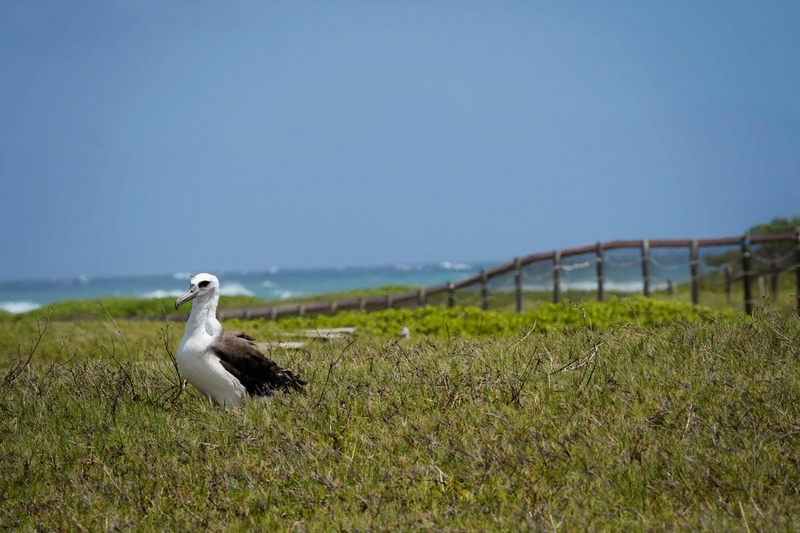
This year there is an explosion in the population of Laysan albatross on properties to the east of the current resort, but species change all the time. "Next year, it might be different," Peters said.
Once the resort expands, that rebounding bird population will have to coexist with more residents and increased levels of resort activity, noise, light and vehicle traffic that threaten to undo recent gains, the plaintiffs argue.
A Decade Of Change
The recent lawsuit brought by the Center for Biological Diversity, the Hawaiʻi Conservation Council and local group Kūpaʻa Kuilima names the Honolulu Department of Planning and Permitting and Host Hotels & Resorts, the owners of the Ritz-Carlton Oʻahu, formerly the Turtle Bay Resort.
At issue is the 2013 environmental impact statement accepted by the DPP stemming from that 2010 Supreme Court decision that the groups say is now outdated.
The 2013 assessment applies to a broad swath of Oʻahu's North Shore from Marconi Road in the east to Kahuku Point in the west. It sets a range of conditions for developing land parcels makai of Kamehameha Highway including the permits required, maximum building height, coastal setbacks and measures to mitigate the impact of construction on the environment and community.
It’s a box that any new building projects there have to check before they can move forward, and Host Hotels got that green light from the DPP in December.
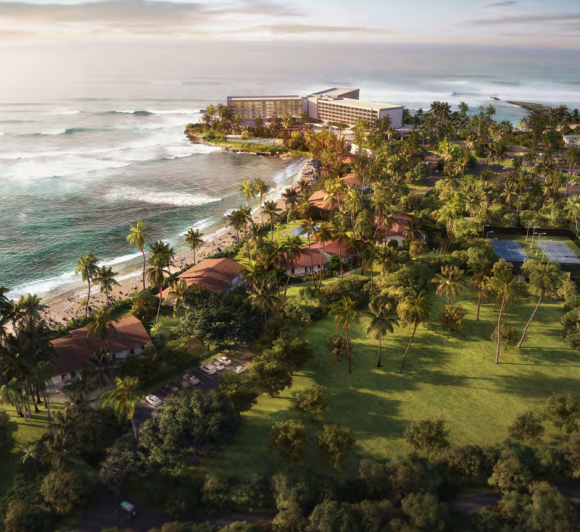
But the conservation groups want the court to invalidate the 2013 EIS — a move that would stall the resort project and open up a new round of community consultation and consideration of recent scientific evidence about the sensitive coastal environment.
“The heart of our claim is that there's no evidence that DPP have taken a hard look at environmental conditions out there since 2013, or did their legally required due diligence to determine that environmental circumstances are the same as they were in 2013,” said Dru Hara, an attorney with the nonprofit Earthjustice.
The department has the authority to require developers to produce a new environmental impact statement, usually by hiring a consultant who produces a plan that has to be approved by DPP. Those can cost between $250,000 and $2 million, according to the U.S. Government Accountability Office.
But in a letter sent to the Ritz-Carlton’s attorneys in January, DPP director Dawn Takeuchi Apuna confirmed the company could proceed with plans for a resort on parcel H-1, citing the 2013 EIS, and the decision was published in The Environmental Notice.
That notice started a 30-day clock for legal appeals under Hawaiʻi law, and the conservation groups filed a lawsuit on Feb. 3 alleging that DPP’s determination violates the Hawaiʻi Environmental Policy Act.
Under HEPA, environmental impact statements do not have an expiration date, but Hawaiʻi courts have required agencies and developers to produce an updated EIS if there are "new circumstances or evidence" of likely environmental impacts that were "not previously dealt with."
The department’s January letter shows that they only considered one part of the EIS requirements in the act, Hara said, and ignored the obligation “to not just to look at the nature of the project being proposed, but to look at the environmental circumstances, which have significantly changed in that time.”
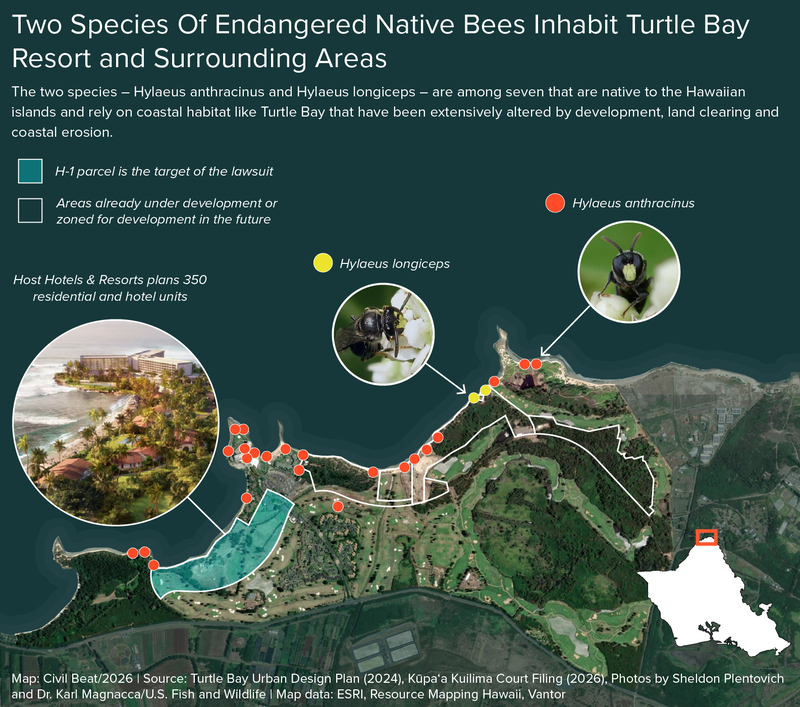
The developments they cite include the endangered listing in 2016 of two species of native yellow-faced bees that inhabit the area, under the federal Endangered Species Act.
There has also been a “steady upswing in populations of endangered Hawaiian monk seals” and their use of the area for pupping and resting, the plaintiffs argue.
DPP spokesman Davis Pitner said the department does not comment on pending litigation. Host Hotels, based in Maryland, and a local contact for the company at the Ritz-Carlton Oʻahu, did not respond to requests for comment.
But in a response filed in court, the cityʻs corporation counsel calls many of the claims made in the suit "vague and ambiguous" and says that while the city understands that Hawaiian yellow-faced bees are threatened, "to the best of its information and belief, development is neither planned nor authorized within coastal strands inhabited by Hawaiian yellow-faced bees."
The filing says the DPPʻs official determination stands for itself, and its motion to dismiss the case will also be heard on July 2.
Locals Want Stronger Protections
The Host Hotels project is the second time the permitting department has relied on the 13-year-old environmental impact assessment to approve a major development project in a sensitive coastal area of the North Shore.
But it’s the first time the 2013 EIS has been subject to a legal challenge. The timing of the previous approval in 2022, after years during which plans were dormant, caught the interest groups off guard, and a legal appeal wasn’t filed within the statutory 30-day window.
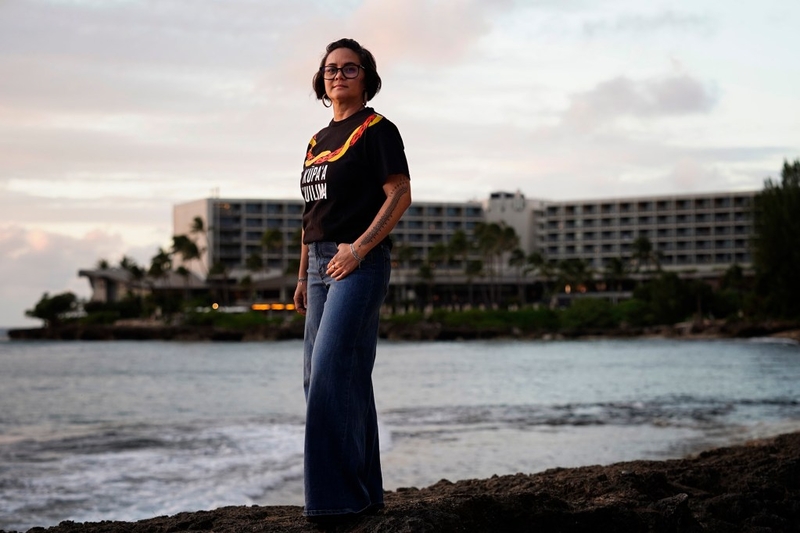
This time, they are hoping the court will issue an injunction within the Host Hotels project area at Kawela Bay until a new environmental review is completed. The 2013 EIS is "gravely unsufficient" for current conditions, said Jessica dos Santos of the local group Kūpaʻa Kuilima.
"There are a lot of cumulative impacts that need to be taken into account with the climate crisis," she said.
Wildlife corridors run through all of the areas that are being considered for development, dos Santos said.
"The populations of the nalo meli maoli (yellow-faced bees) have been documented in all three bays and then the mōlī (albatross) are also coming back," dos Santos said. "There is endangered plants life there is well."
And "the amount of honu (green turtle) landings has changed over time, and they are using this coastline more and more."
The science backs up the presence of two species of endangered Hawaiian yellow-faced bees that were listed as endangered in 2016, three years after the last EIS. The question is: Where?
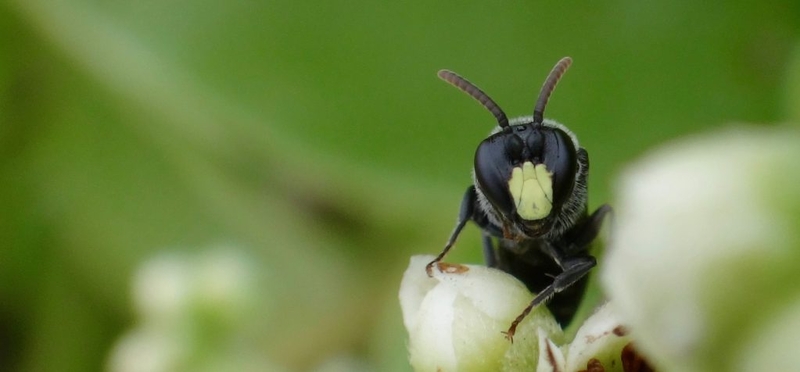
A habitat survey of over two miles of coastal habitat from Kahuku Point to Kawela Point, commissioned by Kūpaʻa Kuilima, found that two species of yellow-faced bees –– Hylaeus anthracinus and Hylaeus longiceps –– were present.
Those two are among seven species that are native to the Hawaiian islands and rely on coastal habitats like Kuilima that have been extensively altered by development, land clearing and coastal erosion, according to the Xerces Society for Invertebrate Conservation.
Entomologist Jason Graham found in August that "Hylaeus anthracinus were more prevalent and found in various locations where they had not been previously documented along the coastline."
The Division of Forestry and Wildlife has been monitoring the populations of the species' distribution on Oʻahu, said spokesman Ryan Aguilar in an email. "We have found H. anthracinus present within the Kawela Point to Kahuku Point area, but these were preliminary surveys."
Aguilar said the surveys would continue through the summer when host plants are flowering and the bees are more actively foraging.
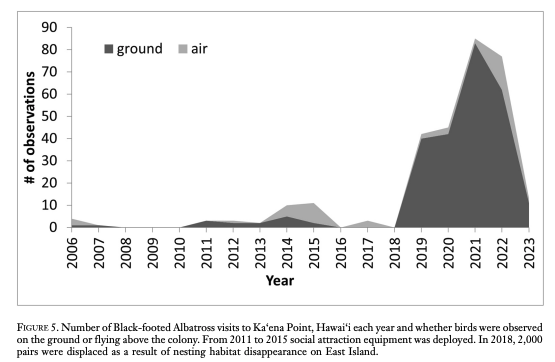
A recent study by researchers from Pacific Rim Conservation also shows a remarkable rebound of the black-footed albatross — currently designated as near threatened — nesting at the privately owned land at Kahuku Point east of the resort between 2018 and 2023.
That was a time when development in the area was dormant, but the area was being actively managed by the North Shore Community Land Trust.
Counsel for the city said, however, that DPP doesnʻt have sufficient information to determine whether albatross are nesting in the area Host Hotels intends to develop.
Dos Santos said there needs to be stronger protections built into the new EIS because of the research showing the increasing impacts of sea level rise and coastal erosion.
The word “climate” doesn’t appear in the public master planning document for the new resort from 2024. The phrase “sea level rise” appears once, but the document says that any structure over 50 feet in height will be set back 300 feet from the shoreline.
A 2025 University of Hawaiʻi research has forecast coastal erosion on Oʻahu will be more extreme than previously thought. Projections show levels could rise by between six inches and 1.2 feet by 2050, and will require up to 43% increases in shoreline retreat on the North Shore due to the high-energy winter swells.
A new EIS would also be an opportunity to ensure that Native Hawaiian cultural interests are better represented in the future, dos Santos said.
"That would speak to the ability of Kānaka Maoli to protect gathering rights, fishing and salt collection, and our iwi kūpuna," she said.
Traditional and customary rights are enshrined in the state constitution, and the scope of the new development threatens cultural heritage and public trust doctrines, the plaintiffs say. The resort plans include interpretive signage to "draw attention to the site's historical and ecological history."
Changing Hands
For more than 40 years, there have been various attempts to expand the footprint of the resort at Turtle Bay. The hotel sits among a patchwork of land parcels that are adjacent to a 634-acre conservation easement at Kuilima designated in 2016 after decades of local effort. The landscape includes public access trails, marshland and golf courses.
But more than a decade went by without any plans moving ahead, and the resort has since changed hands twice.
However, the 2013 EIS resurfaced in 2022 when DPP approved building permits for the construction of up to 350 residential units on 67 acres east of the Turtle Bay Resort, now the Ritz-Carlton Oʻahu.
That development scaled down what had been proposed by the resort in 2013, and then-DPP head Dean Uchida said in a July 23, 2022 letter to the resort’s attorney that the EIS was sufficient and “no further environmental impact statement will be required,” even though the agency has the power to require one.
Those units are proceeding in the hands of Utah developer Arete Collective which bought the land from Blackstone Real Estate in 2024 for $43 million.
Construction began in August 2025 on 100 units, dubbed "The North Shore Club," with a starting price of $5.9 million each. Arete wants to build 250 more, and Blackstone retains about 16 acres that could still be developed.
Arete's project would not be affected by the decision in the new lawsuit, as EIS cannot be applied retroactively under Hawaiʻi law. But projects still to be permitted might have to meet different conditions depending on the outcome of the case.
Arete has said it engaged in extensive community consultation about its project, supports species conservation and has voluntarily implemented measures to minimize the environmental impact of building work.
Challenges to environmental impact statements have met varying degrees of success.
While the 2010 Supreme Court decision at Turtle Bay was successful, the strategy failed when the Sierra Club challenged the Hawaiʻi Super Ferry in 2007, and the Haleakalā Advanced Technology Solar Telescope in 2018.
A new environmental review of the Kawailoa Wind Project on the North Shore in 2019 did result in stricter guidelines for the turbines after it was found that the accidental killing or "take" of species like the Hawaiian hoary bat and the Hawaiian petrel was exceeding original estimates.
Another outcome based on recent examples from the U.S. mainland could be the creation of a voluntary Habitat Conservation Plan undertaken with the U.S. Fish and Wildlife Service. Such plans are voluntary agreements that outline procedures to mitigate or minimize harm to listed species during the course of a development project.
Civil Beat’s coverage of climate change and the environment is supported by The Healy Foundation, the Marisla Fund of the Hawaiʻi Community Foundation and the Frost Family Foundation.
Honolulu, HI